


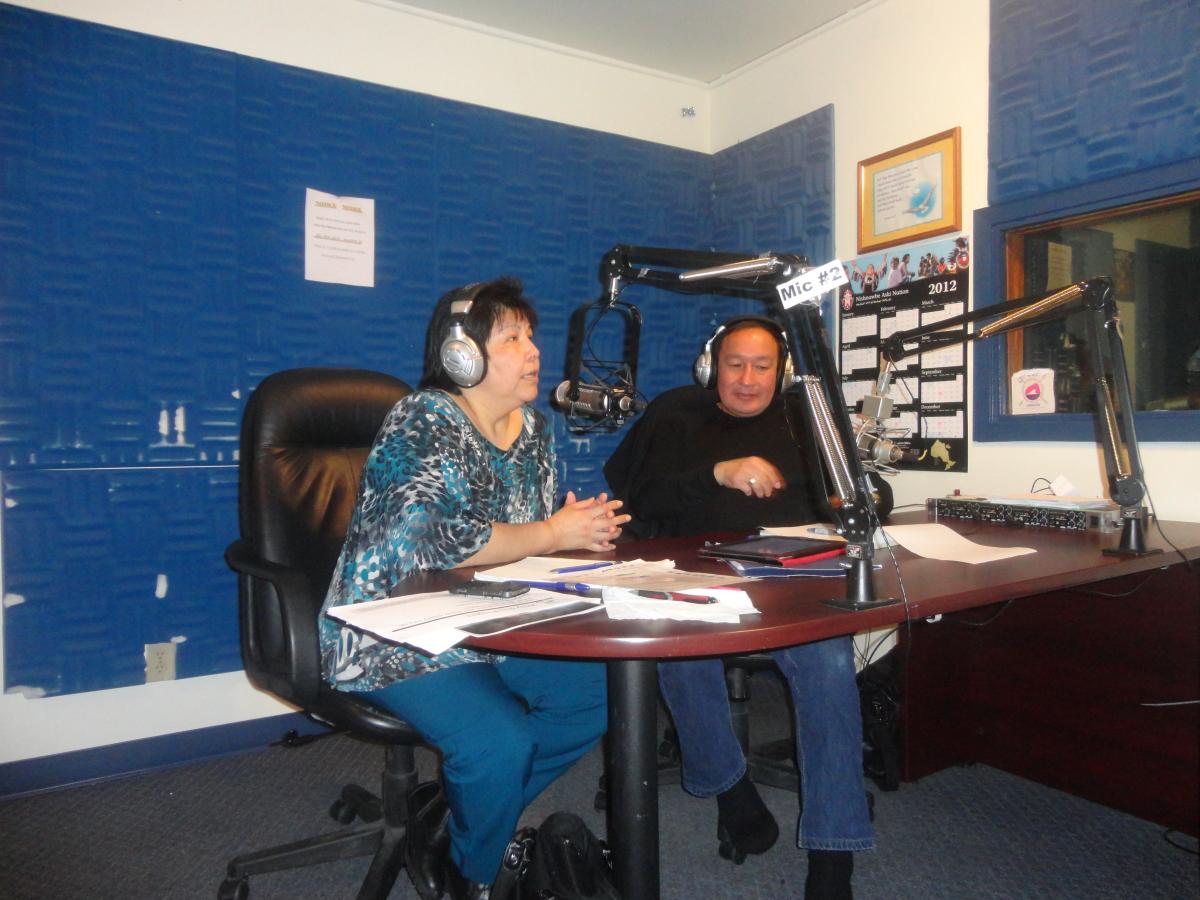
Days after former Conservative senator Pamela Wallin was told to reimburse over $100,000 in inappropriately claimed expenses, KI’s John Cutfeet noted the fallout among federal Conservatives since Attawapiskat Chief Theresa Spence’s hunger strike.
“When people were walking from Victoria Island to Parliament Hill, you had people yelling as people were marching saying ‘where’s the money?‘“ Cutfeet said. “If you can remember, the federal government chose that time to put forward the audits of Attawapiskat, about funds not being accounted for.”
Cutfeet feels the audits were brought up to discredit Spence, who began her Dec. 11 - Jan 24 hunger strike with the demand that Prime Minister Stephen Harper and the governor general meet with First Nations leaders to discuss treaty relationships.
“In the heat of the moment, of all that publicity, those efforts that (the federal Conservatives) made in trying to put Attawapiskat in the bad light, what we’re finding out now is that their own procedures and processes are coming into question,” Cutfeet said.
Wallin and former Conservative senator Mike Duffy both resigned from the Conservative caucus in May over their Senate expense claims; former Conservative senator Patrick Brazeau was removed from the Conservative caucus in February after being charged for a domestic assault and has since been investigated over his Senate expense claims; and former Prime Minister’s Office chief of staff Nigel Wright resigned in May after being questioned about a $90,172 loan to Duffy to repay his Senate expense claims.
“When Chief Spence was trying to call for a meeting with a the prime minister as well as the governor general, the person who played a major role in trying to get the terms of the meeting worked out was Nigel Wright,” Cutfeet said. “There were a lot of what I felt were unnecessary manoeuvres that were taking place in trying to arrange that meeting.”
Shibogama Tribal Council’s Margaret Kenequanash said the First Nations treaty relationship with government is based on the premise of respect for one another.
“If government wants to start playing other games, well, we really do have to be careful, all of us, in terms of how we relate to one another because of the spirit and the intent of that relationship that we have,” Kenequanash said. “Our people are very spiritual people and that’s who we are — we’re very strong people. And we will continue to be that way, I believe, as long as we uphold those principles given to us by our Creator.”
In addition to the three former Conservative senators and Wright, former Aboriginal Affairs and Northern Development Canada minister John Duncan resigned in February over an improper letter written on behalf of an individual to the federal tax court. Also, former Harper senior advisor and University of Calgary professor Tom Flanagan was dropped from CBC’s Power and Politics panel and by the University of Calgary in February over expressing “grave doubts” about jailing people who view child pornography.
Although the First Nation’s accountability issue was raised during Spence’s hunger strike, Kenequanash said First Nations people are very accountable.
“I think we are probably the most accountable people,” Kenequanash said, noting the number of funding reports that have to be submitted to government. “I know with the work that I do, there is quite a lot of paperwork and reporting on everything that we do.”
Kenequanash said First Nation organizations are often put into difficult positions due to funding processes.
“We don’t do justice for the people we serve because you get (funding) at the beginning of March and then it has to be done by March 31,” Kenequanash said. “The overall objective of any program or service that we provide sometimes gets compromised by those logistics. And in the end we are held accountable for it, but really it is not our fault — it’s the approval systems that are in place and the terms and conditions of those approval systems because they are not approved in a timely manner.”
Kenequanash wants to see a change in funding practices.
“I truly believe in accountability and making sure that we spend money properly — that is the only way we will have sound financial and organizational and even First Nation management,” Kenequanash said. “We have to start looking at ways and means how to be stronger in those areas, but at the same time some of these stringent requirements that have come down, they hold us hostage in terms of what we can do in our communities.”


Forest fires have always been a deep worry for those of us who live in the far north of Ontario. We are surrounded by endless forests and we know full well...
First Nation youth representatives are letting the world know that Indigenous people are ready to stand up and protect the land. Keira Spence, Kohen...