


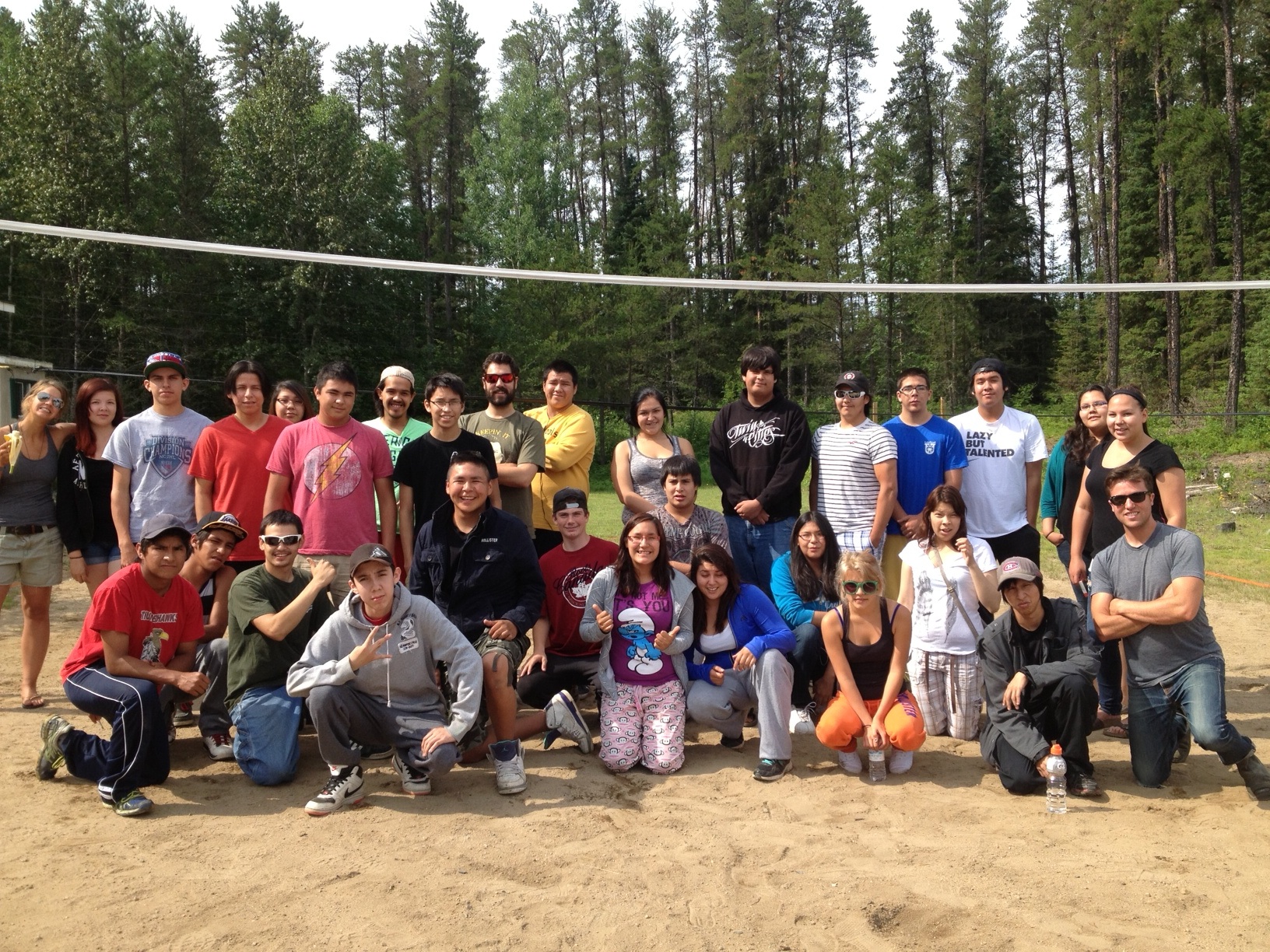
A group of 30 First Nations youth from communities across northern Ontario have completed their third week of training at the First Nations Natural Resources Youth Employment Program (FNNRYP) summer camp. The camp is jointly run by Confederation College and Outland Camps.
The live-in camp, which is six weeks long and held at Firesteel Camp in Upsala, aims to educate youth about forestry and mining and provide them with hands-on experience in the fields. The program aims to prepare attendees for future education and employment.
Dave Bradley, head of Outland’s youth development programs, is thoroughly impressed by the cohesion of this year’s group.
“This years group represents 18 communities from across northern Ontario,” Bradley said. “They are jelling as a group really well.”
The positive dynamic allows for enhanced personal growth and preparation for eventual work and educational environments, Bradley explained.
“With the live-in camp environment, we’re able to create structure in the day-to-day routine,” said Bradley. “It’s a place for youth to practice being an employee in the camp
environment living away from home.”
Bradley hopes that the camp will help students grow and continue to lead.
“Our whole mission is to help them find inspiration to stick to the educational path,” Bradley said. “We want them to be leaders and have an influence on those around them.”
Wendall Fobister, 20, of Asubpeeschoseewagong First Nation is planning on “sticking to the educational path” when he enters the Culinary Arts program at Confederation College in the Fall of 2014. Fobister is currently attending his second year at Outland Camps where he originally came for a learning experience, but found more than knowledge.
“My first year I came for the knowledge,” Fobister said. “From a young age I was taught that these companies (who we’re learning from/ about) are bad... I was curious because I trap and hunt. My second year, I came back because I fell in love with it.”
“What I’m learning,” Fobister continued, “is that these forestry and mining companies are not bad in the way they’re made out to be. What I’m learning is that they do care about us as First Nations.”
During a presentation by Cliffs Natural Resources, Fobister and other students asked intelligent, hard-hitting questions to Cliffs representatives about the environmental effects of the Ring of Fire project. Their concern for the land was evident.
As a second year participant, Fobister is aware of various forest management techniques used by local forestry companies. Pre-commercial thinning is a favorite for Fobister.
“It’s when you leave a certain amount of trees in one spot,” Fobister explained. “You use a brush saw. I’m looking forward to it.”
Sarah Becker, 17, of Biinjitiwabik Zaaging Anishnabek First Nation is also eager to get outside.
“I’m most excited about tree planting,” Becker said. “Last year, I out-planted a lot of the guys.”
Becker is ready to test the skills that she has learned during two years at FNNRYEP.
“I want to try everything,” Becker shared. “I want to try to put out a big fire in the bush, I want to use my First Aid training to revive someone, I want to go tree planting, I’d like to come back here as a Councilor in Training.”
Eventually, Becker would like to work as a social worker for youth.
Erik Charlie, 17, of Fort William First Nation has also decided which career he’ll pursue.
“I’m going into flight management, hopefully in 2014,” Charlie said. “I don’t think I would’ve known had I not come here. This whole program is about educating ourselves about what we want to do and what these companies do.”
Charlie credits the group’s leaders for what’s been a wonderful experience thus far.
“Our crew leaders are a big inspiration,” Charlie said. “It’s a tremendous opportunity.”





My home community of Attawapiskat First Nation is celebrating the annual graduations of students from Kattawapiskak Elementary School and Vezina Secondary...
I was happy to see my nieces and nephews in Attawapiskat taking the opportunity to learn about the traditional practice of making Nah-mesh-tek, the Cree...