


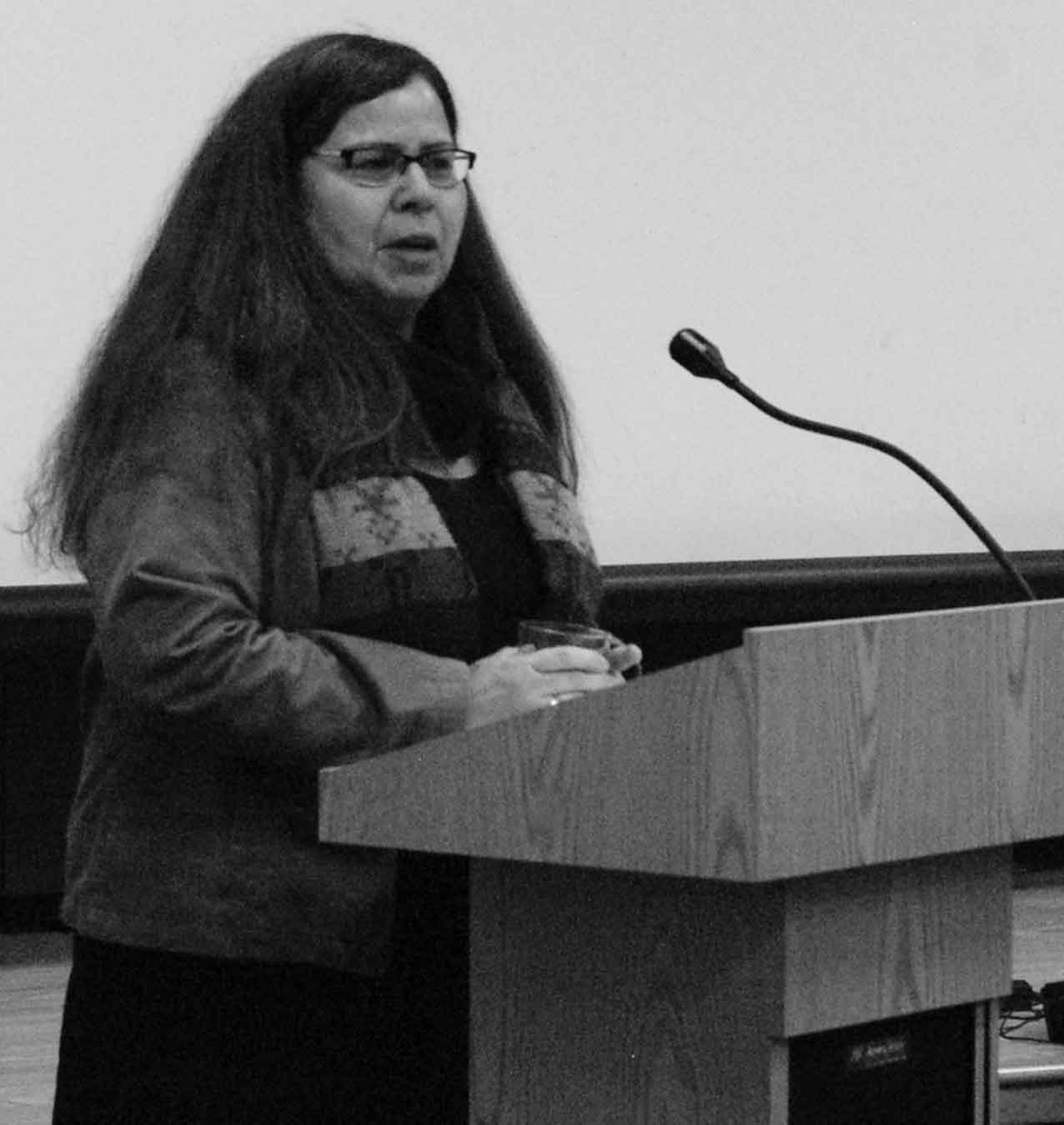
The issue of water in First Nations communities was discussed at the Water Crisis in First Nations Communities event put on by The Thunder Bay Council of Canadians Blue Planet Committee on Jan. 28.
“We wanted to raise awareness about the fact (that) 30 communities in northern Ontario are under water boil advisories, and in some cases like Neskantaga First Nation have been since 1995,”said Janice Horgos of the Blue Planet Committee.
Misconceptions, misleading and inaccurate messages about Aboriginal’s complicated water issues between them and governments deserve awareness to avoid inaccuracies and seeing water as an isolated crisis, said Horgos.
“It was important for us to hear at the event,” she said. “It’s not just the physical impact of not having safe clean water around people’s lives but the physiological impact when you can’t trust your water.”
Fifty people attended the event, which featured the screening of The Water Brothers documentary “Water Everywhere…Not A Drop to Drink” which was filmed in northern Ontario. It was followed by a panel discussion with Wikwemikong’s Teresa Trudeau and Lakehead University’s Rob Stewart, a professor of geography.
The documentary and panel discussed the misunderstanding of the traditional and Western opinions and relationships to and uses of water.
“We have a sacred connection to water because everything comes from it,” said Trudeau, who is the traditional healing coordinator at Anishnawbe Mushkiki. “The life of all living things comes from water. We always acknowledge it in our celebrations, customs and gatherings.”
Including the 30 communities in northern Ontario, audience members said they were shocked to learn 100 out of 600 Aboriginal communities across Canada located near fresh water do not have access to safe, clean drinking water.
Stewart said faculty and grad students of Lakehead University are working towards understanding the “water crisis” of sacred versus commodity water beliefs facing northern Aboriginal communities.
“We are trying to comprehend how to move towards a holistic and spiritual way of managing water,” he said. “Western managing, views water as a commodity or a service. We take care of water as being a resource.”
Northern Ontario communities located near low lying land that are facing water contamination, flooding and scarcity, see water and a tap as a threat, especially when water boil advisories are being called consistently to ensure safety, said Stewart.
“Put yourself in the position where you don’t understand if boil water advisory is a safety measure or a threat,” Stewart said. “You sort of lose that confidence in that system that’s representing a system to safe clean water.”
Unsafe drinking water has resulted in poor economic, physical and spiritual conditions and millions of dollars worth of bottle water being flown into remote communities has distorted people’s reflection of water, said Trudeau.
“It’s common to buy bottled water because that tap has uncertainty for some people,” Stewart said. “By the time boiled water advisories are called, the advisory is over or was not even an issue.”
Aboriginal communities often rely on water considered unsafe or water treatment plants.
Healthy spring waters near communities need to be utilized instead of drinking boiled or bottled water said Trudeau.
“We are encouraged by our medicine people to use our water because it is healing,” she said. “Part of healing is to use our sacred spring waters and not bottle or tap water for our medicine,” said Trudeau.
The Council of Canadians is calling for ground and surface water to be declared a public trust and a national Aboriginal public infrastructure fund for locally managed water and waste treatment.
Horgos said they are building alliances to consult a better understanding of holistic and contemporary ways of helping managing water and waste treatments plants for Aboriginal safe and clean drinking water.
The Blue Planet committee was formed last year by Council of Canadians Thunder Bay Chapter. It is aimed to promote access to safe, clean water as a human right and the protection of our lakes and waterways and to challenge the bottled water industry.




My home community of Attawapiskat First Nation is celebrating the annual graduations of students from Kattawapiskak Elementary School and Vezina Secondary...
I was happy to see my nieces and nephews in Attawapiskat taking the opportunity to learn about the traditional practice of making Nah-mesh-tek, the Cree...