


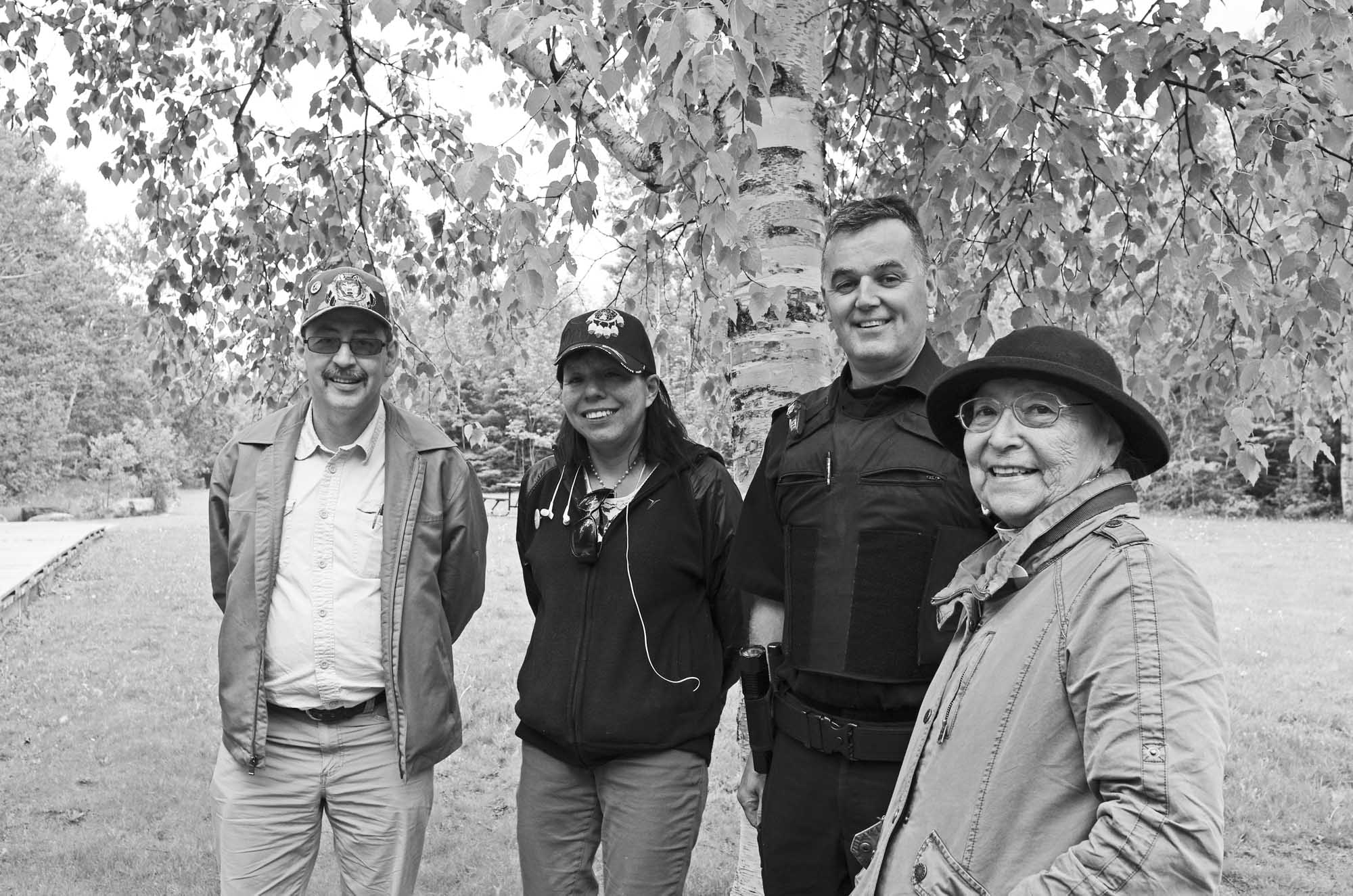
A visit to check out the Legend of Green Mantle at Kakabeka Falls Provincial Park was one of the highlights in William Esquega’s Anishinabemowin language course.
“We touched base on that even though it was summertime — I don’t like to do any legends during the summer,” said the former Confederation College language instructor originally from Sand Point. “We focused more on the story so we were able to do that.”
Esquega began the introductory Ojibwa course this past January on Mondays and Thursdays, split up between afternoons and evenings to accommodate different schedules, and completed it in early July.
“We incorporated area significances, what’s happened to history around this area,” Esquega said. “A lot of people just say different things about Thunder Bay, but in the area it was known as Wequedong — The Great Bay. Anishinabe people to this day practice that saying: ‘I’ll see you in Wequedong — Thunder Bay.’”
Esquega said Mt. McKay was also known as Thunder Mountain — Anemkiwajiw — in the past.
“This (course) was done with more of a different approach, an Anishinabe approach,” Esquega said. “It involves the spirituality of the language and also the culture of the language plus the history of the Anishinabe people.”
Esquega said his approach focuses on acquiring the language, not teaching the language.
“Acquiring the language is through hearing, not just writing,” Esquega said. “So we must hear the language before we can speak it, just like as we were growing up, we heard our parents speak and after that we started speaking and after that we started writing. When we take that approach to Anishinabe language, I think the outcome is a lot better and more successful too.”
Esquega said the Kakabeka Falls visit featured stories and information about place names and different plants, such as tamarack, or agimatic in Anishnabemowin, which is used as a hardwood in the construction of tool handles and snowshoes.
“It is easy to work with when it is wet and you steam it,” Esquega said. “It’s a very hard wood, so it took a lot of beating. It was a unique wood, used in many different ways, even in some of the medicines.”
Esquega said many Anishinabemowin words are more complex than English words.
“Anishinabe is a living language,” Esquega said, noting that the majority of the objects in Anishinabemowin are animate or alive. “So in an Anishinabe style of language a spirit is recognized in each object.”
Esquega delivered the course through lectures, films and videos, hands-on activities such as birchbark collecting, storytelling, legend telling and some writing.
“All of my students walk away with an introduction of at least 12 to 16 phrases,” Esquega said. “What their name is, where they are from, what their clan is, what their Indian name is, as much as they want to reveal to a person or a group or a crowd is entirely up to them.”
Esquega said the use of Anishinabemowin introductory phrases encourages others to learn their own language.
“It’s quite important in our doings in the Anishinabe culture,” Esquega said. “When you go to a powwow or even a ceremony, it’s nice to hear someone say who they are or where they are from in the language.”
Esquega is currently planning two Anishinabemowin courses for this fall, beginning in September, that are open to everybody, including all ages.
“I’ve been struggling to get these programs off the road and get the sponsors and support,” Esquega said. “Sometimes that’s a little hard, but we always seem to manage at the end to put something together.”





This past month, I was happy to attend two Pow Wows I hadn't been to in years. I attended the Mattagami First Nation Pow Wow and the Matachewan First Nation...
I was happy to see my home community of Attawapiskat on the James Bay coast announce the opening of the new St Francis Xavier Parish Church on August 25....