


Kwayaciiwin Education Resource Centre is looking to raise awareness of its language and culture programs among parents in the communities it serves.
“We need to educate and promote the organization on the grass roots level,” said Matthew Angees, Kwayaciiwin’s acting chairman. “Right now a lot of parents don’t know what Kwayaciiwin stands for and the purpose of it.”
Kwayaciiwin has been providing support services to 24 First Nations in the Sioux Lookout district since 2002 under the direction of the District Education Planning Committee, which was established to implement and manage the Academic Readiness Project.
The Academic Readiness Project was developed by district chiefs to address concerns about the academic readiness of students when they leave their communities to attend high school.
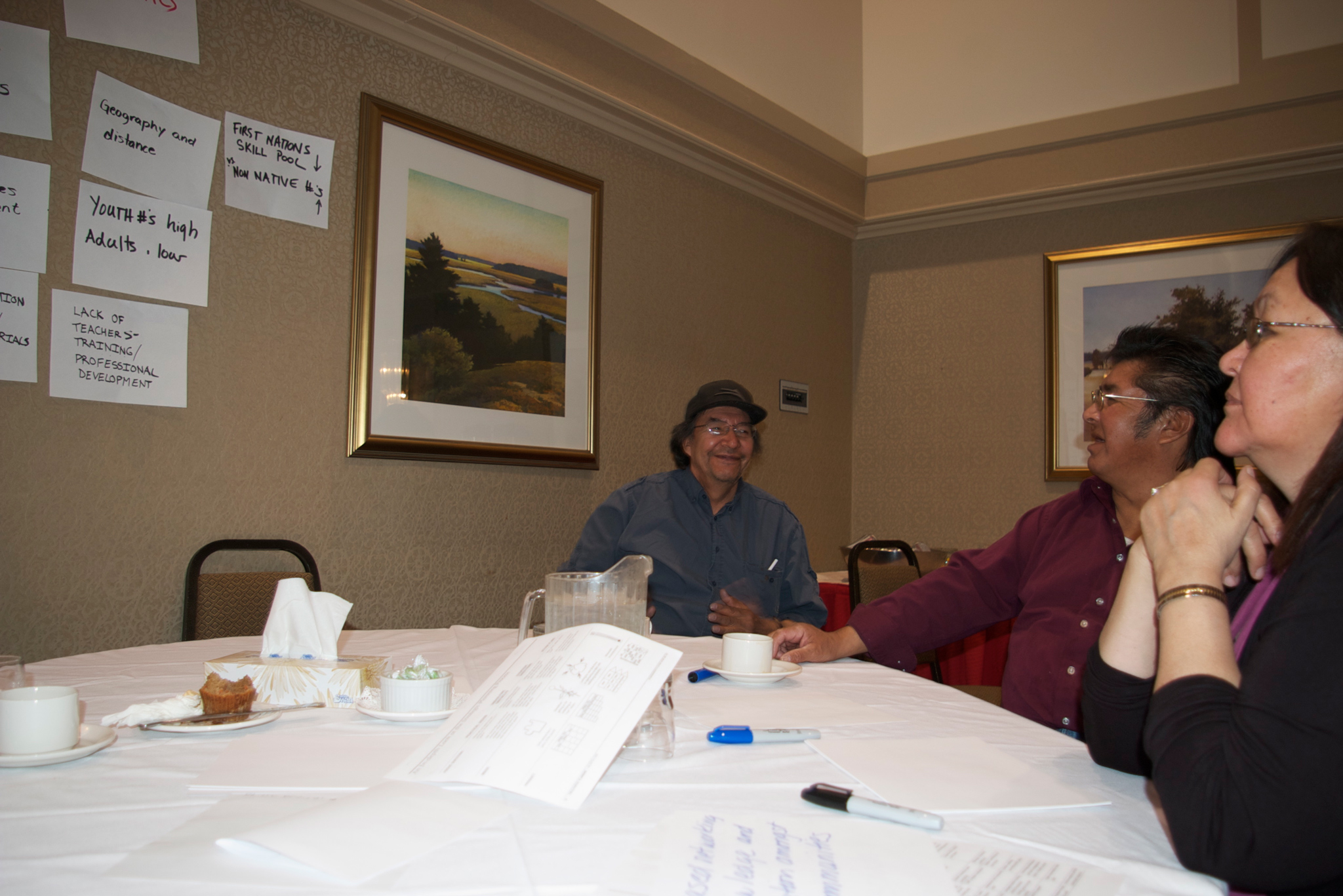
Angees and a group of directors, tribal council representatives and grassroots people met March 30-31 at the Travelodge Hotel Airlane in Thunder Bat to begin formalizing a vision, mission statement and mandate.
“Once we do our five-year strategic plan, we will use that to begin to develop a business plan to lobby and try to get core funding from INAC (Indian and Northern Affairs Canada),” Angees said.
“I’m hoping that out of this we are getting a clear direction from the directors, from the tribal councils and also from the grassroots level because it is their organization.”
Angees said Kwayaciiwin’s First Nations Curriculum Guidelines and Standards will only work if it is implemented in every classroom.
“Everybody has to implement it and everybody has to make sure the teachers are implementing it and the principals are doing what they are supposed to do to evaluate the teachers,” Angees said.
The goal is to eventually provide services that are currently missing in the schools, such as support, training and resources for the teachers.
“Ultimately, what is going to happen is we are going to be housing specialists … that will not stay in that building, but travel to the communities, spend time in the communities to support and train and also provide resources to the teachers, support staff, LEAs (local education authorities) and education directors,” Angees.
While Kwayaciiwin’s role is to supplement what the communities already have and not take over their services, Angees said the organization will likely become involved in the supervisory area in the future to make sure schools are following the curriculum and assessments are completed.
“It’s going to take time,” Angees said. “Everybody has been working independently, so it’s hard to sell the idea but I think it is coming now. They’re beginning to realize this is what we need. I think we can do a lot of wonderful things by working together.”
Angees also called for an increase in education funding for First Nation students.
“The last time I saw how much the elementary child gets funded in the provincial school was close to $10,000,” Angees said. “In my community, an elementary student is funded about $7,800, so you do the math. There’s a difference of about two grand.”


This past month, I was happy to attend two Pow Wows I hadn't been to in years. I attended the Mattagami First Nation Pow Wow and the Matachewan First Nation...
I was happy to see my home community of Attawapiskat on the James Bay coast announce the opening of the new St Francis Xavier Parish Church on August 25....