


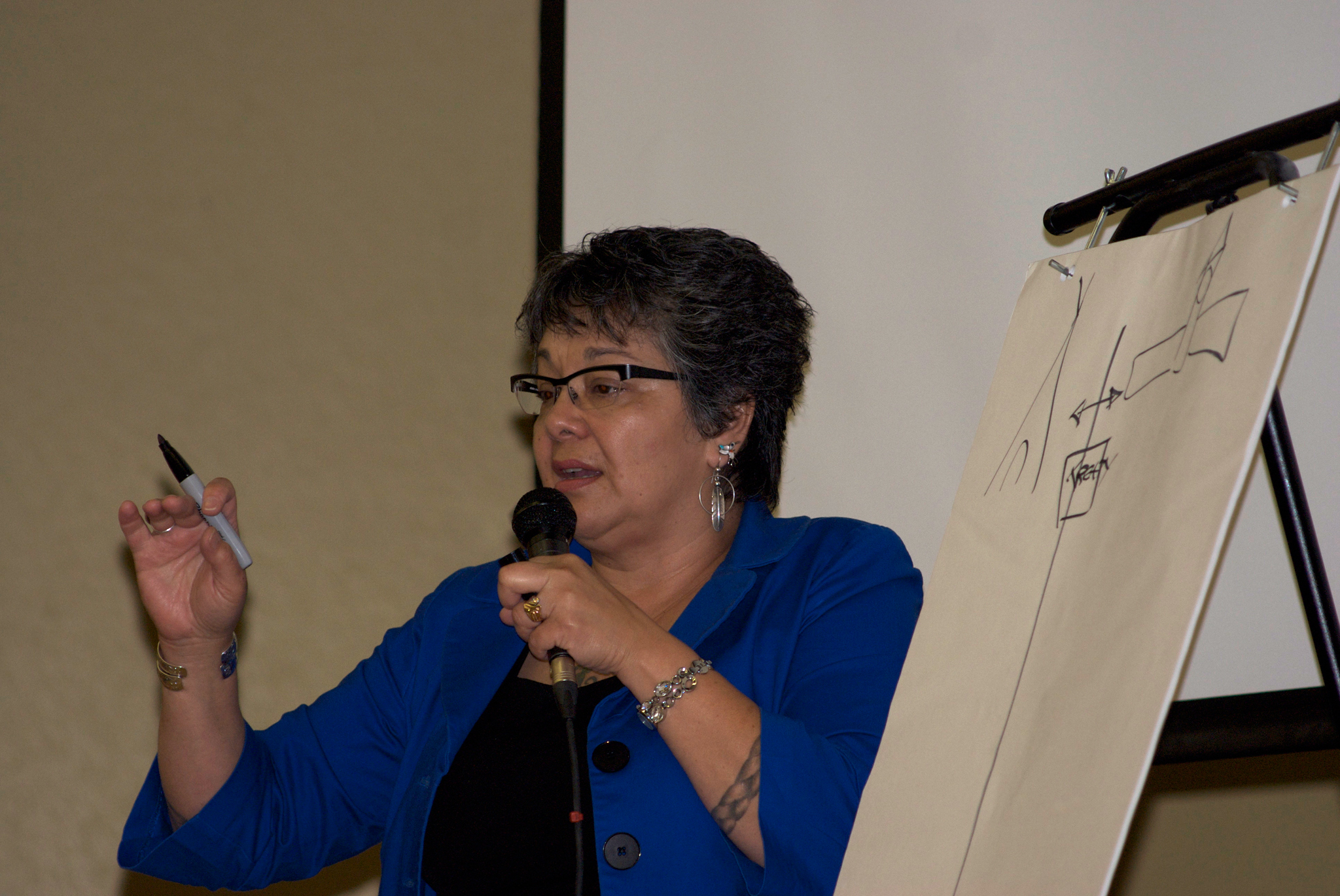
Former residential school students were given a chance to share their stories during Nishnawbe Aski Nation’s Residential School Gathering June 11-12 in Thunder Bay.
The memorial walk Ronnie Moonias held last year to honour students who attended St. Joseph’s Indian Board School (Fort William Indian Residential School) was featured on the first day of the residential school gathering. The Neskangata band member attended the residential school, which is located in Thunder Bay, from 1962-1968.
Moonias said a lot of things happened while he was at residential school.
“We had a lot of people crying,” he said. “Even myself, I was crying. I wanted to go home; I wanted to see my family.”
Moonias and his wife held the memorial walk from their community to Thunder Bay June 1-11, 2010.
“She walked for the ladies and I walked for the men,” Moonias said.
Since there are no roads from his home community, he said they began their walk at Nakina, Ont. They made it 16 kilometres that first day.
Unfortunately, on the sixth day of the walk one of the nine walkers who had just joined the walk suffered a heart attack June 6. Moonias and the other walkers took a break.
Despite the tragedy, the walkers continued their journey June 9. The walk finished June 11 at the corner of Franklin Street and Arthur Street, the site of the former boarding school. A senior elementary school now sits in that location.
During the residential school gathering, representatives from the Truth and Reconciliation Commission (TRC) of Canada were in attendance gathering statements from residential school survivors.
“Our job is to go out there and gather statements from survivors, intergenerational survivors, from former staff and whoever wants to tell their story,” said Alvin Fiddler, regional liaison manager with TRC and former NAN deputy grand chief from Muskrat Dam.
Impacts of residential schools still far reaching
The TRC was established as part of the Indian Residential Schools Settlement Agreement.
Its mandate is to learn the truth about what happened in residential schools and to inform all Canadians.
Fiddler oversees the activities of the regional liaisons. The duties of the regional liaisons are to facilitate information flow between organizations, communities and individuals by increasing community outreach and dialogue. They also assist in coordinating statement-gathering sessions.
Once the survivors’ statements are gathered, they will be kept in a national research centre so others can learn from their experiences.
Anna Gibbon, Aboriginal liaison for the City of Thunder Bay, spoke about her mother’s experiences in residential school.
“She was six when she was taken and her baby brother was four at that time,” Gibbon said. “Neither of them could speak a word of English.”
Gibbon said not a day goes by in her 47 years of life when she doesn’t have to deal with the fallout and impact residential schools has had on her family members.
“We’re still dealing with many of the social issues,” Gibbon said. “So I don’t know when I am going to get over it. This is certainly an opportunity for all of us to begin making some of the healing processes.”
Alan Towegishig, who attended both St. Joseph’s and McIntosh Indian Residential School, located northwest of Vermilion Bay, wants Canadians to know more about what happened in residential schools.
“At the school level, all the kids should learn what happened,” Towegishig said.
Shane Turtle, Correen Kakegamic and Margaret Kakegamic also delivered a youth presentation on how residential school affected them and their families.


This past month, I was happy to attend two Pow Wows I hadn't been to in years. I attended the Mattagami First Nation Pow Wow and the Matachewan First Nation...
I was happy to see my home community of Attawapiskat on the James Bay coast announce the opening of the new St Francis Xavier Parish Church on August 25....