


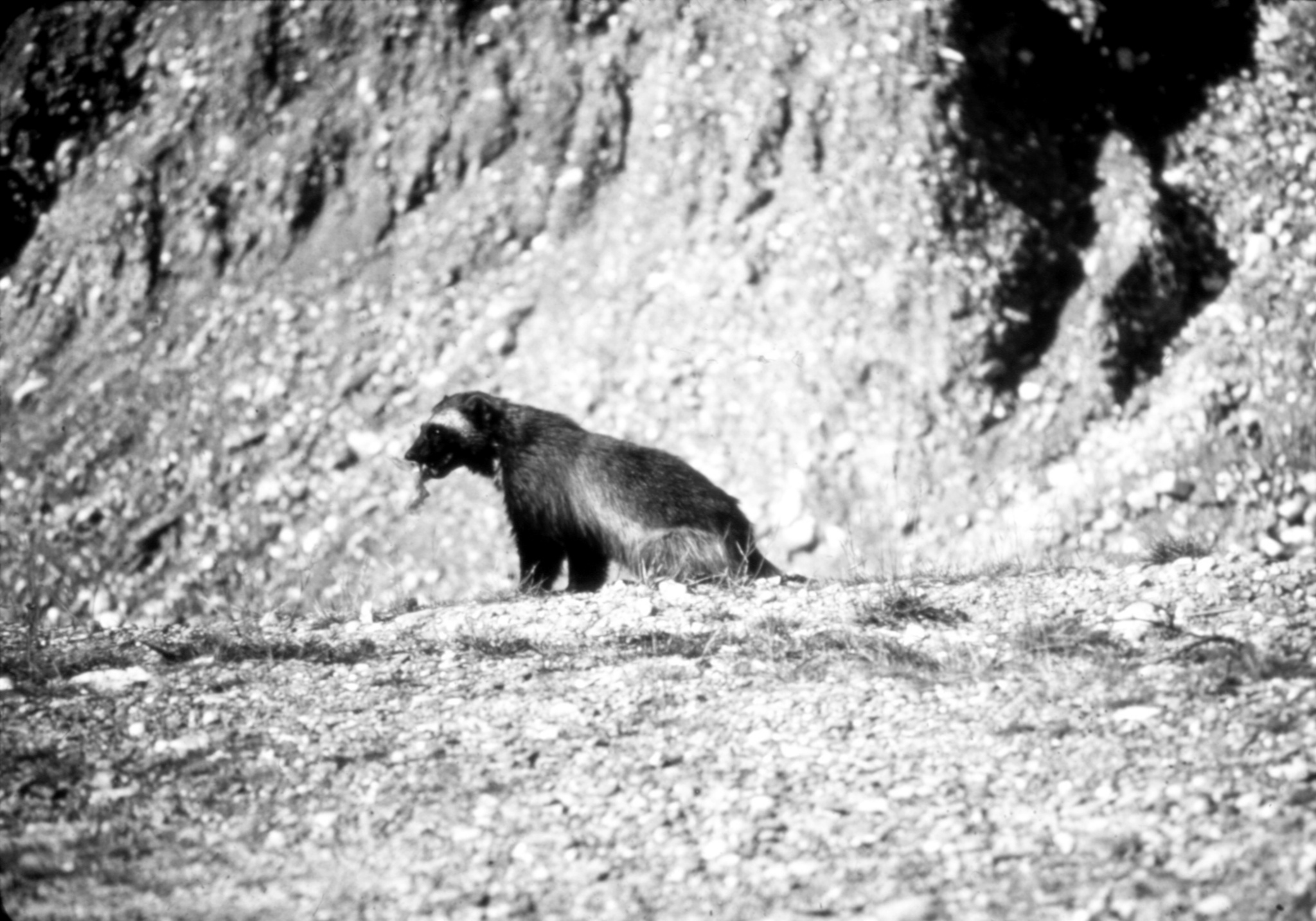
Constance Lake’s Larry Gillis and grandson Jeff Gillis recently caught a wolverine on their trapline near the old Pagwa community site.
“We put a lynx trap there because something was breaking our boxes, wrecking our traps,” Larry Gillis said. “We figured it was a lynx so we put up some lynx sets and that is where we caught it.”
Gillis said the wolverine was dead when they arrived back at the trapline.
“We figure it got caught during the night because it wasn’t even frozen,” Gillis said. “The traps we used are pretty wicked — 330 Conibears. The new ones are very strong. If you get them by the head, that’s it. I don’t even think they would last five minutes.”
Gillis was surprised when he realized they had caught a wolverine, as he had never seen one before except on television even though he has been trapping for about 40 years.
“At first I thought it was a fox,” Gillis said.
“I saw the ring on its back — it was almost white or reddish in colour. I talked to people that have been around (the area) and they haven’t heard of anything being caught like that up here.”
Gillis hasn’t had any trouble with his traps since he caught the wolverine.
“You know how we trap marten — we have boxes nailed onto trees (about three-and-a-half to four feet high),” Gillis said. “They were getting knocked off or ripped up. He was after the bait or whatever was caught in it.”
Gillis didn’t realize wolverines were an endangered species when he caught it, but after speaking about the wolverine with a marine biologist in Hearst, a Ministry of Natural Resources representative from Manitouwadge confiscated it.
“They said I couldn’t sell it or possess it,” Gillis said.
Gillis said the wolverine looked like a “pretty tough animal.”
“They say bears and wolves are leery of them,” Gillis said. “I’d say the one we caught was about 35-38 pounds, it was about 40 inches long from tail to the tip of its nose and around his chest was about 23 inches. I was talking to the biologist and she claimed a full grown male would be up to 60 pounds.”
Gillis has been teaching his eighteen-year-old grandson about trapping for the past four years.
“It’s time to learn when they are young,” Gillis said. “If everybody did that, it would be good for the young people. It’s the only way you learn.”
Gillis remembers going out on the land with his father when he was a “young kid” to learn about traditional activities.
“But back then you were allowed during your school year to go out a couple of weeks or something to go trapping,” Gillis said. “We were living in Pagwa. The rail line was still open back then. Now everything is shut down — there’s only a few houses left.”
Gillis would like to get the wolverine stuffed if the MNR returns it to him.


This past month, I was happy to attend two Pow Wows I hadn't been to in years. I attended the Mattagami First Nation Pow Wow and the Matachewan First Nation...
I was happy to see my home community of Attawapiskat on the James Bay coast announce the opening of the new St Francis Xavier Parish Church on August 25....