


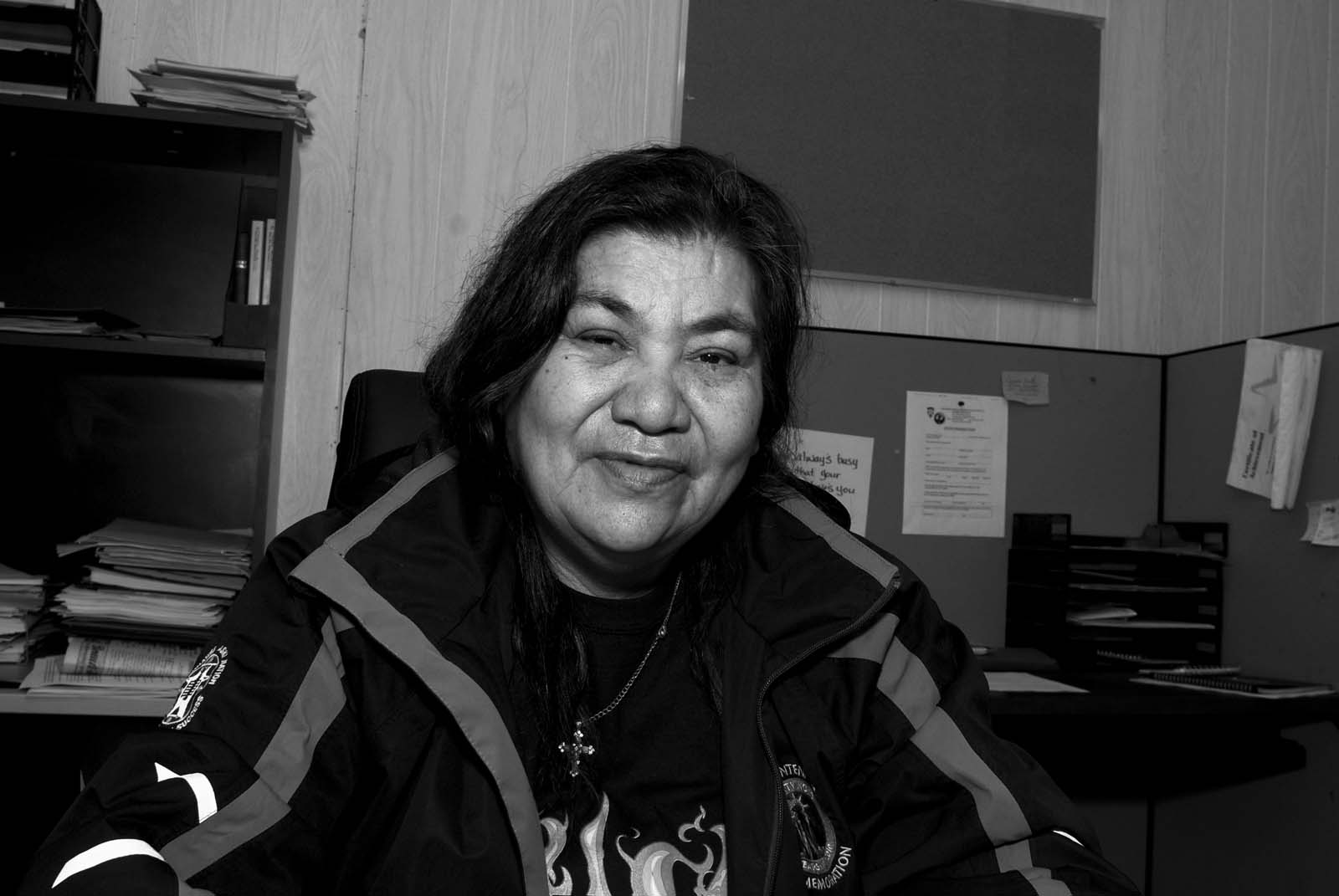
Cat Lake’s Ellen Wesley-Oombash remembers fighting over roasted muskrat with her brother when they were young.
“My brother and I used to fight over the muskrat,” Wesley-Oombash said, “because it was so good when you roasted it over a fire.”
Wesley-Oombash’s father would often roast different kinds of meat over an outdoor fire, including rabbits, fish, partridge and muskrat.
Wesley-Oombash also remembers eating rabbit brain back then.
“Our mom used to eat the ears,” Wesley-Oombash said. “She had a theory that children are not supposed to eat the ears because they will grow up being scared. But I think she just wanted to eat them herself.”
Wesley-Oombash also enjoyed eating loon when she was young, but noted it is not advisable to eat loons nowadays.
Wesley-Oombash’s mother would harvest a variety of berries for different meals throughout the growing season.
“She picked any kind of berry,” Wesley-Oombash said. “Different berries here and there, like raspberries, blueberries, strawberries, and there were berries out there (in the muskeg). I don’t know what they called them but they were good.”
Cat Lake Deputy Chief Dora Leadbeater said the berries in the muskeg were bright red and about the size of blueberries.
“You had to pick berries real early and save them for the winter,” Leadbeater said. “We dried them. I think we just put them on a sheet.”
But they didn’t dry the raspberries.
“We ate them,” Leadbeater said. “You couldn’t really preserve them.”
Leadbeater remembers picking berries with all of her family members.
“We picked lots,” Leadbeater said. “There was 10 of us and we always went as a family to go get blueberries or raspberries.”
Wesley-Oombash remembers one “very good” meal that her mother and the other women made out of berries, fish eggs and something from inside the fish intestines.
“I used to see them pulling something off the intestines,” Wesley-Oombash said. “They cooked the berries and the fish eggs and whatever they pulled from the intestines. They mixed the whole thing together in the frying pan.”
Wesley-Oombash said fish pemmican and moose pemmican were also made from berries and meat.
“Even though back in those days we didn’t have much, we never went hungry,” Wesley-Oombash said. “They had traditional foods like ducks, geese, beaver and the fish.”
Wesley-Oombash said people lived a nomadic way of life back then, moving from one location to another on a regular basis.
“We would camp in one area for a week and then move on to another place,” Wesley-Oombash said. “You just had to keep moving around to survive. That’s what I thought, anyway.”
While the families would gather together at Cat Lake during the summer, Leadbeater remembers her family would sometimes leave to go commercial fishing.
“I know we used to portage, but I have no idea where we went,” Leadbeater said. “Sometimes it would only take the whole day; sometimes we would spend overnight where we were going.”
Leadbeater said the community of about 10-15 families always shared with each other.
“We never used to run out of food,” Leadbeater said. “We always shared food. If anyone got a moose, us kids got to run around delivering moose meat.”
Wesley-Oombash said life was different when she was young as nothing was ever wasted.
“I remember we had feather blankets from the geese and all the ducks they hunted,” Wesley-Oombash said. “And those blankets were warm.”
Wesley-Oombash’s mother also made mitts and blankets out of rabbit skins.
“Nothing was ever wasted, not like nowadays,” Wesley-Oombash said. “People just throw their bones in the garbage dump.”
Wesley-Oombash said bones were considered to be sacred and would have to be put back into the environment they came from.
“When we had fish and the bones we had left after eating, we would have to put those back in the water because that is where the fish came from,” Wesley-Oombash said. “Even the moose, you would take them far into the woods where it was clean and you would place them.”
Wesley-Oombash said everything changed after residential school.
“After residential school, when I finally did come back, I had to relearn all of these things,” Wesley-Oombash said. “The teachings are not being passed down any more — that’s why everything is being lost.”
Wesley-Oombash said First Nations people have to go back to their way of life.
“Our way of life was meant for us,” Wesley-Oombash said. “I think that is why we have so many problems. We’re gone astray from the way we were meant to be. People exercised and worked hard back then.”


This past month, I was happy to attend two Pow Wows I hadn't been to in years. I attended the Mattagami First Nation Pow Wow and the Matachewan First Nation...
I was happy to see my home community of Attawapiskat on the James Bay coast announce the opening of the new St Francis Xavier Parish Church on August 25....