


Wild asparagus is one of the traditional foods still being used in Wabigoon Lake First Nation.
“You have to catch it early though because if it gets too big, it’s very woody and it’s not as tender,” said Terry Favelle, a former councillor in Wabigoon Lake First Nation.
“When I go for wild asparagus, usually you’re lucky to get one meal, but it’s a real treat. It has a flavour like nothing else.”
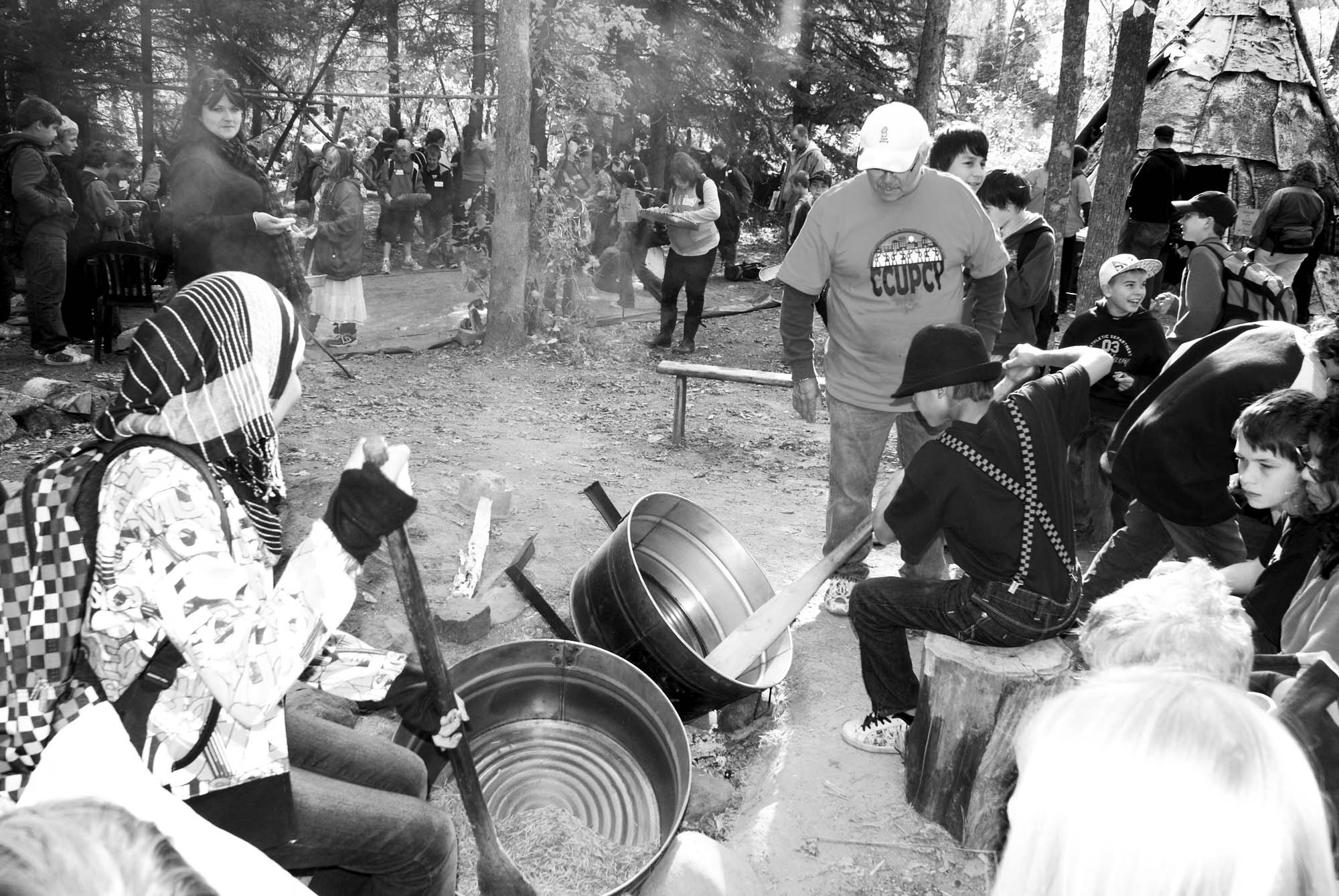
Wabigoon Lake is also well known for its harvest of wild rice and a wild rice production plant. Although the community’s wild rice fields were flooded due to rising waters from a dam in Dryden, community members transplanted wild rice from other lakes on to their former hay fields, which were under shallow water.
“We do have plenty of wild rice here, thanks to our ancestors,” Terry Favelle said. “They ensured we would have that and we do.”
Wabigoon Lake Councillor Tom Favelle said there are not many people left in the community who know the traditional ways of harvesting wild rice with sticks in a canoe or roasting it by hand.
“They call it dancing on it now in a hole in the ground,” said Favelle, whose grandparents taught him about the traditional ways after his mother passed away when he was about seven years old. “I was raised primarily by my grandparents so I had an opportunity to learn the customs, traditions, language and ceremonies. I consider myself fairly knowledgeable about those things.”
Favelle said there are different types of wild rice, including a particular type his grandmother used to prepare just when it was starting to mature.
“It was almost ready to be harvested but not quite,” Favelle said, noting his grandmother would roast it just long enough to get the husks off. “She didn’t want to over roast it.”
Favelle said that type of wild rice didn’t have to be cooked, so his grandmother would usually pour broth from cooking fish or meat over it.
“She would pour it over that green rice and it would puff up like that, like popcorn,” Favelle said. “It was a delicacy, a special type of rice.”
Favelle said it’s important to keep the knowledge of traditional foods alive because they may be needed in the future.
“Some of our Elders say we may need those foods again to survive,” Favelle said.
Favelle remembers learning about mixing dried berries with dried meat from moose, deer and beaver to make pemmican. He also recalls the use of a part of the whitefish intestine for mixing with other kinds of food.
“When whitefish were spawning, in particular, there was a part of their intestine ... shaped like a pipe that you smoke,” Favelle said. “They cleaned that all out and that was a delicacy all in itself. And they combined that with other types of food as well.”
His grandparents didn’t waste much of the fish back then, including the intestines.
“They knew which areas to cut out,” he said. “It doesn’t take much cooking. They boiled them maybe five minutes and they would be ready to eat.”
Favelle said the livers and eggs from Ling were popular back then.
“You could feed a family from one fish, that’s how big the livers were,” he said. “My grandmother would mix flour with the eggs and put it in the oven. It came out almost like a cake. That was another delicacy.”
Boiled sucker heads are also a delicacy.
“Today, they still do that in this area,” Favelle said.
Although his family was not wealthy back then, Favelle doesn’t remember being hungry.
“People didn’t sit around a lot in those days,” he said, noting his grandparents had a trapline along the Sioux Lookout highway.
“From the time we woke up in the morning until it was too dark to do anything else, we were doing something. We were helping, working, learning; it was a continuous thing every day.”
Elders in the community used to preserve food by drying and smoking so it would last for years. They also knew how to combine certain foods to create different flavours.
“They were very creative in how to survive,” Favelle said.
Favelle still remembers one time when his grandfather went straight for the nose of a moose his uncles had shot.
“That is a delicacy,” Favelle said. “I think he boiled it first and took all the hair off with a fire and then put it into an oven.”
Favelle said the moose nose was delicious.
“It tasted like moose meat, generally the flavour was there, but it was easy to eat,” he said. “You could cut it with a fork. It was very tender.”
Favelle doesn’t remember how long his grandfather kept eating that same moose nose, but he saved it for many days.
“He wasn’t quite willing to share it with everybody. He really treasured that.”


This past month, I was happy to attend two Pow Wows I hadn't been to in years. I attended the Mattagami First Nation Pow Wow and the Matachewan First Nation...
I was happy to see my home community of Attawapiskat on the James Bay coast announce the opening of the new St Francis Xavier Parish Church on August 25....