


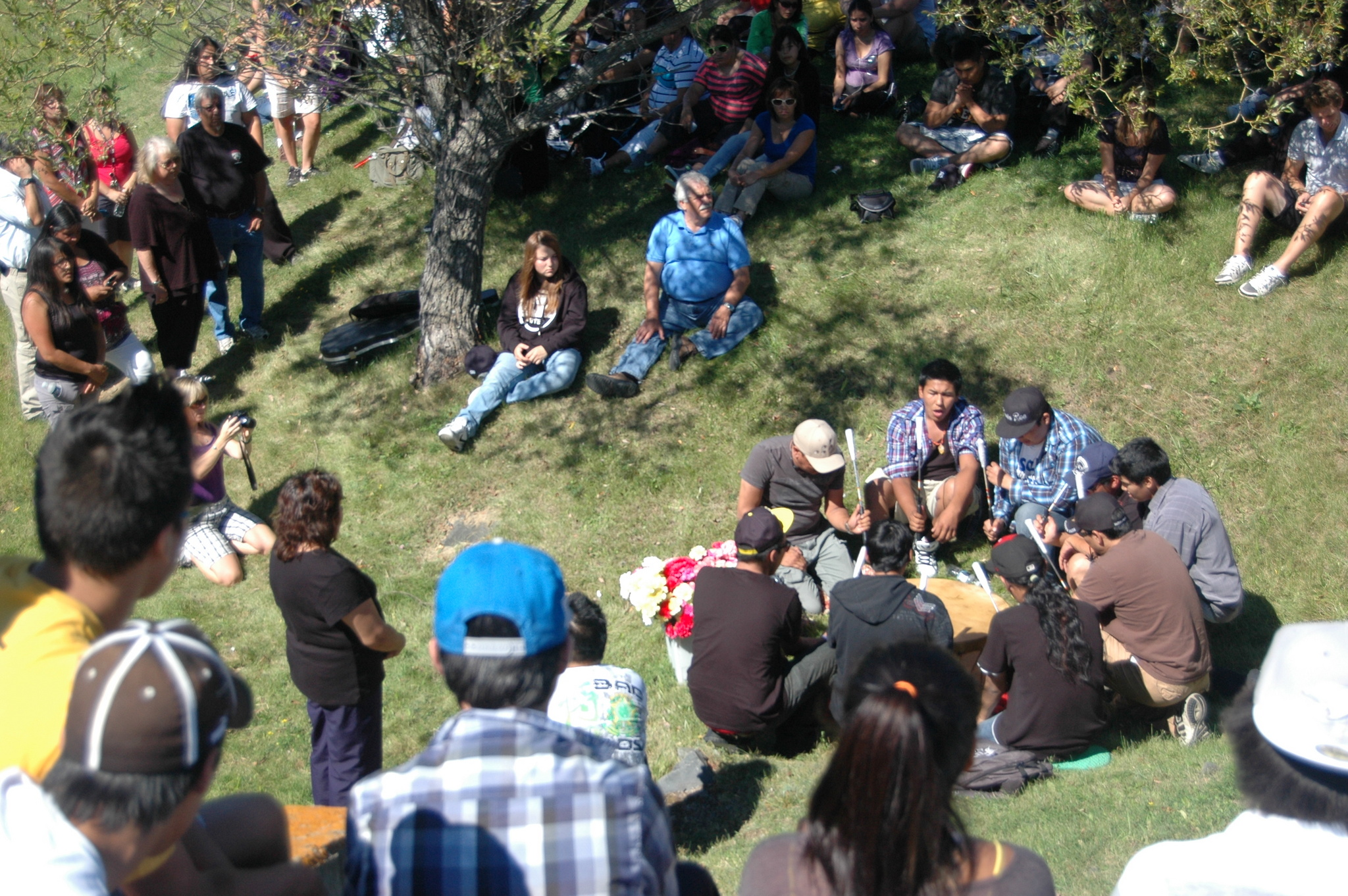
Standing along the McIntyre River, staff and students of the Dennis Franklin Cromarty High School (DFC) prayed and offered tobacco in honour of the northern youth who died in Thunder Bay.
To conclude its first week of classes, DFC held its 3rd annual Memorial Walk on Aug. 31.
After a gathering at the DFC gymnasium, the students and staff walked from the First Nations high school to the McIntyre River where the bodies of several of the youth were found.
After a prayer, drum song and rendition of “Amazing Grace,” the students lined up to offer tobacco and toss flowers into the river in memory of the deceased.
DFC Principal Jonathan Kakegamic said the walk not only serves to honour the fallen, but to remind the new and returning students to stay safe.
“It’s to remind students of these tragic events and that we need to look after each other,” he said. “We can’t forget about those people who passed away because they were a part of our lives and we need to learn from that.”
It was a message reiterated at the gathering, along with updates on efforts to make their school experience better and safer.
Northern Nishnawbe Education Council (NNEC) executive director Norma Kejick told the students that she has taken their recommendations to the City of Thunder Bay, but reminded them that there are consequences for everything they do, good or bad.
“Learn, ask questions, be safe, but most of all while you are here for school in the city of Thunder Bay, have fun,” she said.
Ontario Regional Chief Stan Beardy told the students his story of moving to the city for the first time as a 16-year-old and the culture shock that followed, like seeing cars, streets and white people for the first time.
And although he will try to ensure that the government follows through on recommendations and promises, the students have to do their part, Beardy said.
“As First Nations people, we have to take responsibility for ourselves,” he said. Although he admitted that he was not an ‘angel’ in his youth, “I had a purpose, and I was determined to reach my goals.”
The gathering at the DFC gymnasium closed with the teaching staff reading off the names of the deceased followed by a moment of silence.
There are close to 50 new students attending DFC this year, which is large compared to previous years. Kakegamic said it is a good sign of the parents and students’ faith in the school.
“The only way you can change things and the perception is through the students,” he said. “When they go home, they tell their families and friends (about their experience).”
The school has sought ways to improve the students’ school experience.
They began to seek the input of the students to enhance their programs, Kakegamic said. In the previous school year, students wanted to do more woodworking, so last year the school offered a course where they can build their own guitars. In the following semester, the students were able to use what they built in a music class.
A major change to this school year is the enhancement of the Elders program, particularly as it relates to language. The Elders will be focusing on teaching the students and staff the language throughout the school year.
“I believe the language of any culture is the essence of what keeps them alive,” Kakegamic said.
Kakegamic and some of the teaching staff cannot speak the language and there have been times where Kakegamic felt disconnected from culture as his family spoke it.
“If I feel that way, then I’m sure others feel that way too,” he said. “That’s an identity, and when you have an identity crisis, you do other things to make you feel better.”
The result is that it compounds problems and can lead to suicides and tragic death, he said.
“It’s very difficult for the average teenager in our territory to cope,” he said.
DFC will also reorganize its sports programs and continue to provide extracurricular activities such as music, judo, and square dancing throughout the year.
“I’m looking forward to the new school year,” Kakegamic said, “and I think it’s great having a (NNEC) boss and board to support the students by giving them opportunities to live and learn and do some leadership, because we need to teach them.”


This past month, I was happy to attend two Pow Wows I hadn't been to in years. I attended the Mattagami First Nation Pow Wow and the Matachewan First Nation...
I was happy to see my home community of Attawapiskat on the James Bay coast announce the opening of the new St Francis Xavier Parish Church on August 25....