


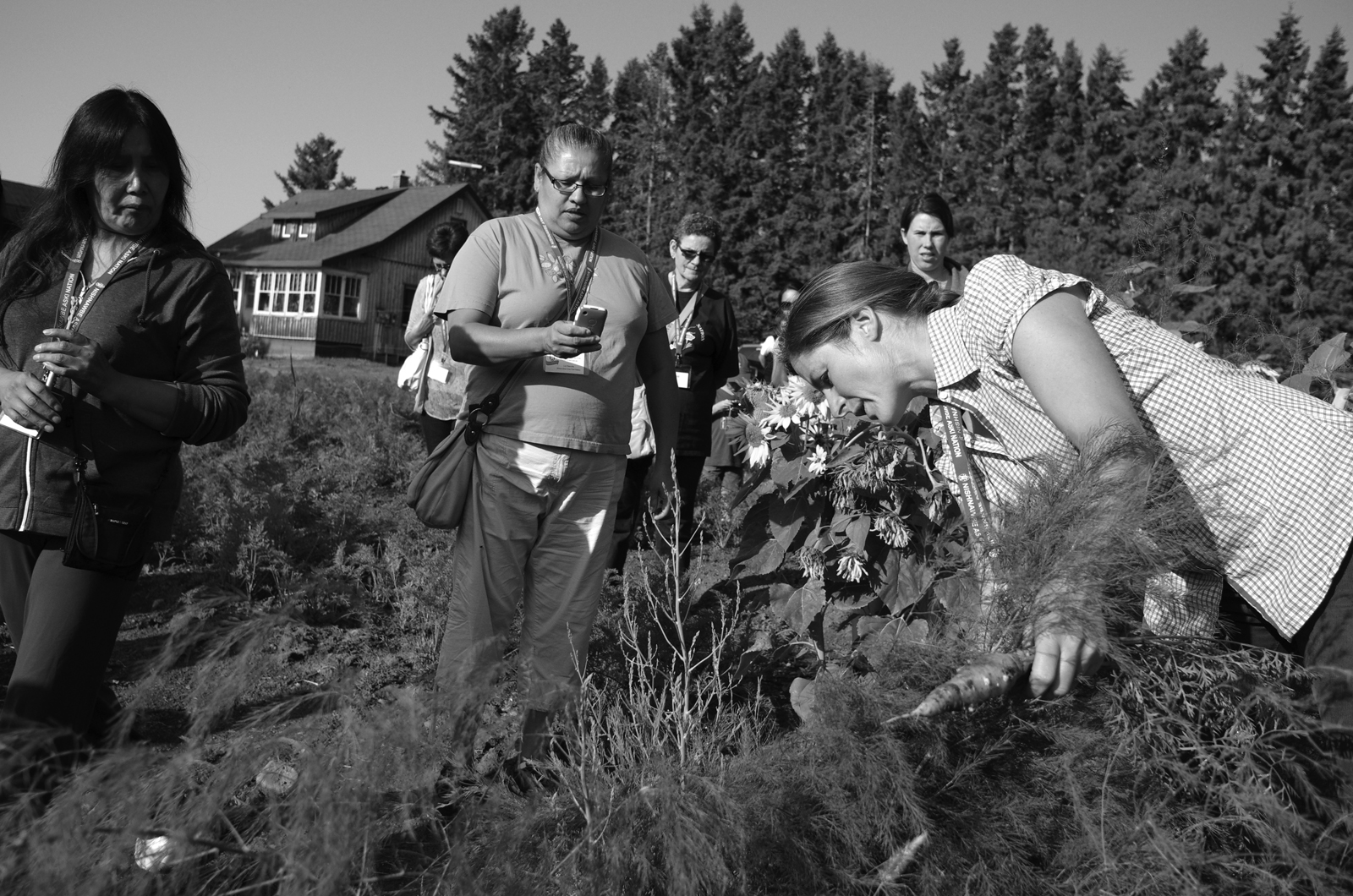
Wawakapewin’s Simon Frogg picked up more knowledge about growing food during two tours to Thunder Bay-area farms.
“Even though we are growing (vegetables), they have more information about different methods and different ways of doing things,” Frogg said about the Thunder Bay-area farmers. “That will help us in terms of our on-going gardening that we are doing in our community.”
Frogg took the tours as part of Nishnawbe Aski Nation’s 3rd Annual Food Symposium in Thunder Bay.
Frogg said his community currently has a test garden at the community site to test what will grow in their area.
“So far most of everything that we have tested has grown to some extent,” Frogg said. “But this year we planted at our traditional garden site away from the community on an island. Apparently there is some kind of spring there near the garden site and the soil is about 50 per cent organic.”
Frogg said most of the vegetables, including onions and potatoes, planted at the traditional garden site are growing well, although the carrots are not doing as well.
“We planted a gamut of everything — different herbs, strawberries, lettuce of course and beans,” Frogg said. “This is a big area. It used to be the old community site.”
Frogg said his community of about 20 on-reserve citizens stockpiles different foods throughout the year.
“We keep some for the community kitchen part,” Frogg said. “And then we distribute that to the members that aren’t there, to those that are living in Sioux Lookout and (other areas).”
“It’s marvelous and we’re having a good time. I’ve been taking notes and it’s a lot of good information for us on our garden.”
Lori Rainville
A co-owner of Mile Hill Farms provided food symposium participants with detailed information about growing and butchering chickens, including the need for heavy fencing to keep out predators and a look at a de-feathering machine, storage of different vegetables, how to combat a variety of common garden pests and the use of cover crops to build soil nutrients.
“At this time of year, everything is pretty much starting to come to maturity on our farm and some of it has already been harvested and put away,” said Renata Thiboutot, co-owner of Mile Hill Farms, noting her family had just butchered and frozen another crop of chickens with the help of neighbouring families on the previous Sunday. “I’ve got 50 chickens for myself and my family.”
Thiboutot said the chickens are fed a grain mixture in addition to what they eat from around the farmyard.
“All animals need minerals,” Thiboutot said. “You need to make sure they have minerals or they won’t grow properly.”
Thiboutot has already harvested many of her medium-sized onions for storage over the winter.
“The purple ones usually only last until February,” she said. “The white ones ... will last until next year if they’re stored and cured properly.”
Two Missanabie Cree members were among those who found Thiboutot’s information to be very valuable for their own gardening efforts.
“It’s marvelous and we’re having a good time,” said Missanabie Cree’s Lori Rainville. “I’ve been taking notes and it’s a lot of good information for us on our garden.”
Missanabie currently has a 34 by 18 foot main garden with some smaller raised garden boxes.
“Our citizenship in the Sault (Ste. Marie) is kind of small, so we are able to bring produce into the office and people can come and pick it up,” said Missanabie Cree’s Louise Campbell.


This past month, I was happy to attend two Pow Wows I hadn't been to in years. I attended the Mattagami First Nation Pow Wow and the Matachewan First Nation...
I was happy to see my home community of Attawapiskat on the James Bay coast announce the opening of the new St Francis Xavier Parish Church on August 25....