


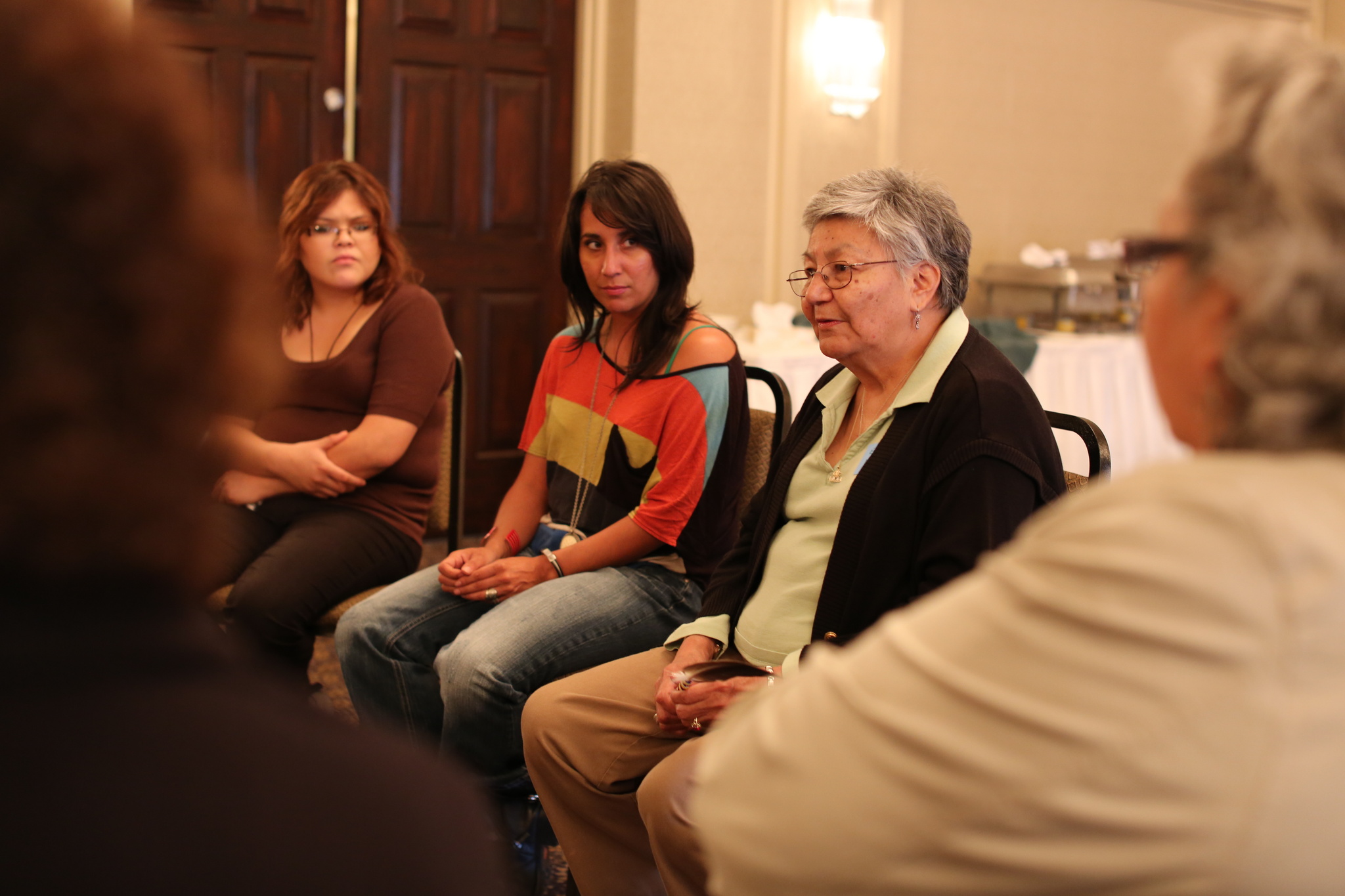
NAN youth and Elders gathered in Thunder Bay from Sept. 4-9 to talk about the intergenerational effects of residential school.
Walking Together, Sharing Our Journey is a five-day gathering that allows the youth to talk to Elders about the impacts of residential school, said facilitator Frank Beardy.
According to the Ontario Educational Communications Authority in 2006, there are 80,000 people alive today who attended the 130 residential schools and who are still suffering the effects.
The Truth and Reconciliation Commission of Canada reports that more than 100,000 people have applied for residential school compensation.
Beardy said it is not only the students who attended that were affected but their children and grandchildren as well.
“Our people have been institutionalized for so long in residential schools,” he said. “We lost the ability to be a parent, to show our love for our children.
“It’s very difficult to say I love you when you’re institutionalized. We look at those things that help us be a family again.”
The gathering included sharing circles, where anyone was free to talk about how residential school impacted them personally. There were workshops on healing, the history of residential schools and Native people, and presentations made by youth to the chiefs as well as a video.
TRC Commissioner Wilton Littlechild was the keynote speaker on Sept. 6 and was on hand for statement taking for the commission. CBC broadcast journalist Shelagh Rogers was also a keynote speaker during the gathering.
Beardy said bringing youth and Elders together is crucial to the healing process.
“It’s important because youth need to understand what happened to their Elders at these schools,” he said. “They need to understand the teachings of our people and be able to start practicing these teachings under the guidance of our Elders.”
He added that the healing will take time and will take generations for Nativesº to recover.
“It’s going to be slow process but we are beginning to see our people taking back what was taken from them in the residential school years and being able to raise good healthy families,” he said. “And there are people coming forward saying they want to be able to express their love for their children.”


This past month, I was happy to attend two Pow Wows I hadn't been to in years. I attended the Mattagami First Nation Pow Wow and the Matachewan First Nation...
I was happy to see my home community of Attawapiskat on the James Bay coast announce the opening of the new St Francis Xavier Parish Church on August 25....