


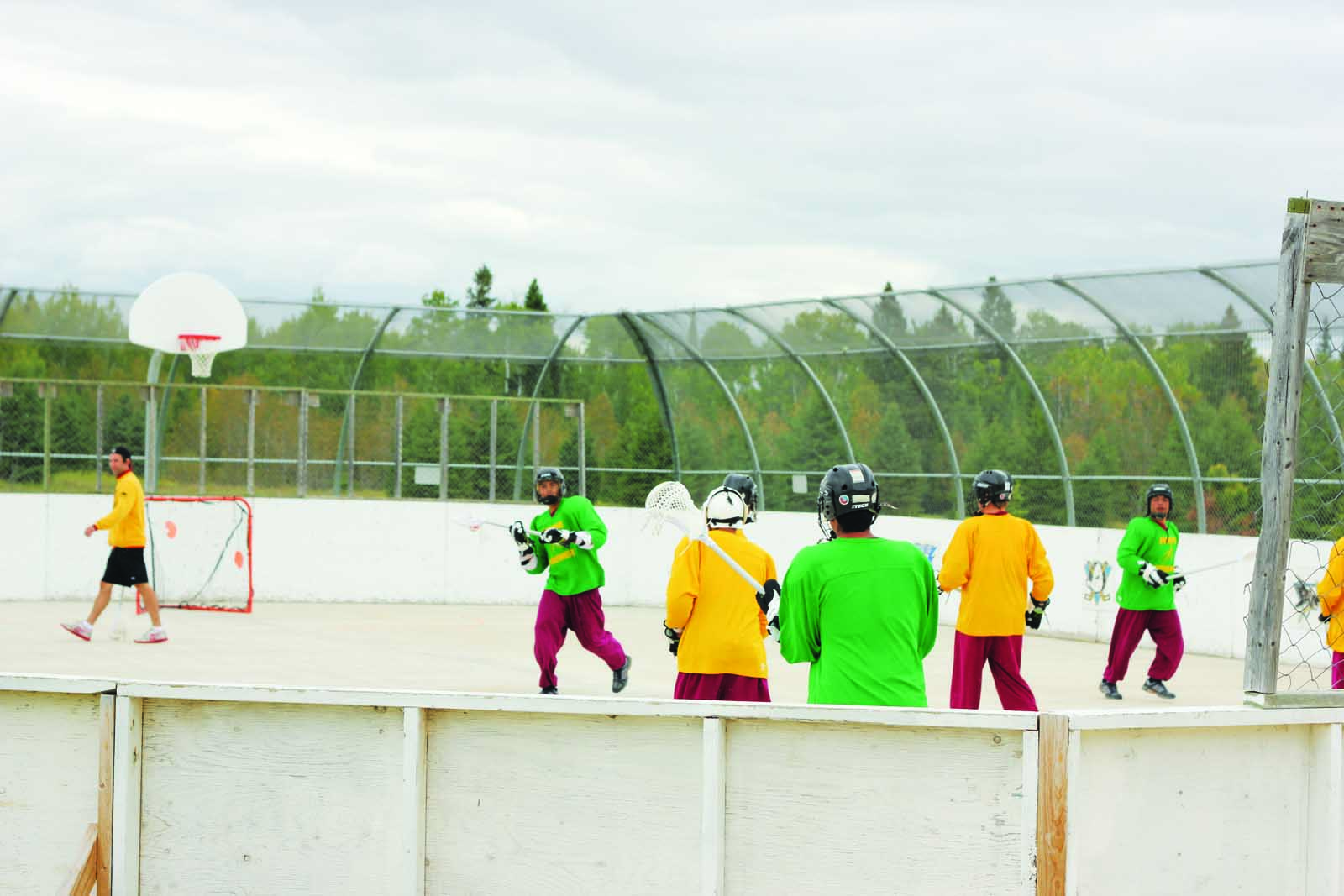
Aboriginal youth detained in Thunder Bay had the chance to develop leadership and life skills through a weeklong lacrosse development camp.
Professional lacrosse players from the National Lacrosse League brought their skills and lessons to the Justice Ronald Lester Youth Centre, where they spent the week of Sept. 10-14 training with the youth.
The idea is to develop leadership skills in the youth so that when they are released, they can bring the sport of lacrosse to their community.
“It’s through sport and play that could help the youth realize that they have the potential to be anything,” said Lauren Simeson, a support and development officer with Right to Play.
Simeson said the program also aims to build relationships between the remote community intervention workers and the youth.
“So that when they are released, they have the skills through lacrosse and leadership sessions and bring the sport of lacrosse to their community and connect with people through the sport, and they have a person to go to,” she said.
The Lacrosse for Development camp was developed in partnership with Right to Play, the Ministry of Children and Youth Services (MCYS), the National Lacrosse League and the Thunder Bay Lacrosse League.
Right to Play recently ran similar programs in 45 First Nations communities in the province, with about 20 of those being in northern Ontario. This was the first time the program was held in a youth correctional facility.
MCYS regional manager Randy Sandvik said they approached Right to Play because it supports one of the goals of the ministry.
“The goal of the ministry to reduce reoffending of young people by providing tools and leadership skills involving them with positive adults,” he said.
Sandvik said research has shown that by providing youth with positive role models and a sports outlet, they become less inclined to commit crimes.
One of the youth involved in the program said he played lacrosse once before and found himself hooked this time around thanks to the challenge of the sport. And he had fun playing with his peers and developing the technical and leadership skills of lacrosse.
“I get to know them a bit better through playing,” the youth, who could not be named in accordance with the Youth Criminal Justice Act, said. “We had fun just talking and laughing,”
He said initially some of the youth did not want to take part but once they were told how much fun it was by other youth, they joined.
“Now we see them having fun and getting good,” he said.
The youth said he has never seen himself in a leadership role, though he has pushed the other residents in the past to take part in basketball or football despite their skill level.
“I would tell them, it’s okay, just play,” he said.
The youth said he did not see the big deal about the Lacrosse for Development camp at first.
“But I found it surprising that people are coming in to work with us and being in facilities,” he said.
The program has helped him develop skills to find resources in his community, and he hopes to organize a sports program once he returns.
“If I get the help from Right to Play,” he said. “I would love to play down there (at home).”
Simeson said Right to Play has an office in Thunder Bay and local workers in each community called community mentors, who are hired locally to help with the program. The community mentors will be on hand to help the youth with their initiatives once they return to their communities.
Simeson said the sport of lacrosse was chosen because of its indigenous origins.
Allan Downey, a PhD student and professor at Wilfred Laurier University, was on hand for the program with Right to Play. He is writing his dissertation on lacrosse in First Nations communities.
“They call it the Creator’s game because from the very beginning of time, but it’s been played in this country for thousands of years by indigenous people,” said Downey, a member of Nak’azdli First Nation in British Columbia.
Lacrosse has been played across Canada and all the way down to Mexico prior to European contact. Non-Natives began to take up the sport in 1884 in Montreal.
“It’s just great to see that we’re re-empowering our youth through indigenous elements,” he said. “That’s what this game provides. It’s something we can celebrate together.”
The Lacrosse for Development camp is a one-time program in youth correctional facilities but Right to Play and MCYS hope to extend the partnership in the future.


This past month, I was happy to attend two Pow Wows I hadn't been to in years. I attended the Mattagami First Nation Pow Wow and the Matachewan First Nation...
I was happy to see my home community of Attawapiskat on the James Bay coast announce the opening of the new St Francis Xavier Parish Church on August 25....