


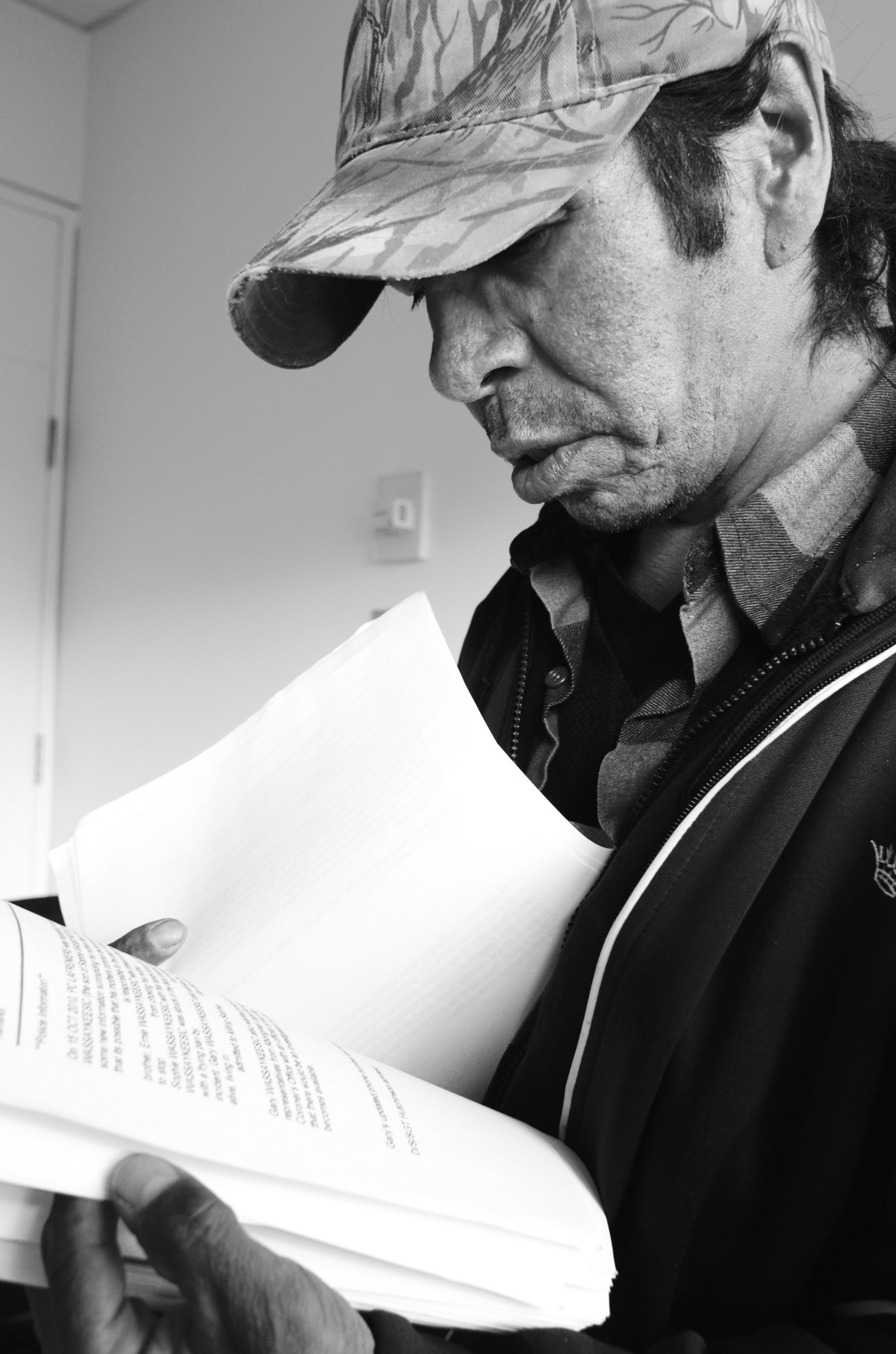
Mishkeegogamang’s Gary Wassaykeesic has finally obtained the police report on the 1976 death of his mother Sophie Wassaykeesic.
“For the past five years I’ve been lobbying to get this police report,” said Wassaykeesic, who obtained the police report through a freedom of information request made by a lawyer with Aboriginal Legal Services of Toronto. “It’s been a real grind, it’s been a real trek, a real personal experience. I’ve met a lot of people and I’ve received a lot of help from quite a few people. And that’s one of the reasons I’ve got this police report now.”
For years Wassaykeesic had been told all the information on his mother’s death was burned when the Ontario Provincial Police’s Central Patricia detachment burned down years ago.
“I’ve been told over and over that it didn’t exist, that the police station had burnt down and there was nothing on record,” Wassaykeesic said. “But what they don’t know is I’ve been through the system. I’ve always known since I started this that this society is built upon a paper trail. Even back in the 1970s they had to report to their commanding officers.”
Wassaykeesic began looking into his mother’s death after he received his residential school compensation payment, which provided him with the financial means to begin his five-year odyssey in search of more information.
“Now that I’ve got the police report, now I know exactly what happened that night,” Wassaykeesic said. “We filed an appeal automatically because we do not agree with this police report at all.”
Wassaykeesic said the police report provides his family with some of the details from his mother’s death, but it does not mention any blood being found where she died.
“One of the claims that my younger brother Ernie (has) is that he saw a lot of blood that night,” Wassaykeesic said.
Wassaykeesic said the police report indicated there was no autopsy on his mother, noting her body was released to the band for burial.
“They just put it on the band truck and took it up to the reserve and then she was buried two days right after,” Wassaykeesic said. “Two days after. There are people wondering on reserve why she was buried so fast.”
While Wassaykeesic had always been told that his mother’s death was caused by suffocation due to alcohol, he believes there was more to her death than what was recorded, suggesting she may have been murdered.
He also said that people told him they heard “a lot of banging” at the time she died.
Wassaykeesic said five women were ordered to wash bloody blankets from his mother’s home after her death.
“So how come it doesn’t say that in the report?” Wassaykeesic said. “My brother jumped on the band truck and he looked under the blanket and he saw blood on my mother, up to the point where post traumatic stress disorder set in that very evening. He’s been living with that all these years.”
Wassaykeesic said it was only within the past few years that he has been able to get his younger brother to open up about what he saw back then.
“For over 30 years he’s been living with this,” Wassaykeesic said. “Now that I’ve finally looked into it, and finally got it open and people are starting to realize, my brother feels better. And my family feels better now, not totally, but now they’re starting to open up.”
Wassaykeesic recommends other families look more closely into the cases of their missing or murdered family members.
“You can’t keep stuff like this hidden all the time,” Wassaykeesic said. “You can’t push it down and expect to live that good (life) because you are always going to have it inside you.”
National Chief Shawn A-in-chut Atleo recently called for a National Public Commission of Inquiry on the unresolved cases of murdered and missing indigenous women in Canada.
“Action is required now – to achieve justice and to ensure our peoples are safe,” Atleo said on Oct. 4. “I encourage all communities and indigenous citizens to tell their stories and seek support, and today I challenge all Canadians to make the pledge, sign a postcard, tell your story.”
First Nation leaders declared Oct. 4 as a National Day of Remembrance for murdered and missing indigenous women in Canada.
“Ending violence against and among indigenous peoples is a priority every day,” Atleo said. “Today we stand in honour of the too many women who have lost their lives to violence and those whom remain missing.”


This past month, I was happy to attend two Pow Wows I hadn't been to in years. I attended the Mattagami First Nation Pow Wow and the Matachewan First Nation...
I was happy to see my home community of Attawapiskat on the James Bay coast announce the opening of the new St Francis Xavier Parish Church on August 25....