


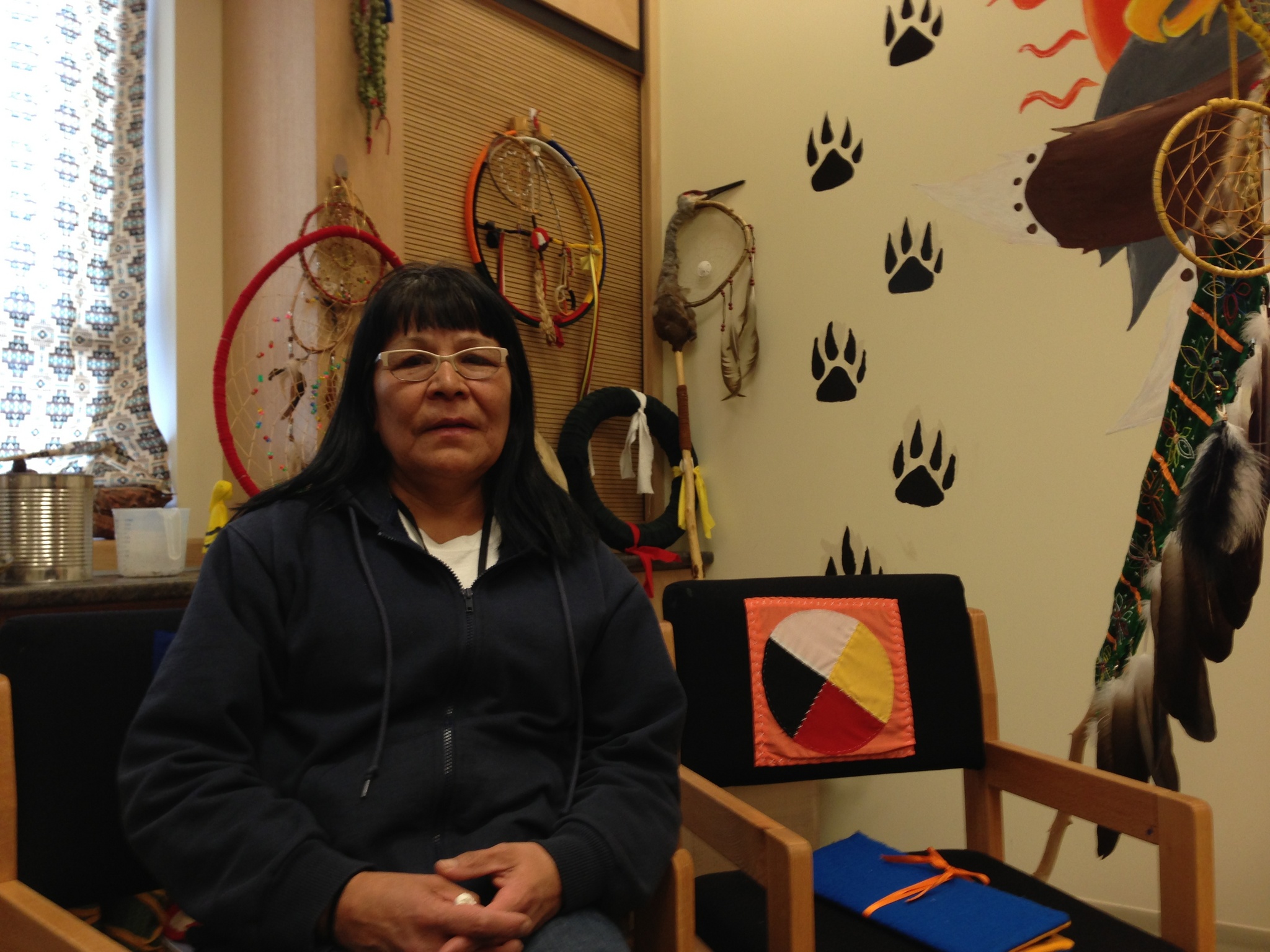
It can be challenging for Aboriginal youth in custody to maintain the connection to their community and their roots, says Esther Diabo of Whitesand First Nation.
“I think they’re lonely when they come in, especially being isolated from their communities, coming into a strange place like this where there’s a lot of structure, there’s officers watching their every move,” said Diabo, who is the Aboriginal integration worker at the Justice Ronald Lester Youth Centre in Thunder Bay.
The centre is a 16-bed facility where Diabo said about 13 youth are Aboriginal.
And while Diabo is tasked with preparing the youth to reintegrate back into the city or their community, she provides a spiritual role as an Elder.
Sitting in what she calls the cultural room, Diabo said most of the youth enter to take part in a daily smudge and share their feelings and emotions.
“When they come in through that door, they can be who they really are,” she said. “I see, hear, feel it, it’s like (sigh), they can come in and relax and talk about whatever they want to talk about.”
The cultural room is part of a spiritual and cultural program and the youth participation is voluntary. At times, Diabo will have one youth drop in but for the most part, 10-12 youth regularly visit Diabo.
The program also offers sweat ceremonies, cultural crafts and visits from Elders.
“I’m organizing Christian Oji-Cree singers to come in as well,” Diabo said.
Along with participating in the ceremonies, some youth might be part of helping out. Diabo assigns one youth to be the medicine bundle carrier, who loads the smudge bowl with sage and other traditional medicines.
Diabo asks the youth to pray in English, then she prays in Ojibway.
The cultural room also allows the youth to interact with one another.
“They don’t see each other very often and I see that,” Diabo said. “So I give them opportunity to sit and chat.”
Spirituality has not always been a part of Diabo’s life.
A residential school survivor, Diabo was in a bad relationship and turned to alcohol to “make those feelings go away.”
“But something happened one day, that I realized that there is more to life than this,” she said. “There’s more to life than drinking, getting hammered, not remembering what you did the night before. And feeling those feelings of unknown, embarrassment and shame.”
Realizing that her lifestyle was not healthy, Diabo turned her life around.
“It’s been uphill for me since that time, almost 30 years ago,” she said.
Diabo became a teacher and was working with the Lakehead Public School board prior to assuming her current role at the youth centre more than two years ago.
Diabo tells the youth her story of alcohol abuse.
“For me to come here, I know where they come from, and where their parents come from,” she said.
In her experience, Diabo understands the value of having Aboriginal workers in the justice system.
“We need to see more Anishnabe officers, more cultural sensitivity training,” she said. “They have to understand where we come from.”
For Diabo, the most rewarding experience was when she was praying in Ojibway and a youth began to cry.
“I could hear him sniffling and when it was over, everyone was quiet,” Diabo recalled, beginning to tear up at the memory. “And I said what’s the matter. He looked at me and said you remind me of my kokum.”
Reflecting on her journey, Diabo finds her role to be fulfilling.
“I found my way out of this thing (alcohol abuse) I’m lost in, and I feel positive,” she said.


This past month, I was happy to attend two Pow Wows I hadn't been to in years. I attended the Mattagami First Nation Pow Wow and the Matachewan First Nation...
I was happy to see my home community of Attawapiskat on the James Bay coast announce the opening of the new St Francis Xavier Parish Church on August 25....