


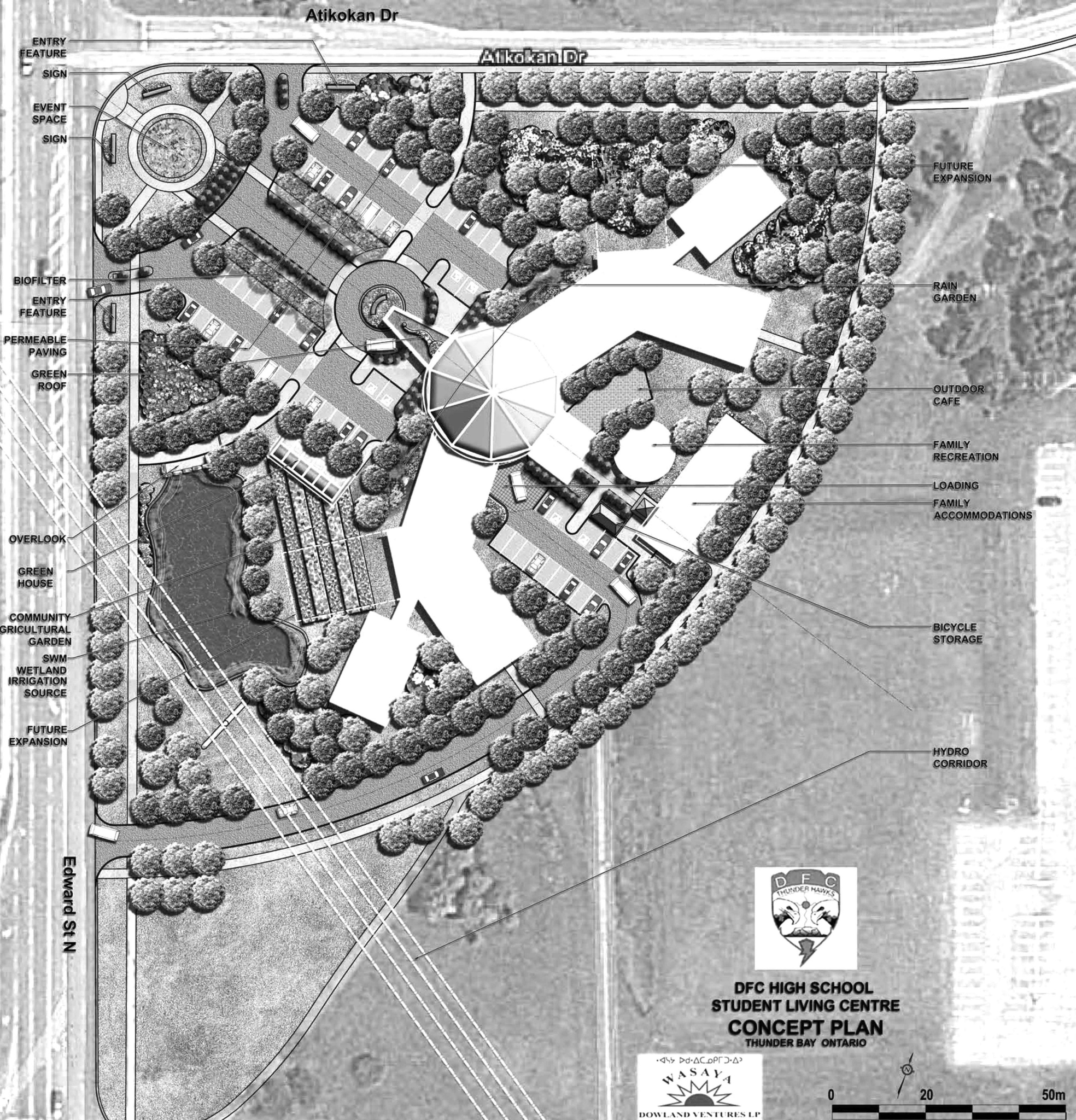
The Dennis Franklin Cromarty Student Living Centre is scheduled to open for the beginning of the 2015-16 school year with accommodations for 150 students and up to 50 family members.
“It’s important for students to have a safe place, a comfortable place to reside in when they are away from home,” said Norma Kejick, executive director of Northern Nishnawbe Education Council. “NNEC’s motto is we provide a home away from home, and I don’t think that is really happening right now. With this residence we are building, it takes a whole village to raise a child and everybody working together will only be positive for our students.”
While about 100 DFC students are currently billeted in homes across Thunder Bay, the DFC Student Living Centre will provide students with accommodations on the grounds of Confederation College within a short walking distance of DFC.
“Students doing the dual-credit program we have running here at DFC, they are getting a taste of the college life already,” Kejick said. “Being around the college, we’re hoping that they continue on with post-secondary (education). It’s great that everybody has come together to support our students.”
Wasaya Group Inc. announced plans for the $15 million, two-storey, 55,000 square-foot DFC Student Living Centre on March 27 at DFC along with representatives from NNEC, Confederation College and the City of Thunder Bay. Confederation College is leasing land for the DFC Student Living Centre for $1 annually for about 20 years.
“We know that First Nations and Aboriginal students would benefit from accommodation that is safe, secure and is possessed of surroundings that are comfortable to students coming from many locations, particularly the north,” said Dennis Wallace, chair of the Confederation College Board. “With the proximity of college lands to the current high school through trail and transportation systems, the location is ideal.”
NNEC chair Chris Kakegamic is looking for students to achieve higher education levels once the new accommodations are built.
“With all the support of this venture they are getting, I think there is going to be less dropouts,” Kakegamic said. “I think there will be more excitement, more parents supporting their children. It’s exciting; it’s a brand new day for a new beginning.”
Kakegamic said the DFC Student Living Centre is an amazing step in the right direction for First Nations youth.
“By giving our children a safe environment to better their education and become contributing members of society, just like the reason all Canadians go to school, this will help their generation and the future generations of these remote communities on and off the reserve,”
Kakegamic said. “By including other support services, like counselling, the student living centre will be a happy place for those away from their family and give support for students who need it and otherwise way be unable to get it if they were living in their remote communities.”
Wasaya Group Inc. president and CEO Tom Kamenawatamin said the idea for the DFC Student Living Centre was developed after concerns were raised by some Nishnawbe Aski Nation communities about the loss of seven students who had been pursuing their secondary school education in Thunder Bay over the past 10 years.
After talking with some of the concerned parents and the Wasaya Group board of directors, Kamenawatamin began looking into the situation and soon discovered about 70 recommendations from the DFC students.
“We were looking the recommendations and suddenly it hit us that the answers were in those 70 recommendations from the students themselves,” Kamenawatamin said, noting that the DFC Student Living Centre was one of the main items the students prioritized.


This past month, I was happy to attend two Pow Wows I hadn't been to in years. I attended the Mattagami First Nation Pow Wow and the Matachewan First Nation...
I was happy to see my home community of Attawapiskat on the James Bay coast announce the opening of the new St Francis Xavier Parish Church on August 25....