


After a joint meeting with First Nations leaders, Prime Minister Stephen Harper and Govenor General David Johnston failed to materialize on Jan. 11, Attawapiskat Chief Theresa Spence continues her hunger strike.
But even as she entered Day 34 without eating any solid food, Spence does not fear what might happen if her demand is not met.
“I don’t even think about death, you know,” she said in her teepee, rummaging through her medicine boxes for sage. “I just wake up every morning and look forward to the day.”
As she takes out a dream catcher and medicine pouches to present as gifts, the interior of her teepee is adorned with hand drums, ceremonial flags, and bundles of sweet grass.
A sage bowl sits by her bed, and as she continues to rummage, she finds a pipe that was presented to her by a visitor.
“When you’re given a pipe, it means you’re on a journey,” she said. “I don’t know what will happen after all this. I’m not sure if I’ll run for chief again. But you never know.”
Her statement is a dismissal of any pessimism about her situation – the fact that her health is deteriorating as she forgoes solid food, and that there is no indication of her desired meeting with the Crown and prime minister in sight.
Spence believes that the Creator will ensure she survives. In fact, while everyone is calling it a hunger strike, Spence considers it a sacred fast.
“I only call it a hunger strike so the white men world will understand,” she said. “It’s a sacred fast because you suffer for the people, and the Creator will help you. They wouldn’t understand that.”
Spence starts her day waking up to the sound of a traditional whistle blown by the sacred fire outside, followed by a drum prayer. She smudges, meditates and prays before she has her cup of fish broth and medicinal tea.
Spence said she does not necessarily pray to give her strength, but for the youth, and for Harper to find the compassion in his heart to meet with her and the other chiefs.
Spirituality is not something Spence was introduced to until recent years.
Spence’s mother was a residential school survivor, and Spence herself went to St. Anne’s Residential School in Fort Albany, so Christianity was instilled in her at an early age. She even enrolled her eldest daughters in a Catholic school.
But after moving to Attawapiskat, Spence was introduced to her people’s traditional beliefs.
“I was taken to my first sweat,” she said, and it grew from there. “I’m still learning.”
Spence has a jingle dress and has so far danced twice.
“I still need to practice,” she said.
Since arriving at Victoria Island, Spence has a received a lot of support.
“When I got here, I prayed to the Creator to send me helpers and supporters,” she said. “Sure enough, not long after, Jean showed up.”
Jean Sock is a M’kmaq Elder from Nova Scotia. Not long before Spence made headlines, Sock said he had a vision that he could not understand. But when he heard about the hunger strike, he made his way to Victoria Island. He has been fasting with Spence since Day 4.
Meanwhile, as Spence was deliberating about her hunger strike, an Elder in another province was having similar thoughts after hearing about the omnibus Bill C-45, which he felt would ruin his and his descendants’ way of life.
Raymond Robinson of Cross Lake First Nation began his fast 10 hours after Spence began hers. On Dec. 31, he made his way to Ottawa as well to join Spence and Sock.
And other supporters have been visiting Spence from the start.
Thomas Louttit of Moose Cree First Nation started the sacred fire that continues to burn outside the teepee. He comes to Victoria Island nearly everyday to keep the fire and help with any other tasks.
Meanwhile, Theland, a nine-year-old from Walpole Island visits everyday.
According to his mother, Theland came to Victoria Island on Dec. 10, the day before Spence began her fast, to sing songs. He said he has been drumming since he was 15 months old.
“He promised her that he would come everyday to sing his songs and support her,” she said.
True to his word, Theland is a regular fixture around the sacred fire in the evenings,
singing songs on either his hand drum or round drum.
“I tell her I love her,” he said of Spence and the reason he visits.
And other visitors come in everyday to see Spence, often providing gifts of tobacco, sage, sweet grass, bundles and pipes.
Ceremonies occur every day, either by songs or pipe.
Prior to the Jan. 11 meetings, a group of Crees from Treaty 6 in Alberta brought a sacred bundle and pipe. The sacred items, passed down five generations, were present during the signing of the treaty in the late-1800s.
“I bring these sacred items in honour of Chief Spence, for she is suffering so that the treaties will be honoured,” an Elder said.
Support also came in the way of spirit animals.
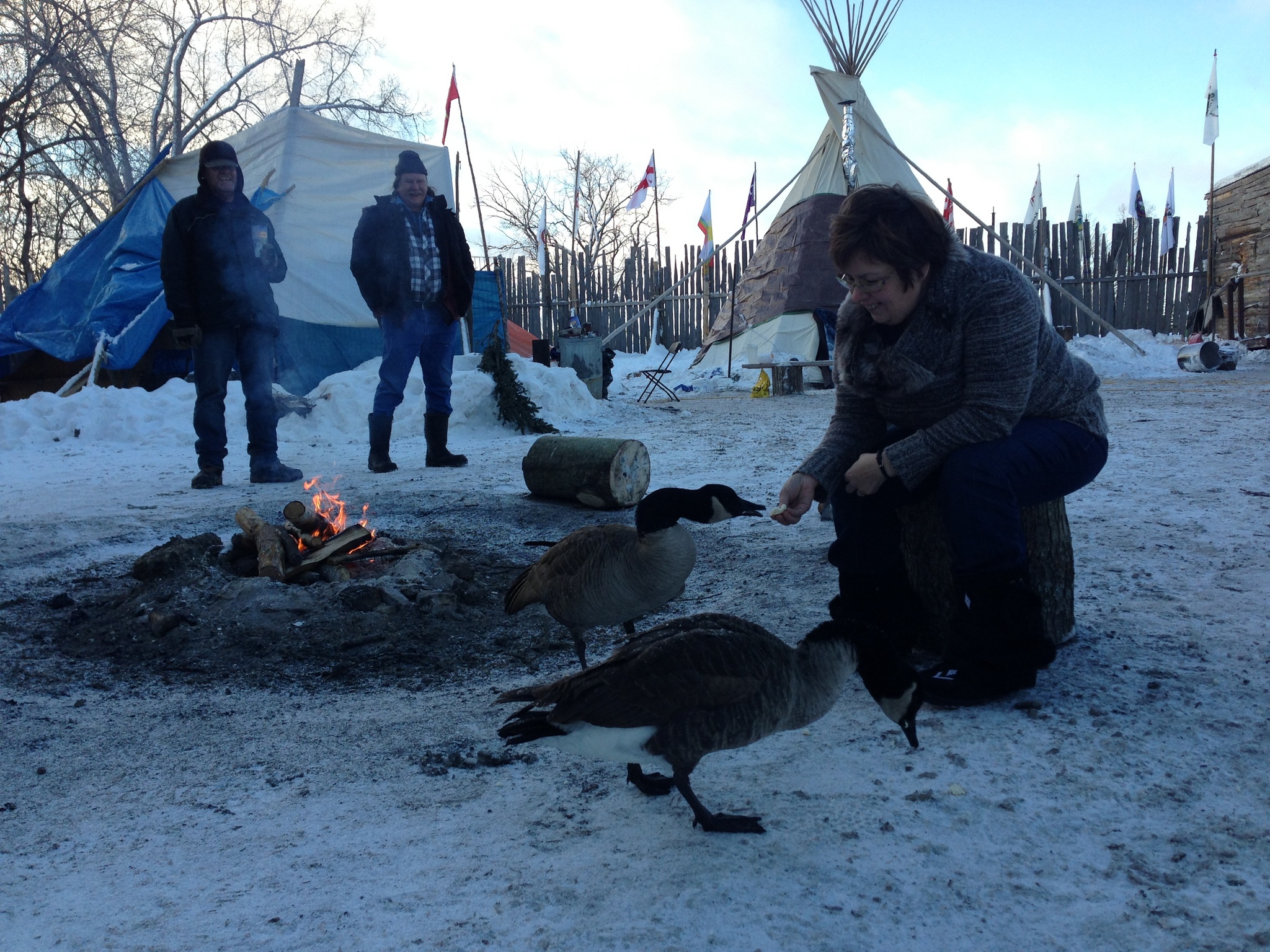
Spence said she was told before her fast that birds would appear. Not long after, four geese began to come into the camp from the river.
“They represent the four directions,” Spence said.
And so with no end of her fast in sight, Spence reiterates that she is not worried.
“My time has been set from when I was born,” she said. “The Creator has determined my journey. If it’s my time, so be it.”


This past month, I was happy to attend two Pow Wows I hadn't been to in years. I attended the Mattagami First Nation Pow Wow and the Matachewan First Nation...
I was happy to see my home community of Attawapiskat on the James Bay coast announce the opening of the new St Francis Xavier Parish Church on August 25....