


Nishnawbe Aski Nation education week highlights career options for Aboriginal students
Northern Nishnawbe Education Council (NNEC) is encouraging Grade 9 students to choose a career path for their future.
“Most often we ask them what do you like or what are you good at,” said NNEC executive director Jennifer Manitowabi during a break at NAN Education Awareness Week, held May 24-27 at the Victoria Inn in Thunder Bay. “If they can identify those two things, that might help them pick their area.”
Once the students pick their field of interest, Manitowabi said they are encouraged to look at the different careers paths available within that field, such as lawyer, police officer, or customs officer in the law field.
“We show them the whole field,” Manitowabi said. “We don’t narrow it down too much at a young age.”
Manitowabi said the students’ paths are being shared with their parents and communities as well so the whole community can support them and connect them with mentors.
“If they tell me they want to be a reporter, I’m going to call you up at Wawatay and say, ‘do you want to spend the day with this student and show them what your job entails.’”
Richard Morris is the Independent First Nations Alliance board representative for the Kwayaciiwin Education Resource Centre in Sioux Lookout.
He said the Kwayaciiwin Anihshiniimowin Immersion Program was set up to better prepare students for their future right from when they enter school. Kwayaciiwin’s goal is to graduate bilingual students who are fully fluent and literate in Anihshiniimowin and English.
“We knew our children were not succeeding, all the way from the elementary level, so that is where we have to start,” Morris said. “Academically, we want our kids to be at par with their provincial counterparts or even higher. We need the proper program for that, a bilingual program, because we also want to make our kids feel good about themselves by teaching their language, their culture and their history from our perspective.”
Morris said the Kwayaciiwin program is geared towards providing academic readiness and preparing students to become mature responsible people.
The program also provides support to teachers, principals and local education authorities so they can do their job effectively.
“At the community level, the education authorities were trying to do everything themselves,” Morris said. “They don’t have the resources to do that nor do they have the capacity.”
Morris said the long-term vision for Kwayaciiwin is to develop the expertise required and to collaborate on a district-wide basis in the Sioux Lookout district.
“We are getting there,” Morris said. “I hope that by showing the kids they don’t have to be ashamed of themselves, they can be proud of themselves as Aboriginal people.”
Morris encouraged youth to grab control of their destiny.
“One of the biggest things we are lacking is our confidence and trust and belief in ourselves,” Morris said. “We have to start showing kids at a young age that they can succeed. We’re hoping that with our program, our students that graduate from Grade 8 will be fully bilingual. They will be fully versed in their language, they will be able to read and write in it the same as English. They will have the academic readiness and confidence to be able to move onto the high school program, whether it is in their community or outside.”
Morris hopes that most communities will keep their students in their community until Grade 10.
“By that time they will have achieved a level of maturity and self-discipline which is very critical to be outside on your own,” Morris said.
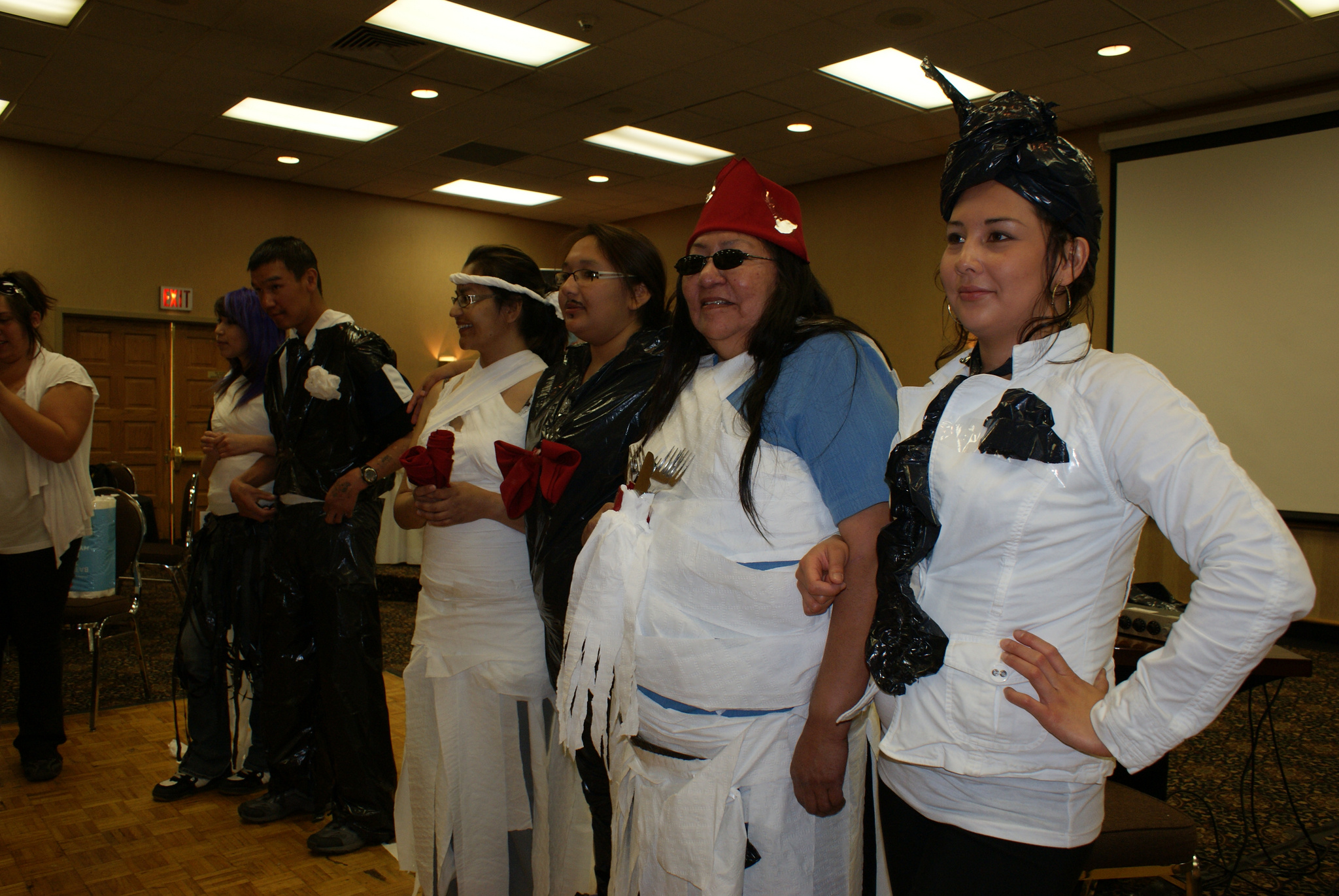
NAN Education Awareness Week also featured a variety of workshops on e-learning, cultural awareness, language awareness, residential school, governance, education jurisdiction, successful learners, HIV/AIDS awareness, guidance counsellor training and guidance counselling for students.


This past month, I was happy to attend two Pow Wows I hadn't been to in years. I attended the Mattagami First Nation Pow Wow and the Matachewan First Nation...
I was happy to see my home community of Attawapiskat on the James Bay coast announce the opening of the new St Francis Xavier Parish Church on August 25....