


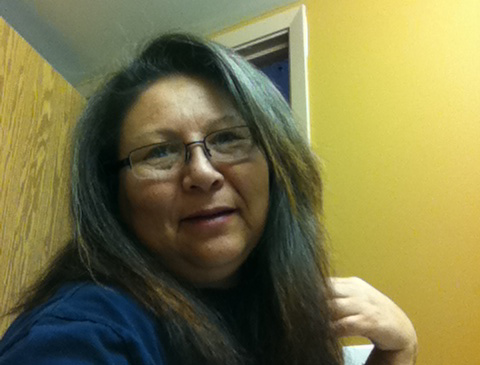
Valentina Herbert’s plans to live on carrots, broccoli, celery and some fruit did not work out during her five-day A Walk In Other’s Shoes: Poverty Challenge.
“Oh my God, I ended up having to drop out after the third day,” said the repatriation worker at Anishinaabe Abinoojii Family Services. “My body couldn’t handle it – I was getting too many headaches and I almost passed out a couple of times.”
Herbert had attempted to make it through the Week of Action Against Poverty challenge of living on $35 for five days, from Feb. 11-16, on a diet of noodles for lunch and cans of vegetable soup for supper.
“It was really something — it was really hard just to live on $35 that week,” Herbert said. “It’s more expensive to buy healthy foods than junk (food). (That) is what I realized.”
Kenora-Rainy River MP Howard Hampton, three students, two registered dieticians, a bank manager, a retired police officer, a community services officer, a senior pastor and a television producer also took part in the challenge.
Herbert said getting to work was not too difficult because the participants had an exception for that reason.
“But other than that, we had to walk everywhere we went,” Herbert said. “I just stayed home.”
In addition to living on just $35, the 12 participants were given daily challenges, such as buying a bottle of aspirin, which needed to be completed before the end of the day.
“Every day we had to open an envelope,” Herbert said. “We would have to go buy medicine with our $35, but I called the Fellowship Centre to ask if they gave out free medication and they did have fever reducers for free.”
Although Herbert also received challenge cards telling her that she lost her mittens and she had a wound on her hand that was oozing, she managed to find a pair of mittens at the Salvation Army and she used some traditional medicine from a tree to treat her wound.
“You know the sap that seeps out of there, you put it on your wound and that sucks out the infection,” Herbert said.
The Options Committee of Making Kenora Home proposed the challenge to raise awareness and break barriers for those living in poverty and on social assistance.
Herbert accepted the challenge because she sees how people have to live while on Ontario Works.
“I see the people who end up on the street and having to live at the shelter because they don’t have enough money to get their own housing,” Herbert said. “You can’t even feed your own child without anybody else helping you.”
Herbert said people shouldn’t have to live in that situation.
“I totally disagree (with) this system,” Herbert said. “I think it makes them feel more depressed because they feel helpless when it comes to not having enough food to feed their children or (provide) clothing.”
While some of the other challenge participants had food such as white rice and beans left over after the five days, Herbert noted that her vitamin-B deficiency peaked during her three days on the challenge and she had to be treated by a physician.
“I never thought (the challenge) would affect (the vitamin-B deficiency), but it sure did,” Herbert said. “I went backwards on that because I had to get injections. I had to go back and get it levelled.”
After completing three days of the challenge, Herbert would like to see more help for those who live in poverty and on social assistance.
“The government needs to do something about it because when we were there, all these homeless people ... were really appreciative that we lived like them because it’s like nobody understands,” Herbert said.


This past month, I was happy to attend two Pow Wows I hadn't been to in years. I attended the Mattagami First Nation Pow Wow and the Matachewan First Nation...
I was happy to see my home community of Attawapiskat on the James Bay coast announce the opening of the new St Francis Xavier Parish Church on August 25....