


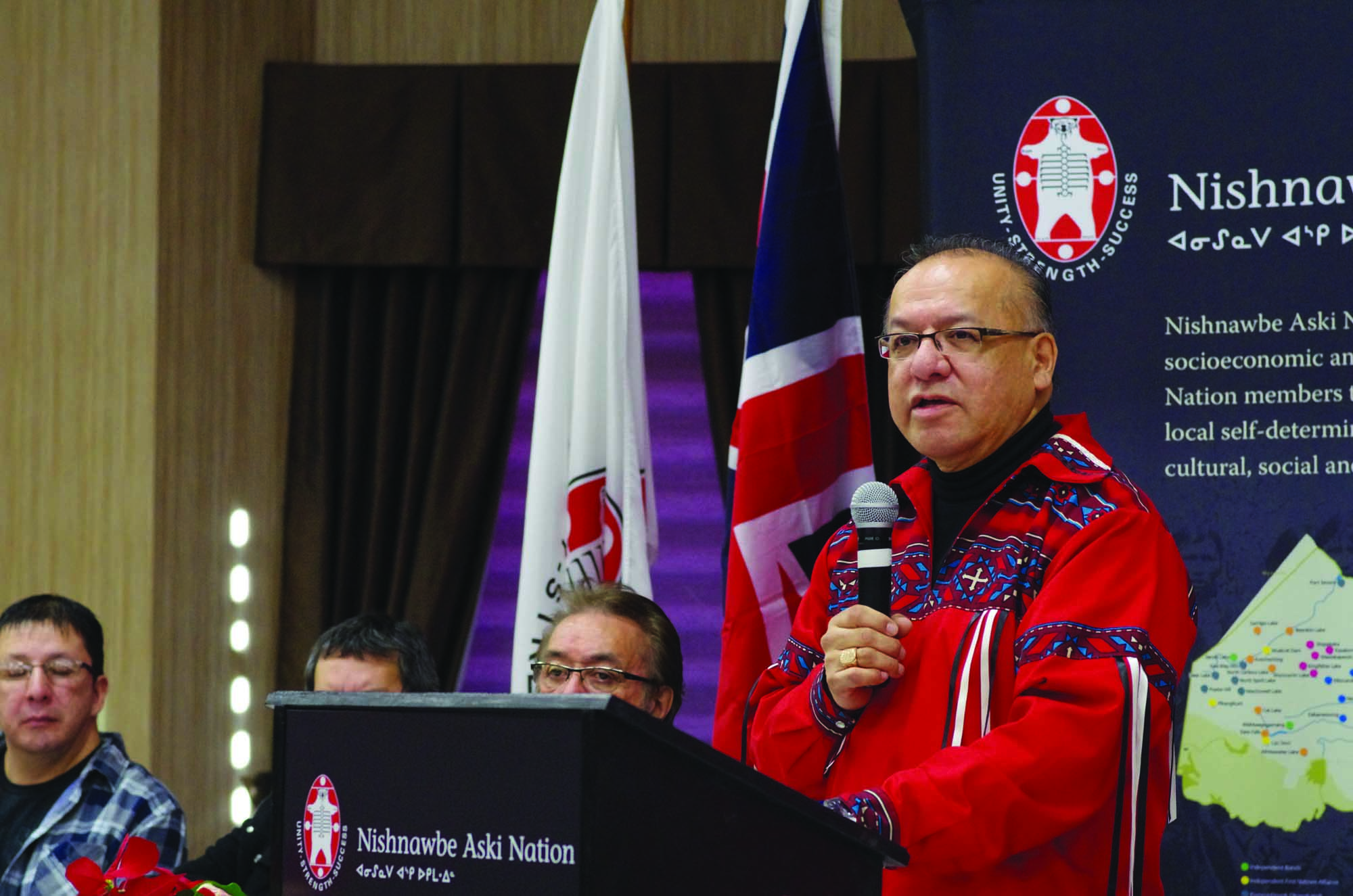
Grand Chief Harvey Yesno is looking to focus on treaty issues, all-weather roads and hydro transmission lines and business development in 2013.
“We need to be focused on the treaty, our relationship with Canada and Ontario,” Yesno said. “I’ve said that from the beginning, I said that when I was chief over 30 years ago, and we need to get back to that. We can’t just speak about it; we’ve got to do something about it.”
Yesno said Attawapiskat Chief Theresa Spence has begun raising awareness of treaty issues across Canada during her hunger strike in Ottawa.
“So now we’re more focused on the real issue for us, particularly in the far north,” Yesno said. “I think we basically have no choice. We have to make a stand.”
Yesno also wants to meet with the federal and provincial governments over investments into the development of all weather roads and transmission lines to remote fly-in communities.
“Those two alone would contribute to (reducing) the cost of living in the communities,” Yesno said. “That’s a big issue, that’s a bread and butter issue with our communities. And we’re also looking for investments in community development, the key areas are obviously education and health, and of course the overarching thing is around resource revenue sharing and new fiscal arrangements with Canada and Ontario.”
Yesno wants to build on the successes in business development that have already been occurring across NAN territory.
“They (First Nation businesses) are successful and we need to build more on that to create the wealth for our communities,” Yesno said. “And I think if our young people start seeing that, they will stay in school, get a higher education and I think it will inspire them to raise their own families in safe and healthy communities.”
Yesno said NAN is looking to be a stimulus for business development, noting there is “a lot of goodwill with other partners.”
“It is just a matter of getting organized and getting focused on this,” Yesno said. “So I think the future looks good.”
Yesno also raised potential economic development opportunities in the Ring of Fire area, noting that while some of the area First Nations have not said yes or no to development, they see the opportunity in the Ring of Fire.
“What they’re saying is we need to give consent for this to go ahead,” Yesno said. “I think once that’s done, I think communities either will be satisfied with the issues that have been addressed, whether it’s community infrastructure, regional infrastructure or some kind of profit or revenue sharing.”
Yesno said the Ring of Fire communities are concerned about the cumulative impacts of building a road corridor through their territory.
“Once you put a road in, there’s going to be other things that will happen quickly on the corridor.” Yesno said. “So if the First Nations consent to that, I think there is a lot of stuff that is going to happen very quickly.”
But Yesno said his main focus is on meeting with the federal and provincial governments.
“We need to get to the table and discuss the treaty, as far as the implementation, and I think the economies will grow in our communities and in Ontario and Canada,” Yesno said. “But that is my vision. I think it will have a positive impact for everyone.”


This past month, I was happy to attend two Pow Wows I hadn't been to in years. I attended the Mattagami First Nation Pow Wow and the Matachewan First Nation...
I was happy to see my home community of Attawapiskat on the James Bay coast announce the opening of the new St Francis Xavier Parish Church on August 25....