


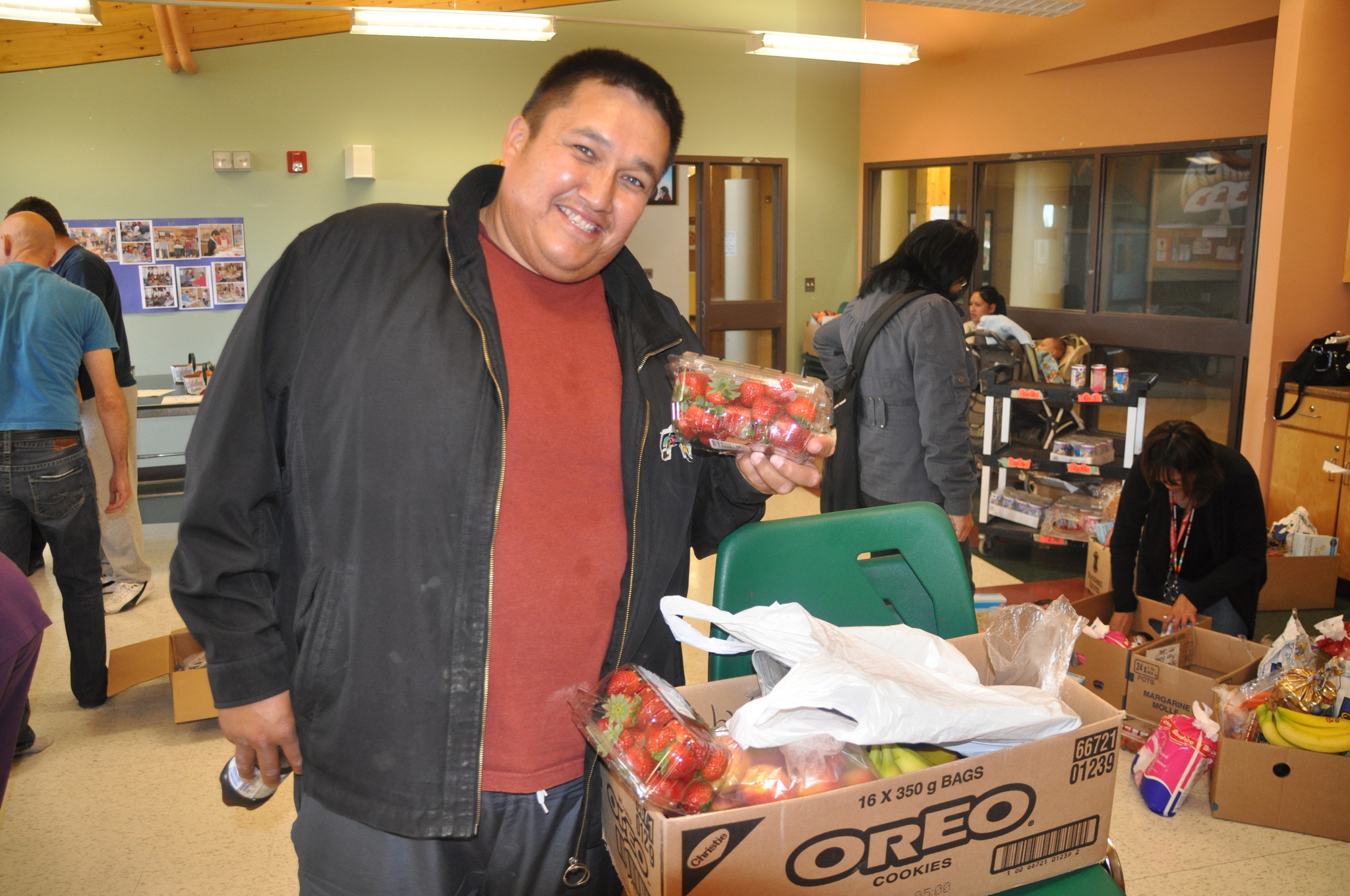
Fort Albany has been working on promoting food security in their community since establishing a food security committee in January.
“We established it because we were concerned about the availability of affordable food,” said Gigi Veeraraghavan, a member of the food security committee and coordinator of the community’s Healthy Babies Healthy Children program. “It’s just impossible to feed a family, especially a large family.”
Veeraraghavan said traditional foods such as moose, caribou, fish and geese are an important part of the community’s diet, but there are concerns about whether future generations will be able to continue harvesting traditional foods.
“Another (concern) is the food that does come in, the quality isn’t great (and) the cost is way too high,” Veeraraghavan said.
Grand Chief Stan Beardy attended Fort Albany’s farmer market Sept. 7 with a group of partners involved with Nishnawbe Aski Nation’s (NAN) initiative to provide communities with food orders under a Nutrition North Canada program.
“We’re trying to provide organic vegetables and organic grown beef as well,” Beardy said. “We’re trying to introduce healthy eating. We introduced the food boxes, a government subsidy program, to try to assist communities to access affordable, healthy foods.”
Fort Albany is one of the seven NAN communities involved in the initiative, which NAN developed in collaboration with Quality Market and the True North Community Cooperative. Another NAN initiative involves the shipping of nutritious food boxes to six NAN communities under full subsidy from Nutrition North Canada from July 2011 to Oct. 2011.
The cost of living in NAN’s remote fly-in communities is extremely high due to transportation costs, with essential foods such as milk and bread costing up to three to four times more than in municipal settings.
Beardy is encouraged to see people beginning to take greater responsibility for their well being by eating a healthy diet.
“I know a lot of leaders are talking about exercise programs, but you can’t forget about healthy eating,” Beardy said. “What you eat determines what kind of health you will have.”
Fort Albany developed the farmer’s market over the last few years using food supplier contacts from the school’s food nutrition program.
“It’s almost like a bulk buying club,” Veeraraghavan said. “We’ve been ordering a load of food in as often as we can. Originally we did it maybe four times a year but now we’re aiming for every month.”
Most of the food is bought from wholesalers or stores in Cochrane or Timmins.
“So I’ll just order a whole bunch of food from them and they put it on the train and we’ll ask a small plane to fly it up,” Veeraraghavan said. “We’re paying the price (people) pay in the city and we pay our own transportation.”
Veeraraghavan said the community gets lucky from time to time when planes fly into the community without a load.
“They let us fill the plane up with food and we didn’t have to pay the freight, we just paid the straight cost,” she said. “For us they were amazing prices; they were the prices offered at the stores down south.”
Beardy said a healthy diet is important when dealing with a variety of health issues, such as diabetes, high blood pressure and depression.
“It all boils down to what you eat as a person,” Beardy said. “Part of the long-term solution is to ensure people are taught what a balanced diet is, what healthy eating is, and what you can harvest and utilize from your surroundings up north to do that.”
The food security committee was also concerned about people with diabetes as well as those who are living from day-to-day and cheque-to-cheque while still trying to feed their children.
Veeraraghavan said a number of programs have been developed to deal with the situation, including a food nutrition program at the school that was started about 20 years ago.
“All of our students get a healthy breakfast at school and an afternoon snack so they can concentrate on their school work rather than their empty stomachs,” Veeraraghavan said.
The food security committee has been encouraging community members to grow their own vegetables during the summer so they don’t have to rely on the vegetables from the local grocery store.
“We’re not telling people they have to grow enough food to last the whole year, that’s not very realistic but it’s a great supplement,” she said. “And it’s a healthy hobby.”
Veeraraghavan said there are a wide variety of berries growing in the Fort Albany area, such as raspberries, choke cherries, high bush cranberries, which are known locally as moose berries, and ground berries.
“People really like (ground berries) for jams because there is no stone in it,” she said. “It’s a low growing berry and it grows on the moss on the muskeg and it’s red.”
Veeraraghavan’s husband, a Fort Albany band member, told her about a kind of lettuce that grows in the area.
“Some people know about it and that’s something we’d like to explore more,” she said.


This past month, I was happy to attend two Pow Wows I hadn't been to in years. I attended the Mattagami First Nation Pow Wow and the Matachewan First Nation...
I was happy to see my home community of Attawapiskat on the James Bay coast announce the opening of the new St Francis Xavier Parish Church on August 25....