


Thunder Bay’s Neighbourhood Capacity Building Project is in danger of folding due to expiring funding from the Office of the Federal Interlocutor, a branch of Aboriginal Affairs and Northern Development Canada.
“Unfortunately, we’re at the eleventh hour and we have no funding commitments for this program within the city,” said Corinne Fox, board president at Shkoday Abinojiiwak Obimiwedoon, during a community stakeholders forum Nov. 29. “If we don’t see commitments within the next month or two, it’ll be done next year for sure, possibly by the fiscal year end, March 31. There are no funding commitments beyond that.”
Renamed BIWAASE’AA at the beginning of the forum, the project was originally developed in 2004 by the Thunder Bay Urban Aboriginal Strategy to help address child poverty issues by increasing life skills of children, youth and their families through strategies of cultural awareness, academic improvement, structured activities and health nutritional supplementation.
After a significant portion of the funding was cut in 2007, the project continued providing its after-school program, in-school program, nutritional programs and structured activities through Shkoday.
The project currently employs seven full-time youth outreach workers, 15 casual workers, a program manager and a finance officer to provide the after-school program for about 175 students a week at seven elementary schools in Thunder Bay and an equivalent number of students for the lunch program.
“The program is huge and it has made tremendous impacts for many of our Native children and children in general within our communities,” Fox said. “There is less divide and more understanding and appreciation for Aboriginal culture, tradition and beliefs.”
Fox said one of the success stories from the project is the Little Eagle Singers, a youth drum group that began singing and drumming through the project’s activities.
“I’m so proud every time I see them,” Fox said. “They are very visible within the community.”
Fox said they are approaching a number of ministries, including the Ministry of Education, and local school boards for help to keep the project going.
“The schools within the city and the teachers and principals have benefitted tremendously from this program,” Fox said. “So we are hoping they are going to be a big, potential future partner for the program.”
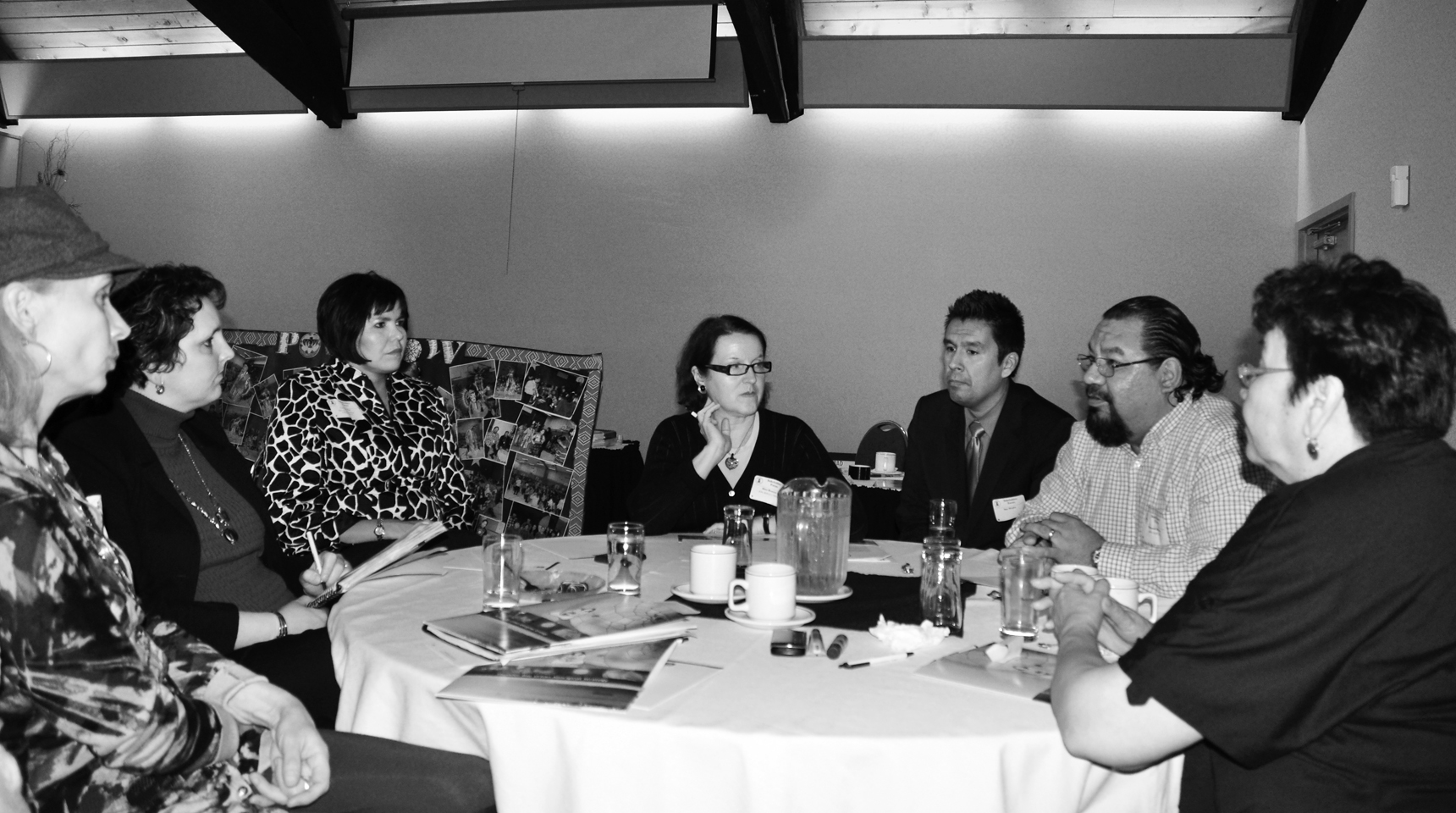
Shkoday held the forum for representatives from local school boards, the City of Thunder Bay, various provincial ministries, Lakehead University, Ontario Literacy Coalition, RBC, Thunder Bay District Social Services Administration Board, Canadian Red Cross as well as the offices of MP Bruce Hyer and MP John Rafferty to provide a review of a study on the impact the project has had on four Lakehead Public Schools as well as a business case for the long-term sustainability of the project.
“What we’re hoping to receive by the end of the day is that feedback and those suggestions and their help for their contributions wherever they are able to help support us,” said Tammy Bobyk, Shkoday’s executive director. “The feedback will be very helpful for us to determine more of a direction because we have been working on sustainability for more than three years now.”


This past month, I was happy to attend two Pow Wows I hadn't been to in years. I attended the Mattagami First Nation Pow Wow and the Matachewan First Nation...
I was happy to see my home community of Attawapiskat on the James Bay coast announce the opening of the new St Francis Xavier Parish Church on August 25....