


Education is the basis of Nishnawbe Aski Nation’s survival.
That was the message from Deputy Grand Chief Goyce Kakegamic during the opening of Nishnawbe Aski Nation’s First Nation Student Success Program (FNSSP) Conference 2013, held Feb. 21-22 at Dennis Franklin Cromarty First Nations High School in Thunder Bay.
“Education is getting to be a priority to our First Nations people,” Kakegamic said to an audience of educators from across northern Ontario on the first day of the conference. “We know that it is the basis of our survival as First Nations, our culture and our language.”
Kakegamic said the environment has been changing across the north, leading to less opportunities to make a living off the land.
“Due to the depletion of the natural resources that we used to live off the land, hunting and fishing, we cannot live like that no more,” Kakegamic said. “Even if we want to, we can’t.
It’s only classified now as supplementing your income. Our ancestors survived these harsh environments and they succeeded, but today we need to come up with a new livelihood and education is one of the means that we can do that.”
Kakegamic said there have been many success stories over the years where First Nations people from NAN territory have succeeded in a variety of careers.
“Looking in the room here, you have educators, you have administrators, we have principals,” Kakegamic said. “Outside the room we have doctors, we have lawyers now and all kinds of professionals in social services.”
Kakegamic said First Nations people have to take ownership of the prescription drug abuse and suicide issues that are affecting youth in order to turn the educational gap around.
“It all stems from the home,” Kakegamic said. “We have to have a hard look ourselves. The answer does not come from the halls of Ottawa; it comes from the halls of our own four walls, which we call home.”
The conference featured FNSSP presentations by nine different First Nation education groups, including Northern Nishnawbe Education Council and Keewaytinook Internet High School.
Kakegamic said the FNSSP is working for First Nation communities.
“It’s beginning to touch some of the key points that we need to address, such as numeracy, literacy and retention,” he said.
Kakegamic said NAN wants to move towards taking control of their children’s education, in part by changing the curriculum to include NAN culture and language.
“We want our children to do well in school,” Kakegamic said. “It is our focus to make a difference in the lives of our children and daughters and sons.”
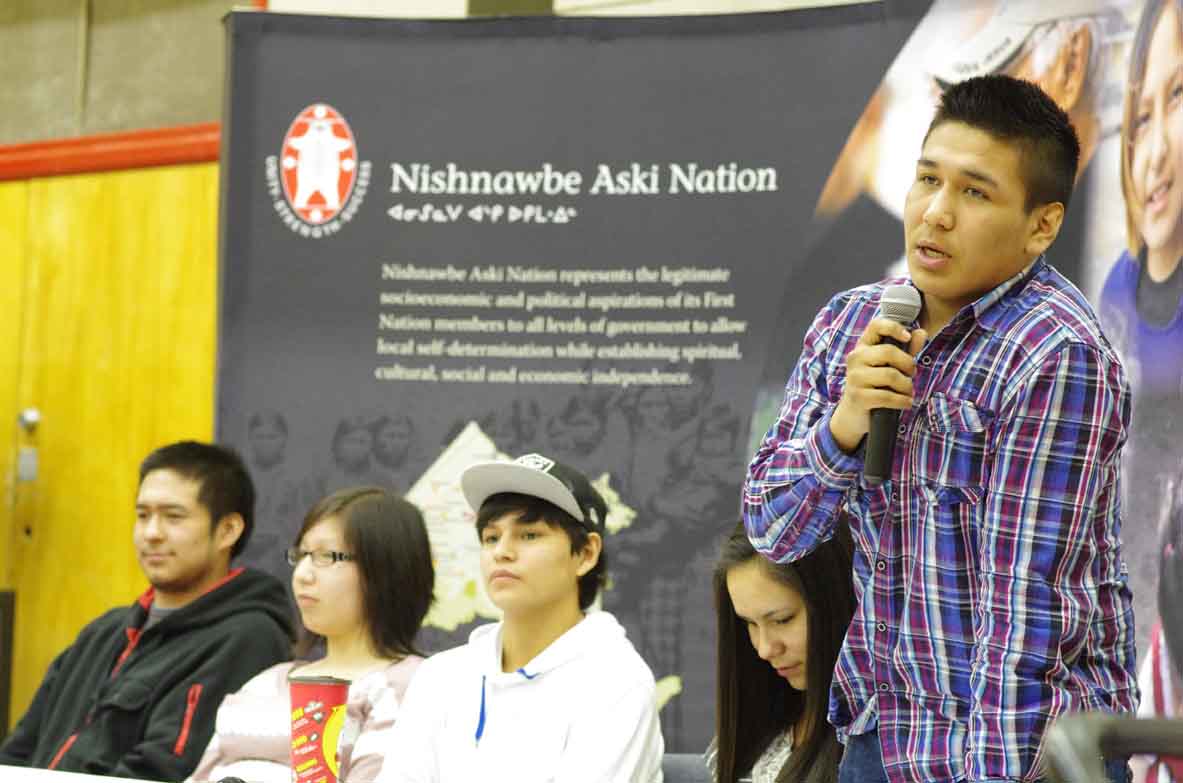
The conference also featured a DFC student panel presentation and question and answer session; a keynote presentation by Lakehead University professor Dennis McPherson and an effective governance presentation by Kwayaciiwin’s Matthew Angees.


This past month, I was happy to attend two Pow Wows I hadn't been to in years. I attended the Mattagami First Nation Pow Wow and the Matachewan First Nation...
I was happy to see my home community of Attawapiskat on the James Bay coast announce the opening of the new St Francis Xavier Parish Church on August 25....