


As Prime Minister Stephen Harper met with First Nation leaders Jan. 24 in an award-winning building in Ottawa, Elders in communities across northern Ontario were making do with tiny plywood, chipboard and log shacks for homes.
“I live here on my own,” said Mishkeegogamang’s Tommy Spade about his 12 by 14-foot chipboard and plywood home. “I don’t mind living in this kind of shack. I used to raise my family in this kind of house and I was born like that.”
The long-time community school bus driver moved into the shack to provide more space for his children and grandchildren, who are living nearby in his old house.
“We’ve got two families living there,” Spade said. “When I was sleeping at night time, I couldn’t go to sleep early; my grandkids were running around and making too much noise.”
Spade built the shack with about $1,100 worth of lumber supplies and insulation.
“I burn about four cords a year, maybe,” Spade said, estimating the cost to heat his small home. “It isn’t very much.”
A family in Kasabonika also made a similar decision to provide more living space for their children and grandchildren by building first a smaller home next to their original home, and then later an even smaller home.
“They’ve been living here for quite a while now,” said Nishnawbe Aski Nation Grand Chief Stan Beardy, who translated for the two Elders during a Jan. 17-18 NAN media tour to five communities. “They built these two structures on their own efforts with no help from the band. And they use extension cords from next door for power.”
Beardy pointed out there wasn’t any running water in the 12 by 16-foot home, which has some insulation in the walls but no insulation in the bare split-log rafter and roof sheathing ceiling.
“They get the water truck to haul in some drinking water for them,” Beardy said. “When they put enough wood in (the wood stove) it’s nice and warm. But you have to keep the fire going all the time.”
The Elders’ grandson wishes there were better wiring and running water in his home, the first smaller home built.
“We can’t use too much electronics,” Waylon McKay said. “If we do, the power could go out.”
The Crown-First Nation Gathering took place in the recently named John G. Diefenbaker Building, which was opened in August 1958 by Princess Margaret and won the Massey Medal for design in 1959.
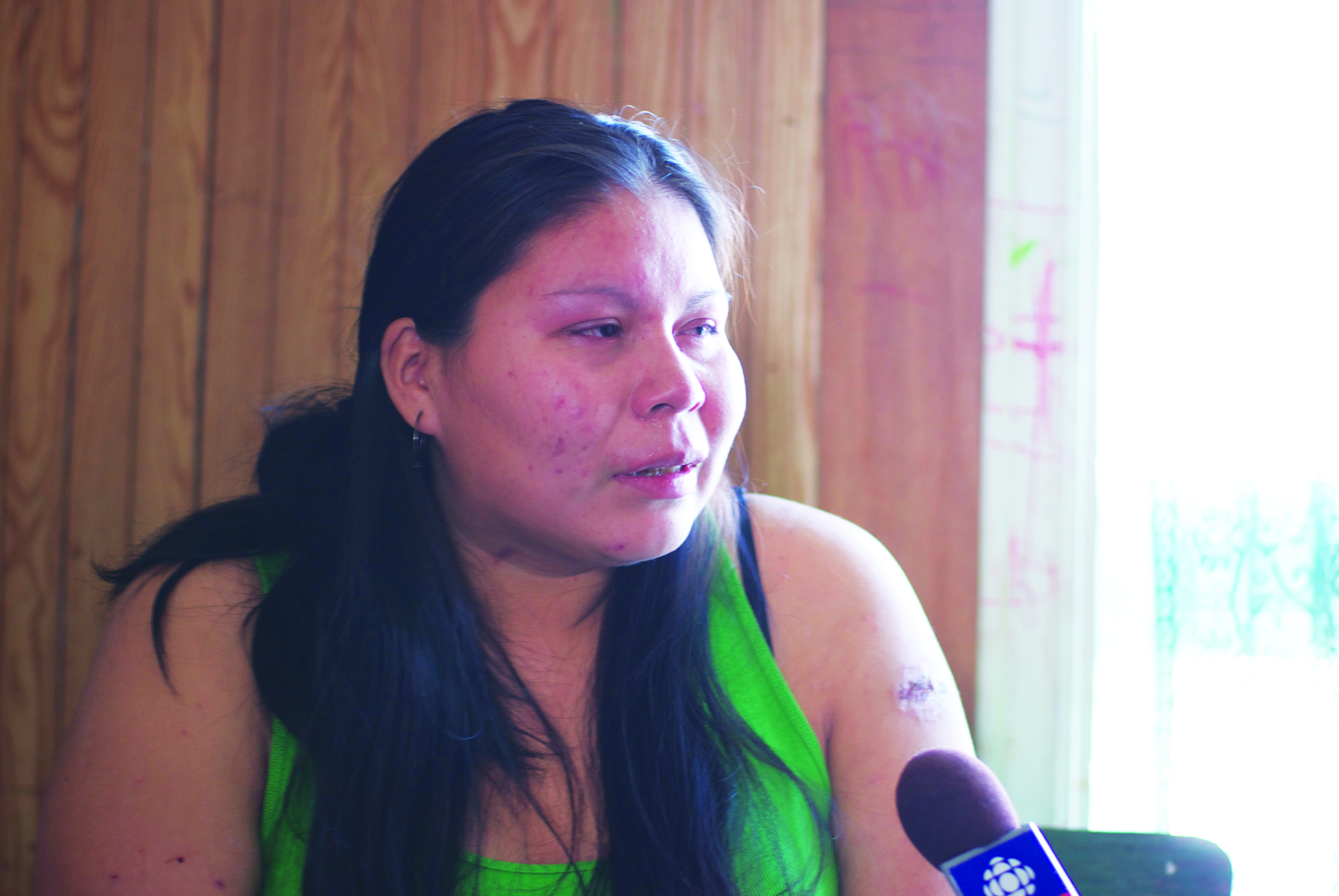
Although Harper spoke during the gathering about former prime minister Diefenbaker’s efforts to extend the right to vote to First Nation band members living on reserve in 1960, Eabametoong’s Rebecca Drake plans to leave her reserve within the next month to find a better life for herself and her five children, aged seven and under, in Thunder Bay.
“I’m hoping for a better life than what they got here,” Drake said. “I want them to finish school. I want them to be happy.”
An only child, Drake and her children have been living in a small two-bedroom home with her parents for seven to eight years.
“I want to get out of here,” Drake said. “My parents are the only ones there for me. I’m a single parent — I try to do my best.”
Drake is planning to go back to school and work towards becoming a Nishnawbe-Aski Police Service officer.
“I’ve been wanting to do that for so long already,” Drake said. “I know it’s going to take time but it’s something I look forward to.”


This past month, I was happy to attend two Pow Wows I hadn't been to in years. I attended the Mattagami First Nation Pow Wow and the Matachewan First Nation...
I was happy to see my home community of Attawapiskat on the James Bay coast announce the opening of the new St Francis Xavier Parish Church on August 25....