


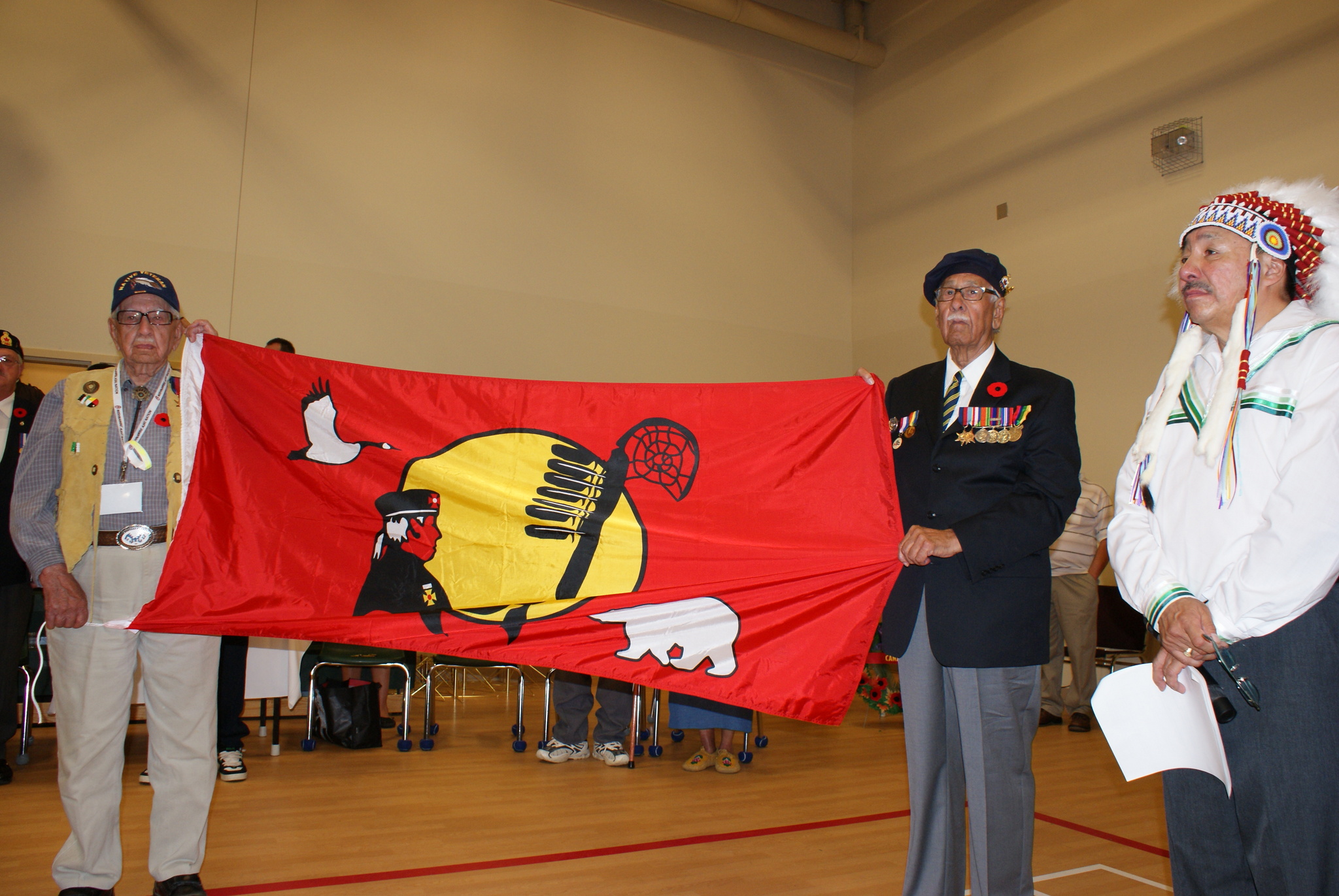
Chapleau Cree World War II vet Donald White has stopped hunting since his rifle was seized by a Ministry of Natural Resources (MNR) conservation officer on Sept. 29, 2010.
While the rifle has been returned and the final charges in the case were dropped late last year, the seizure of the Elder’s rifle has opened a rift between the Chapleau Cree community and the MNR.
“(White) only received the rifle back from the MNR after we threatened to bring a lawsuit to force them to return it to him,” said Paul Quick, a lawyer with Klippensteins Barristers and Solicitors in Toronto. “The official line that was given as to why they did not return the rifle before that was that forensic tests were being conducted on the rifle.”
The 97-year-old Elder, along with his brother Ian White, also a World War II veteran, and his nephew Steven Caldwell were pulled over and questioned by a conservation officer about a moose Caldwell shot in the Crown Game Preserve. After being kept by the side of the road for about 45 minutes, Donald White’s rifle was seized.
Caldwell was charged with illegally hunting on a roadway and making a false statement to a conservation officer on Nov. 24, 2010. Two weeks later Caldwell was also charged with careless hunting.
The charges were finally dropped in the autumn of 2011.
Jolanta Kowalski, MNR senior media relations officer, said evidence collected by the conservation officer suggested that the moose was shot from the road.
“This is an offence whether someone has Aboriginal rights or not,” Kowalski said. “However, prior to trial the defendant’s counsel disclosed new evidence suggesting the individual did not shoot from the road. Crown withdrew the charge as he did not believe he had a reasonable prospect of conviction.”
However Quick pointed out that potential witnesses were not interviewed, including a non-native passerby who helped Caldwell recover the moose from the bush and a group of MNR employees who drove along the road where the moose was alleged to have laid dead for several hours.
“They had a record of their own MNR truck driving by that area and they didn’t bother to interview their own MNR officers about whether or not there was a dead moose by the side of the road,” Quick said.
The case has led Chapleau Cree Chief Keith Corston to question the relationship the band has with the MNR. Corston wants the government to look into to how conservation officers are charging community members with safety infractions.
“We should be looking at that Interim Enforcement Policy we have with the MNR,” Corston said.
The Interim Enforcement Policy was developed by Ontario to minimize the number of instances where Aboriginal people are in conflict with the government over the Game and Fish Act, the Fisheries Act and the Migratory Birds Convention Act.
The Interim Enforcement Policy states that an Aboriginal person who identifies themselves as such shall not be subject to enforcement procedures when harvesting or transporting wildlife or game as food for personal consumption and for social and ceremonial purposes, except for when hunting in an unsafe manner, where wildlife or fish are taken for commercial purposes, where wildlife or fish are taken in a manner that puts conservation objectives at risk or where hunting or fishing occurs on privately owned or occupied land without express permission of the owner or occupier.


This past month, I was happy to attend two Pow Wows I hadn't been to in years. I attended the Mattagami First Nation Pow Wow and the Matachewan First Nation...
I was happy to see my home community of Attawapiskat on the James Bay coast announce the opening of the new St Francis Xavier Parish Church on August 25....