


Two First Nation education leaders feel the changing of racial slur words in two classic novels is a positive move.
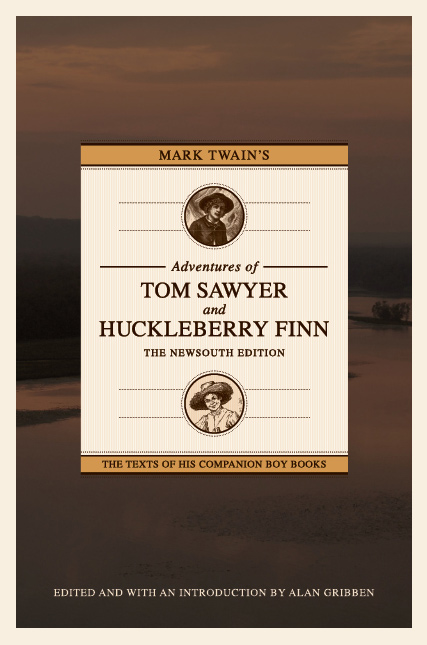
Injun, half-breed and the n-word are being changed to Indian Joe, half-blood and slave in a new edition of Mark Twain’s Adventures of Tom Sawyer and Hucklebehalrry Finn that is being published in February by NewSouth Books in Alabama, a southern state in the United States. The Adventures of Tom Sawyer was originally published in 1876 and the Adventures of Huckleberry Finn was originally published in 1885.
“The words as they stand in the book in my mind they would be derogatory terms,” said Jennifer Manitowabi, executive director at Northern Nishnawbe Education Council. “The onus would be on the reader then to think about them critically and think about everything that surrounds using that terminology, in terms of racism, in terms of prejudice, in terms of stereotyping.”
Manitowabi said the changes in the new edition are an example of how society changes and adapts over the years.
While the two novels are being published by NewSouth Books as a continuous narrative that Twain had originally envisioned, the decision by editor and noted Mark Twain scholar Alan Gribben to eliminate the racial slurs Twain employed in his effort to write realistically about social attitudes of the 1840s has raised controversy across Canada and the United States.
“Both novels can be enjoyed deeply and authentically without those continual encounters with the hundreds of now-indefensible racial slurs,” Gribben said, pointing out that while dozens of other editions are currently available with the inflammatory words, their presence has gradually diminished the potential audience for Twain’s masterpieces.
“Definitely some people are going to be faced with an internal conflict when they’re faced with those words,” Manitowabi said, noting that they may not have the resources available to them to gain an insight as to why those words might cause someone to be uncomfortable.
Manitowabi said not everybody is aware of the history of terms such as First Nation, Indian, Aboriginal and Indigenous.
“Everyone of those words has difficulties,” Manitowabi said. “When I hear the word Indian, I think of the Indian people in India, so there are difficulties even if they are going to change the word.”
Manitowabi said her son read one of the novels in school last year and he shared his experiences at home around the dinner table.
“Why do they call us Inj-ns,” Manitowabi said, quoting her son’s comments. “We do educate our son from our perspective of how it was historically and what our expectation is today.”
Manitowabi said education is the key.
“By going to school you are exposed to texts, literature, and you have every right not to agree with what you read and you have a voice,” Manitowabi said.
“And we need students to use their voice, and to say I have difficulty when I read that and to share that with their peers and with their fellow learners: ‘that is not my reality; my reality is my mom is an executive director and my dad is a manager of economic development. My First Nation engages in million dollar opportunities.’”
Oshki-Pimache-O-Win Education and Training Institute executive director Rosie Mosquito praised the publisher for printing the revised edition of Twain’s novels, noting that racial slur words may affect a child’s development.
“Although they may be young and small, that could potentially affect them,” Mosquito said, quoting her mother’s comments on the use of racial slur words. “We have to be very careful what we say to children because it could affect their self-esteem and their growth.”
Although Mosquito has not read any racial slur words for a “long time,” she still remembers how she felt when reading those words.
“It doesn’t reinforce a positive self-image,” Mosquito said. “We can use all kinds of academic and theoretical terms, but it’s all about oppression and colonization. Those are some of the tools of colonization and oppression.”
Mosquito said the use of racial slur words affects people in a “bad way,” but it also creates an awareness of what is happening in the world.
“I think there is a benefit of learning about it and what its significance is and why you wouldn’t want to perpetuate the symbolism and the underlying messages.”


This past month, I was happy to attend two Pow Wows I hadn't been to in years. I attended the Mattagami First Nation Pow Wow and the Matachewan First Nation...
I was happy to see my home community of Attawapiskat on the James Bay coast announce the opening of the new St Francis Xavier Parish Church on August 25....