


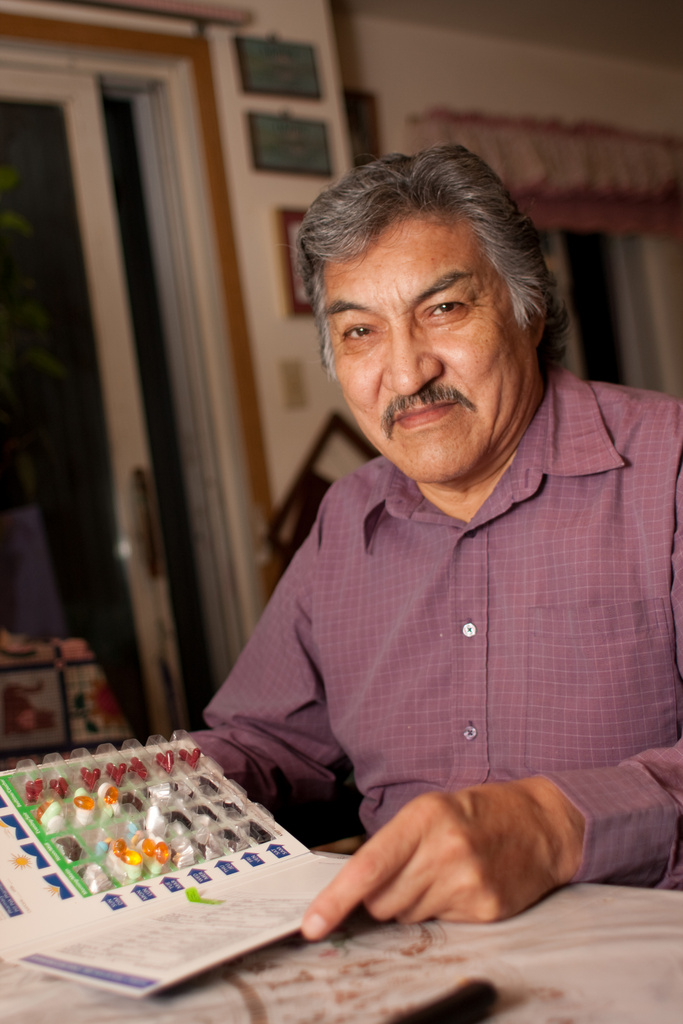
Former Wawatay Radio Network broadcaster Danny Kakepetum knows the serious consequences of diabetes – he recently had his leg amputated below the knee.
“In April, they amputated one of my toes,” Kakepetum said. “It got infected because I lost my nail.”
Kakepetum said his foot didn’t heal very well after the amputation and his baby toe also became infected too, so the doctors amputated that toe as well. “And it didn’t heal at all – it just got worse,” Kakepetum said. “So finally (in late July) they just amputated my leg below the knee. It was getting worse, it was getting black instead of healing.”
Kakepetum said his toenail came off while he was wearing his cowboy boots, but he didn’t notice right away because of the loss of sensation in his feet due to the diabetes complication of poor blood circulation in the legs.
“My shoes were kind of small, and my toes were rubbing, that is how I lost my toenail,” Kakepetum said. “They were tight. I wouldn’t recommend cowboy boots for people with diabetes.”
Kakepetum, who now wears wide shoes that are “very comfortable,” first discovered he was diabetic in the 1980s when he was scheduled for some minor surgery in Sioux Lookout.
“They told me my sugar level was too high so they couldn’t do it,” Kakepetum said. “Before the 1980s, when I was back in Sandy Lake, I sometimes felt shaky when I felt hungry. I didn’t know I was having diabetes but I had the symptoms.”
Kakepetum began following a diabetes regimen after he discovered he had the disease.
“They put me on medication and told me to go see a dietician,” Kakepetum said. “The dietician told me (what) not to eat and what to eat, what’s good for me. They also told me to lose weight a little bit.”
The Canadian Diabetes Association recommends all people with diabetes get advice on nutrition from a registered dietitian. It says good management of diabetes includes healthy eating, staying active and taking required medication.
Kakepetum said it was difficult to give up his favourite foods, but he began walking every day to get some exercise.
“The only thing is, if I have a sore, it takes too long to heal up,” Kakepetum said. “They told me to look after my feet all the time and make sure I have no sores on my foot.”
Kakepetum is currently waiting for his leg to heal enough to begin wearing a prosthesis – an artificial limb – so he can walk. But for now, he uses a wheelchair and crutches to get around.
“Sometimes it’s very frustrating because I can’t do anything that I used to do,” Kakepetum said, explaining he now weighs about 200 pounds. “I can’t go very far with my crutches because of my weight.”
Kakepetum misses his work at Wawatay, especially speaking with people across the north. He started with Wawatay in 1982, working on a program for CBC called Indian Faces.
Kakepetum has advice for other diabetics.
“Look after your feet very good because you can live with diabetes if you take care of yourself,” he said.
Kakepetum also has suggestions for people who are not diabetic: watch what you eat and get as much exercise as possible.
The Canadian Diabetes Association suggests people build time for physical activity into their daily routine. The association says to try and be active most days of the week, walk instead of taking a vehicle, start exercising slowly and gradually increase the amount of effort, make family activities active instead of watching television or a movie, and try new activities such as dancing, basketball and cycling.
Kakepetum remembers getting lots of exercise when he was young, especially when he used to go out on the land with the dog teams or on moose hunting trips.
“I used to run ahead of them,” Kakepetum said of the dog teams. “I used to run for miles.
“In the winter time, when they hunt moose, they had to walk with their snowshoes. Walking in the snow is hard work. It’s a good exercise – snowshoeing.”


This past month, I was happy to attend two Pow Wows I hadn't been to in years. I attended the Mattagami First Nation Pow Wow and the Matachewan First Nation...
I was happy to see my home community of Attawapiskat on the James Bay coast announce the opening of the new St Francis Xavier Parish Church on August 25....