


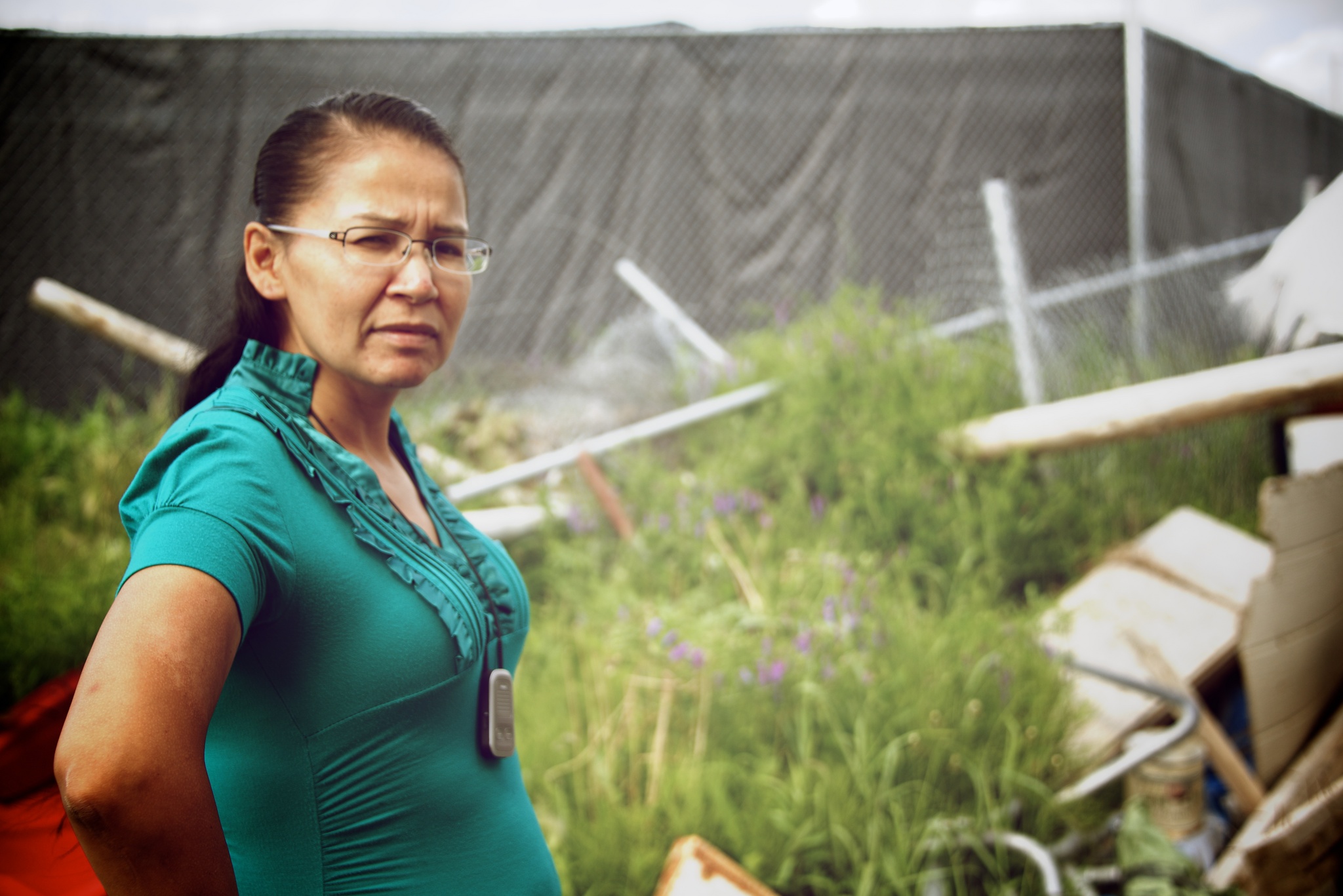
Students in Attawapiskat started school studies a week late due to an ongoing diesel fuel contamination clean up effort located in a fenced off area next to their classrooms.
Marjon Lenart, is the new principal of Vezina Secondary School, and said he used the extra week to prepare for above average enrollment at the school.
“We were a little overwhelmed by the amount of kids signed up for classes. Some classes have as many as 38 students andwe don’t have enough desks for all of them,” he said.
The contamination zone sits between Vezina Secondary School and the Attawapiskat General Hospital underneath what was once the JR Nakogee Elementary School and the community water treatment plant.
Rosie Koostachin’s backyard borders the contamination zone. From her deck she can see over the chain-link and black tarp perimeter fence. She said she experiences headaches, nausea and exhaustion since the dig began. She is worried about the possible side effects of living so close to the spill site.
“I see those men who do the air monitoring. He tells me the readings have spiked three times due to the wind. He says they tell the band office if the readings go up, but no one there has contacted me,” she said.
She said her daughter and grandchildren moved out of the family home due to flu-like symptoms that they no longer experience since moving.
The old school was closed in 2000 but according to Wayne Turner, executive director of Attawapiskat First Nation, the first signs of trouble were noted in 1977. Students would often complain of migraines, dizziness and nosebleeds during the more than two decades that classes at Nakogee Elementary remained in session.
Lead engineer Brian Feherty of Feherty & Associates Engineering was contracted by Aboriginal Affairs and Northern Development Canada (AANDC) to execute the clean up. He said the job presents unique challenges.
“This is the biggest project of its kind in Ontario, if not Canada,” he said. Nearly 100,000 liters of diesel fuel leaked from underground pipes over three decades, he said and the scale of the project required intensive preparation before shovels could break ground and remove contaminated soil. He said the first step was to map the contaminated area.
In 2008, Thunder Bay-based firm True Grit Consulting, did preliminary soil tests of areas around the suspect diesel tanks. The results defined five separate areas in need of immediate remediation. Both JR Nakogee School and the water treatment centre were within contaminated zones. The structures had to be demolished before the clean up could start. Project manager Mary Johnson, said contaminated soil is moved to a bio-cell containment centre on the riverbank just outside Attawapiskat. At the school site, the pit was dug to a depth of 4.5 metres in the deepest areas. Contaminated soil was relocated to lined bio-cell containment pits near the bank of the Attawapiskat River. She said the project has experienced unavoidable set backs but continues to make progress, “wet weather is our biggest delay,” she said.
Right now, the contamination sites are quiet. Workers are on a break before beginning the fill-in and leveling part of the project. Students are back in classes and Principal Lenart said there is time to make up for missed classes. “We are well within meeting the minimum of 110 hours required per course. Even if we were behind, there are always ways to make that up. We’re absolutely safe,” he said.
I was happy to see my home community of Attawapiskat on the James Bay coast announce the opening of the new St Francis Xavier Parish Church on August 25....
Attawapiskat First Nation wrapped up another successful Kattawapiskak Keekehwin Gathering for the community. The week-long event was held from August 2 to 8...