


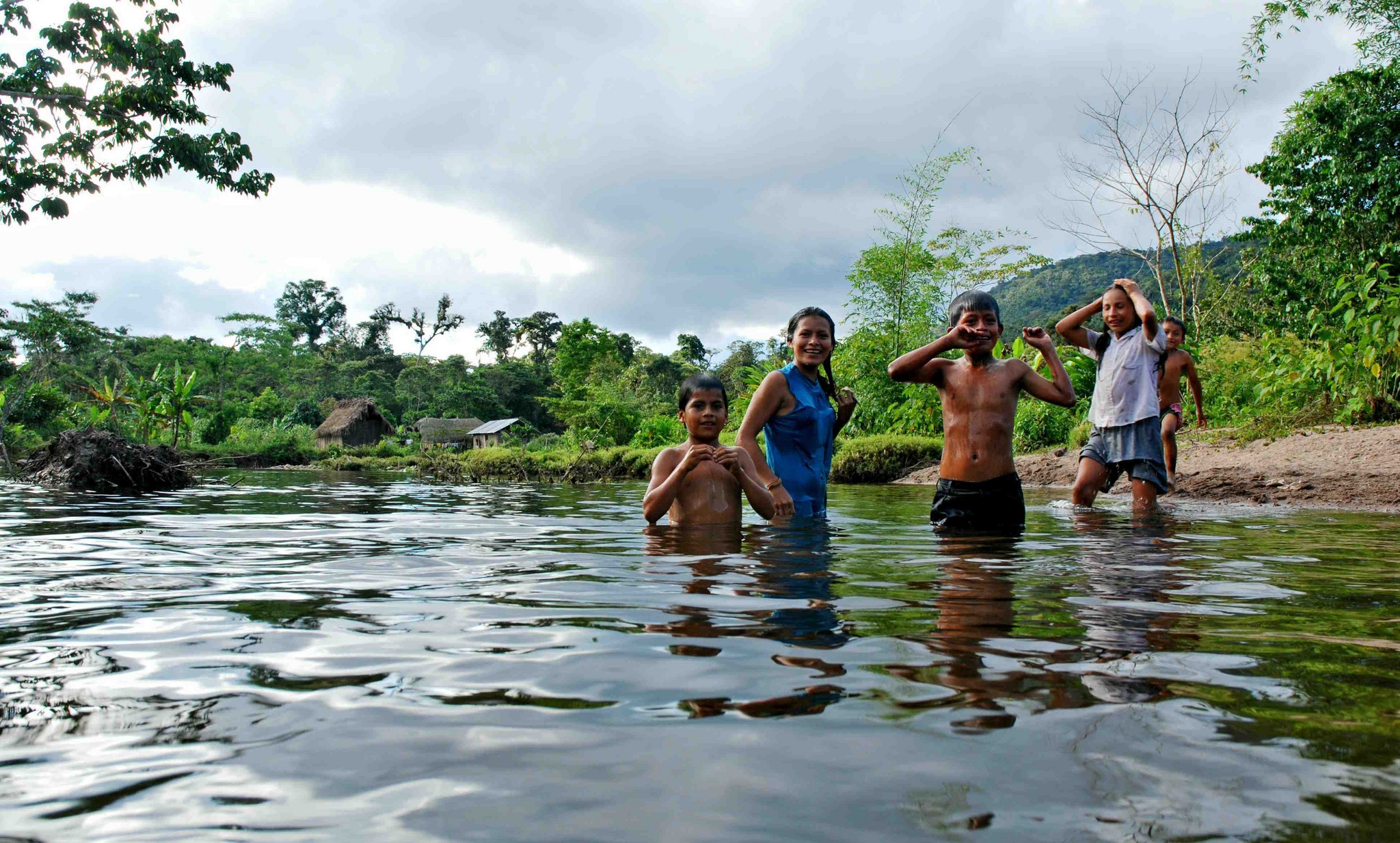
Former Missanabie Cree chief Glenn Nolan’s photographs of Latin America are hanging in the air at the Thunder Bay Art Gallery.
“It’s pretty exciting for me — I never lose the thrill of showing my work to an appreciative audience,” said Noront Resources Ltd.’s vice-president of Aboriginal affairs during his Jan. 14 artist talk for the exhibition which runs through Feb. 27.
“I hope it captures the objective I had to help people feel they are there.”
In Glenn Nolan: Engaged: A Photographic Journey Through Latin America, Nolan took about 75 art aficionados on a photographic journey through Latin America during his talk, where he offered a glimpse of the changing world in Latin America and described his experiences, including the consumption of live larvae.
“Being in the jungle, it is remarkable how similar it is to being here at home,” Nolan said.
“There’s different plants, obviously ... but it’s no different than walking around in our back yard.”
But Nolan emphasized the sounds in a jungle during a rain storm are extremely loud.
“Walking in the jungle in the rain is a marvelous experience,” Nolan said.
“The noise is absolutely amazing. It’s the loudest that I have ever experienced.”
Nolan’s first trip to the area was in 2005 when he visited Argentina and his last trip was in November.
“I’m a very visual person and with my breadth of photography it just offers one subject after the next and I can’t stop myself from taking pictures because they are just everywhere you look,” Nolan said.
Former Webequie chief Scott Jacob was interested in hearing about some of the similarities between indigenous people in Latin America and First Nations people in Canada.
“It gets me thinking both personally and where we are at in terms of the struggles we have,” Jacob said.
“One of the things I find very fascinating is the similarities to our life.”
Lac Seul’s Nellie Ningewance also noted the similarities and differences between First Nations people here in Canada and the indigenous peoples in Latin America.
“I wouldn’t want to live in that side of the country,” Ningewance said. “I like Canada. But it was quite interesting.”
Ningewance agreed with Nolan’s comment that First Nations people in Canada are better off than the Indigenous people in Latin America.
“In some ways I think we are quite rich with what we have,” Ningewance said. “I know some of our people live in poverty, but I don’t believe anybody is poor. I always believed I was rich although I was living poorly.”
Nolan’s exhibition ranges from images of daily life including food preparation and children playing to images of technicolour boats docked by the river.
“Though far removed from the sights and sounds of South America, these bright and expressive photographs bring us a little closer to understanding the people and places encountered in his travels,” said Thunder Bay Art Gallery curator Nadia Kurd in her essay on Nolan’s exhibition.
“Connected and poignant, Nolan’s photographs take us on a journey and along the way, he also provides us with the stories that accompany these scenes. We are as a result, enriched with knowledge of South America and its first peoples.”
Nolan’s exhibition also includes a video he made showing the culture, dance and music of the peoples’ he met and the landscapes he encountered on his journey.
Nolan is looking to focus on First Nations people for his next exhibition.
“That has always been my first love,” Nolan said. “I want to go back and find the opportunity to do pictures as portraits of Elders and do the same thing, hang them and be able to interact and engage with photographs close up.”


This past month, I was happy to attend two Pow Wows I hadn't been to in years. I attended the Mattagami First Nation Pow Wow and the Matachewan First Nation...
I was happy to see my home community of Attawapiskat on the James Bay coast announce the opening of the new St Francis Xavier Parish Church on August 25....