


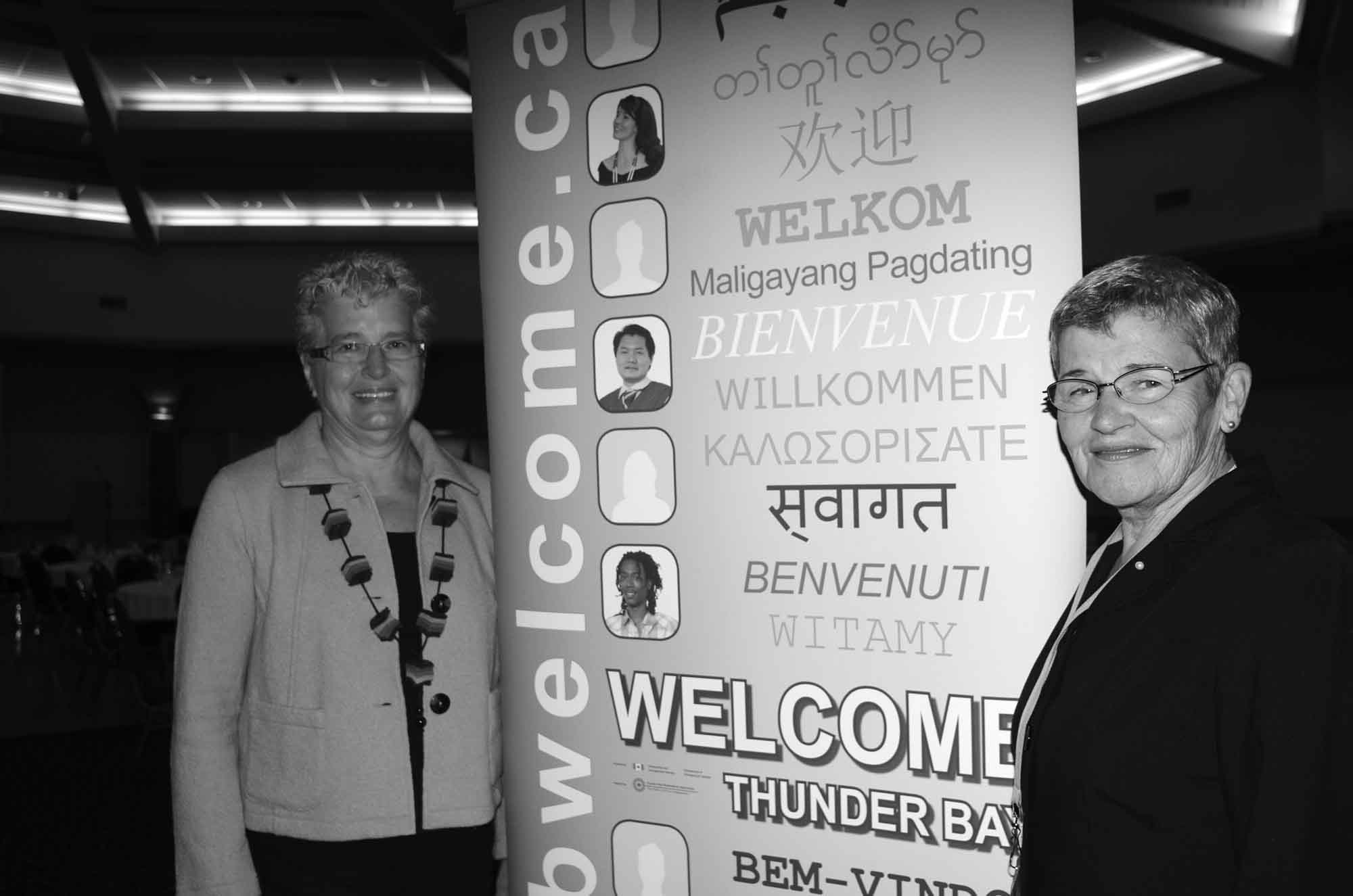
Competing human rights were featured during a recent Ontario Human Rights Commission Training on the Policy on competing human rights training session in Thunder Bay.
“They were giving us tools on how to weigh when we have competing human rights,” said Yolanda Wanakamik, director of programs for Lakehead University’s Office of Aboriginal Initiatives.
“There were three major steps — stage one is recognizing that you actually have a competing rights claim, determining what the claims are about, do the claims connect to a legitimate right, do the claims involve individuals or groups or operational interests, do claims connect to human rights or legal entitlement, do claims fall within the scope of the right when defined in context and do claims amount to more than minimal interference with the rights.”
Stage two was about reconciling the competing rights.
“What they are saying is there is no right that supersedes one right or another,” Wanakamik said. “We have to weigh them all out and can we come to an amicable agreement about what the balance of those rights are, and if there isn’t, then what is the next best solution.”
Stage three was about making decisions about competing rights.
“Decisions must be consistent with the human rights and other laws,” Wanakamik said. “At least one claim must fall under the Human Rights Code to be actionable by the Human Rights Tribunal of Ontario.”
The competing human rights training session, held on Sept. 23 at the Italian Cultural Centre, featured an overview of the policy and the framework for addressing competing rights, a review of competing rights legal cases and an opportunity to practice with the framework using case studies and local scenarios.
“We spent the whole day talking about competing rights, when one person’s rights come up against another person’s rights,” said Barbara Hall, Chief Commissioner of the Ontario Human Rights Commission. “How do you resolve those in a way that is respectful and recognizes both sets of rights.”
Wanakamik said some of the local stories involved people going into local restaurants and being asked if they could afford to pay for the meal.
“So what was the rationalization for being asked that kind of question,” Wanakamik said. “There’s that internal struggle for those people who are in those places who are saying: ‘Why am I being asked this question, is it because I’m in a wheelchair, is it because I am elderly, is it because I am Aboriginal. Why are those people asking those questions.’”
The Ontario Human Rights Commission also held the Taking it Local – Northwest A municipal update on human rights on Sept. 24 at the Italian Cultural Centre.
The update featured a panel discussion of organizational responsibilities under the Ontario Human Rights Code to uphold human rights for Aboriginal Peoples, a discussion of the Ontario Human Rights Code and the Accessibility for Ontarians with Disabilities Act as well as workshops on: anti-racism and anti-discrimination for municipalities, housing and human rights, disability and accommodation and preventing sexual and gender-based harassment.




This past month, I was happy to attend two Pow Wows I hadn't been to in years. I attended the Mattagami First Nation Pow Wow and the Matachewan First Nation...
I was happy to see my home community of Attawapiskat on the James Bay coast announce the opening of the new St Francis Xavier Parish Church on August 25....