


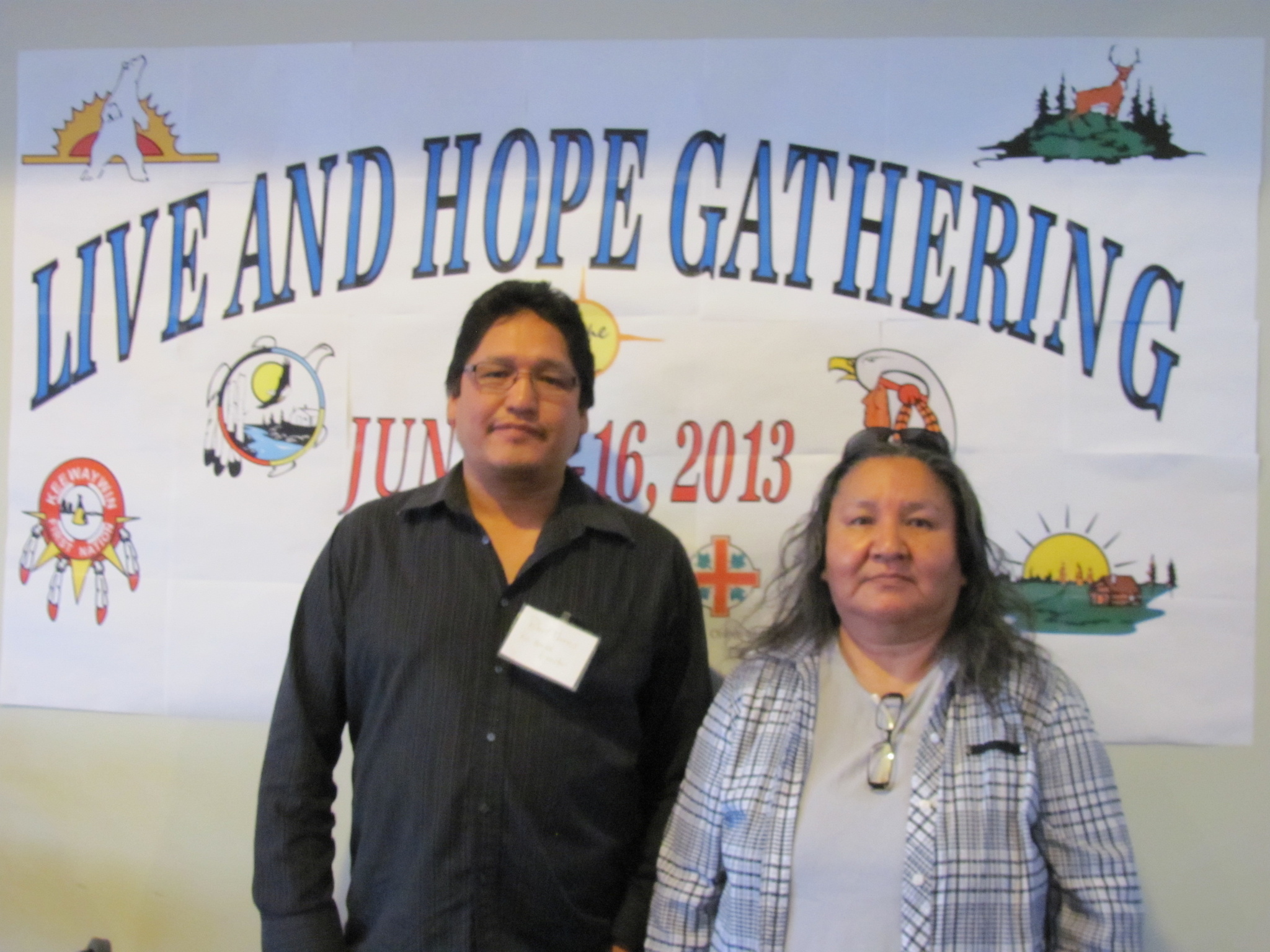
Keewaytinook Okimakanak (KO) hosted a gathering for Residential School survivors of the KO communities from June 14-16. Lydia Sherman, who has been the Indian Residential School Support Worker since 2011, has been working on this project since October of that year with Robert Thomas, the KO Health Director. In 2011 a gathering took place in Thunder Bay where people from the KO communities suggested that they would like a similar event to take place in their region. Two years later that is what Sherman and the KO Health Department have made possible. This call for a local gathering lead to the development of the, “ 2013 Live and Hope Gathering.”
In the Red Lake area residential schools had a profound and long-lasting impact on First Nations people. The effects were not isolated to the ones who attended these schools. The effects are still being experienced by their children and grandchildren. These schools included the Stirland Lake, Crystal Lake and Poplar Hill residential schools. People who attended these particular schools were the main focus of this gathering. However, it was not exclusionary and others were permitted to attend because family members who have not attended residential schools have also been affected by the roles the schools played in their lives. A Google search of the Carlisle Experiment will give a quick summation of the role these schools played in history.
“The Residential School experience left a traumatic experience for the survivors while being away from their home community, their family members were affected as well while living in their reserves. Throughout history the main purpose of the residential schools was to eradicate, separate, and assimilate a thriving culture. Even though some students may have had positive experiences these came at a cost. The purpose was wrong,” said Thomas
Additional support for the Live and Hope Gathering came from KO, Nishnawbe Aski Nation, Treaty 3, Mennonite Central Committee and the Anglican Fund for Healing and Reconciliation.
The KO communities that participated in the gathering and had community members attend these schools in the past were Deer Lake, Fort Severn, Keewaywin, McDowell Lake, North Spirit Lake, and Poplar Hill First Nations.
A number of presentations were made including an historical overview, the Common Experience and Independent Assessment Processes, and self-care. There was also a presentation by a sibling of the late Charlie Hunter whose remains were recently located and returned to the community of Peawanuck where his parents still live today.
“The presentation of the Late Charlie Hunter project has awakened and inspired Survivors to begin their healing journey,” Thomas said. “This story demonstrated the generational impacts of the residential schools.”
The goal of this gathering, like the issue, was multi-faceted. The key goal was to create a safe environment where people could share their personal experiences and their self worth could be affirmed. Sharing what is often a common experience and releasing pain that has often been held by an individual for years is beneficial and needed when holistic healing is desired. It contributes to a sense of self-worth and well-being.
One of the key items on the agenda were the Sharing Circles. These occurred daily and were a very powerful cultural tool. The self-imposed isolation that often resulted from attending residential schools was and is combated by coming together in this context. Suddenly a person does not feel so alone or so different. With many qualified support staff present the participants were able to begin or to carry on with their healing process in a culturally affirming and holistic way. The Sharing Circles and the Live and Hope Gathering environment provided the participants with a place where everyone was equal and people were able to speak about what they have been through without correction or disqualification of their feelings.
KO is planning to follow up with another gathering in the future to continue with the goals of the Live and Hope Gathering.
Oftentimes what was taken away from individuals was an internal sense of self-worth. Through sharing positive and negative experiences a person often will experience an increase in their value of themselves. Health Support Workers that were available at the event were there for support and to assist people who may need to combat negative thinking patterns or deal with resulting emotions from their own pain or vicarious pain caused by listening to others. Many residential school survivors may not have experienced direct abuse but have been traumatized vicariously through seeing or hearing from or about others that were harmed in some way. It is known that the younger the age of a child being harmed the more dramatic their reactions will be later in life when they are affected by a trigger.




This past month, I was happy to attend two Pow Wows I hadn't been to in years. I attended the Mattagami First Nation Pow Wow and the Matachewan First Nation...
I was happy to see my home community of Attawapiskat on the James Bay coast announce the opening of the new St Francis Xavier Parish Church on August 25....