


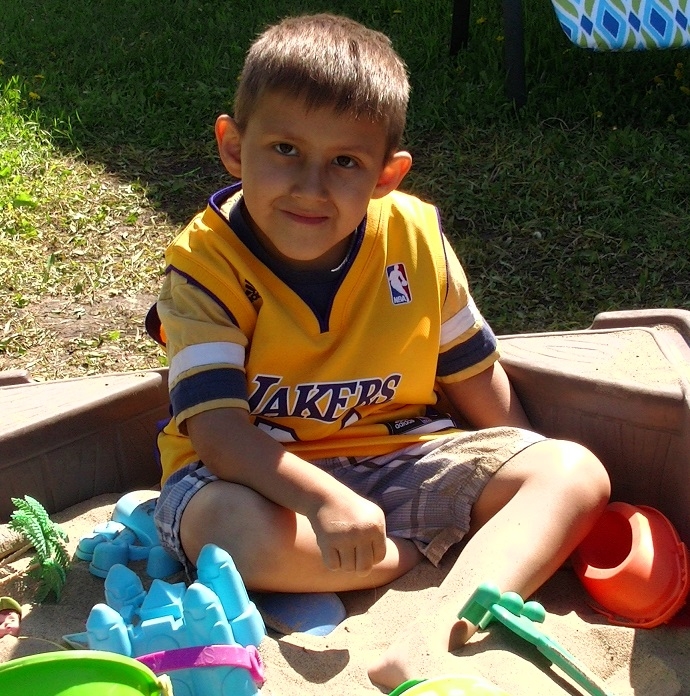
A June 25 CBC news article featuring an Aboriginal boy in need of a stem cell transplant inspired Tania Cameron, a Dalles First Nation band member, to develop a stem cell drive designed specifically for Aboriginal people.
“This is more of a personal initiative,” said Cameron, who said she discovered that there are 15 other Aboriginal people in Canada who are in need of an Aboriginal stem cell donor. “I had no idea, and a lot of people were surprised to learn it.”
Cameron’s Aboriginal stem cell swab drive is a joint partnership with OneMatch, a marrow and stem cell registry organization – she is assisted by volunteers and the campaign is operated out of Kenora, Ont. Cameron is also assisted by Jessica Stergiou, a coordinator for donor management for OneMatch Stem Cell and Marrow Network from Canadian Blood Services.
Cameron said she spoke with Stergiou asking what she could do to raise awareness and help up the number of Aboriginal donors, and she said the representative told her, ‘if you want to do it, let’s do it.’
The Canadian Blood Services has some information packages already, said Cameron, who will be asking Grand Council Treaty #3, area organizations such as Bimose Tribal Council and the Health Access Centre in Kenora if they will print out these packages for distribution to health directors, band offices and health centers in reserves.
With volunteers, Cameron is currently preparing an awareness campaign to let people know of an event that will either be hosted at the Kenora friendship centre or be hosted during the Whitefish Bay powwow.
“I was thinking is there something I can do to help? Especially in Kenora, in the heart of Treaty #3, there’s so many First Nations people here,” said Cameron.
She said she was looking to see if she was able to get a good handful of Aboriginal donors.
Stergiou said they are looking for donors between the ages of 17 and 35, with an even bigger focus on males.
“The reason for that is that males actually provide the best outcome for transplants,” said Stergiou.
She said that getting awareness out to the community, letting people know what’s going on and having people join the registry and potentially saving a life were the goal of this initiative.
“There’s a little boy named Drayson, he’s just a little guy, he’s five, and he’s in need of a stem cell transplant,” said Stergiou.
She said the chances of finding a match are really small, and that there are patients who have looked at over 20 million potential registrants with no genetic matches.
“From the Aboriginal community, either First Nations, Inuit, or Metis, it’s even more specific, because ultimately they’re not going to find a match in Europe or in other parts of the world,” she said. “Their best chances of finding a match are in North America, within their own communities.”
What happens during a stem cell drive is an interested person registers to be a part of a registry for stem cell transplants by filling out a health questionnaire, then gets the inside of their cheeks swabbed for a tissue sample – with that tissue sample they see if they are a match for a specific patient.
Less than 25 per cent of patients find a match within their family, leaving 75 per cent of the patients who need a transplant to look for someone to save their lives or the lives of their family member.
“So we swab their cheeks to get that tissue sample, then that’s it, they’re done. They’ll probably never hear from us again,” said Stergiou. “And if they do, they’re literally that one person that can save a life.”




This past month, I was happy to attend two Pow Wows I hadn't been to in years. I attended the Mattagami First Nation Pow Wow and the Matachewan First Nation...
I was happy to see my home community of Attawapiskat on the James Bay coast announce the opening of the new St Francis Xavier Parish Church on August 25....