


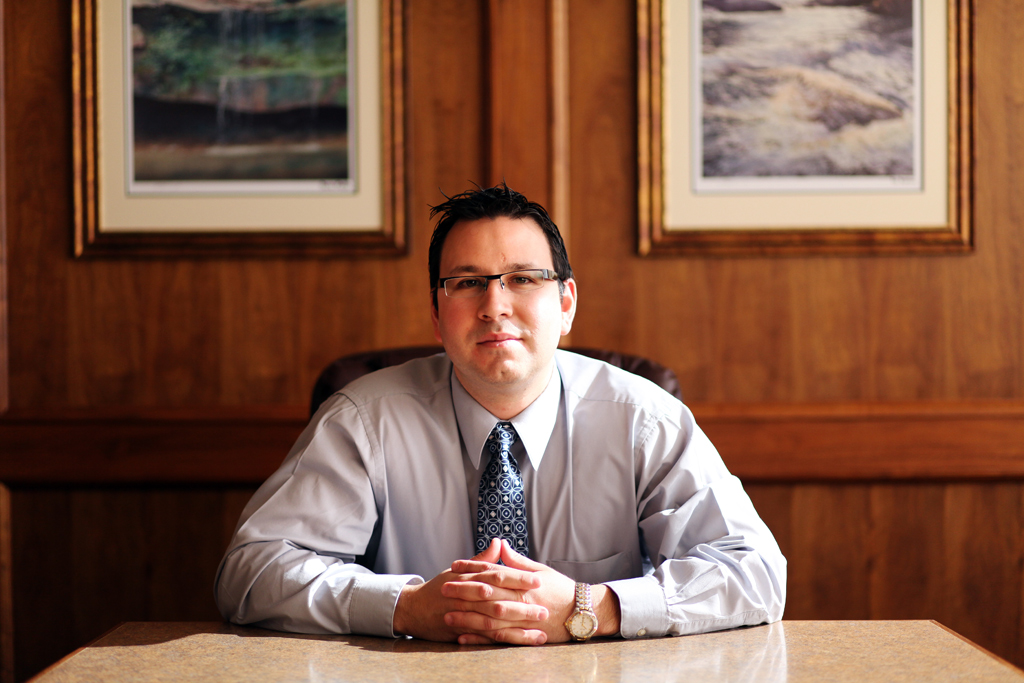
From the time he was in high school, Etienne Esquega knew he wanted to be a lawyer.
Esquega, a band member of Biinjitiwaabik Zaaging Anishinaabek First Nation (Rocky Bay) has seen his dream fulfilled as he is a lawyer with the Erickson & Partners law firm in Thunder Bay. He has been practicing law at the firm since 2005.
“My decision (to practice law) was made in high school. I always wanted to be a lawyer and I told many people that even back then. Law was always the target,” Esquega said.
Esquega grew up in Thunder Bay and after high school went to university in Windsor, Ont. where he received a Bachelor of Arts in political science.
After completing his degree in political science he enrolled in law school in Toronto at York University’s Osgoode Hall Law School and graduated in 2004.
Esquega said his goal was always to get involved in Aboriginal legal issues and the reason he chose Osgoode Hall was because the faculty there is experienced in that area of law.
“The Aboriginal law focus is what took me to Osgoode,” he said.
After receiving his law degree Esquega came back to Thunder Bay and articled with Erickson & Partners for a year before being brought into the firm as a lawyer.
“I have family connections here so I wanted to get back home,” Esquega said. “I was raised by my grandparents since I was very young. I was very close to my grandparents and just prior to me going to law school my grandmother passed away, so my grandfather was here by himself. The entire period of law school I was thinking that I had to get back and help my grandpa out. He was the main reason why I came back here,” he said.
Esquega’s legal practice is focused mainly on Aboriginal cliental. He assists First Nation bands and organizations with legal issues and also works on historical claims like unlawful trespassing on reserve lands. Additionally, he acts for various individuals who have suffered personal injuries because of car accidents and is also working on some residential school claims.
Esquega said if someone is interested in law as a career they should start focusing on planning early on in high school because once you get to university there’s not much time to plan for it then.
“You should go into first year (university) with a plan because you have to keep your marks reasonably high and remain competitive. Professional school is really competitive these days and there are lots of people that want to go to law school, so it’s hard to get in,” he said.
He added you need to get ready for the admission process early because there’s other things you should do such as volunteering, work experience and writing an LSAT test “and these are things that have to be done in a relatively short time,” he said.
Esquega said a career in law is a good choice because not everyone has to be a lawyer. “Lots of people that come out of law school don’t even practice law,” he said. “There are lots of great jobs out there, like a lot of the Native organizations could use the skills of someone with a law degree for upper management positions and lots of lawyers do those types of jobs. Also, at the community level there’s all sorts of opportunities for people with legal training to do all kinds of work.”
Esquega said the most satisfying part of being a lawyer is knowing you have helped someone out, especially Aboriginal claimants who have suffered personal injuries.
“It’s a satisfying feeling when you can help them out because a lot of times the system is such a discouraging process to go down,” he said.
I was happy to see my home community of Attawapiskat on the James Bay coast announce the opening of the new St Francis Xavier Parish Church on August 25....
Attawapiskat First Nation wrapped up another successful Kattawapiskak Keekehwin Gathering for the community. The week-long event was held from August 2 to 8...